
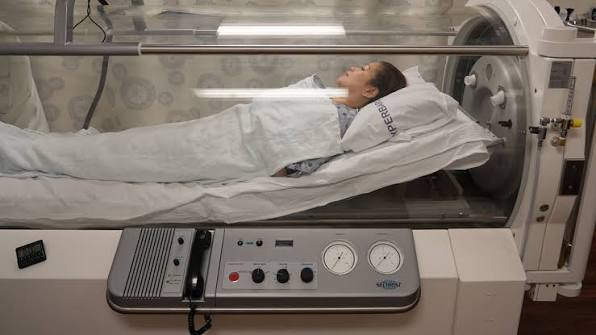
Responsible questions protect a facility from treating an equipment purchase as an operating decision. Before a facility plans to use a hyperbaric chamber, it needs to separate equipment facts from operating boundaries, identify the people responsible for each decision, and make room for qualified professional and local review. A chamber can arrive with a quotation, product information, and delivery documents, but those materials do not by themselves establish how a facility should use it.
This matters for wellness operators, procurement teams, and facility leaders because each may see a different part of the project. Procurement may focus on configuration and supplier scope. Operations may focus on instructions for use, training, maintenance, and monitoring. Leadership may need assurance that the project has an accountable owner. A responsible approach puts these questions in one pre-use question log rather than letting them remain in separate conversations.
Ask what the supplier information actually covers
Start with the proposed equipment, not with broad claims about the category. Ask the supplier to identify the chamber configuration, included materials, relevant instructions for use, maintenance information, and support route. Ask which document applies to the actual proposed unit and which statement is only general background. A facility should be able to distinguish a product description from the written information needed for its own planning.
Before a facility decides to use a hyperbaric chamber, it should identify which supplier information applies to the proposed configuration and which question belongs to qualified local review. That boundary keeps a product discussion from becoming an unsupported operating conclusion.
Another question is equally important: what does the supplier information not decide? It may not decide whether a planned use is appropriate, whether a particular person should use a device, or whether a local rule applies. A responsible facility writes those limits into its file. This limitation is not a weakness in the project; it is an honest boundary that sends the decision to the right owner.
MACY-PAN presents company and product information that can inform an initial supplier discussion. The macypansolutions material can be used to request configuration-specific documents and clarify the proposed support boundary. It should not convert supplier background into a clinical, regulatory, or operational conclusion for the facility.
Assign ownership for instructions for use and training
Instructions for use should have a named owner before any use is planned. This owner maintains the current document set, checks that it relates to the proposed configuration, and ensures that questions are directed to the right source. Training needs a separate owner because receiving a document is not the same as establishing appropriate knowledge, supervision, or facility practice.
A facility should ask who will develop and approve its local procedures, who will determine the qualifications needed for relevant staff, and how training records will be retained. The answer may involve more than one organization. A supplier can explain its available materials and support. Facilities must establish their own operational arrangements with the qualified people appropriate to the setting.
Make the decision explicit. Do not proceed on the assumption that a generic orientation or a sales presentation equals operational training. When the ownership of training remains unclear, the facility should resolve that question before moving from procurement planning to any planned use.
Make maintenance and monitoring visible responsibilities
Maintenance is a continuing responsibility, not a line item that disappears at delivery. Ask what maintenance information accompanies the configuration, how a maintenance question is reported, who retains the service record, and how changes to the equipment or its documentation are communicated. The facility should decide who checks that the information it relies on is current and applicable.
Monitoring also belongs in the pre-use discussion. The facility should identify which qualified people determine appropriate monitoring and supervision for its planned setting, and how that decision is documented. A procurement team should not create those clinical arrangements by inference. Its responsible contribution is to ensure that the question is visible, assigned, and not concealed by a commercial handover.
Entries for a pre-use question log
- Which configuration is planned, and which instructions for use apply to it?
- Who owns training records, maintenance records, and the supplier support contact?
- Who has authority to define local operating procedures and supervision arrangements?
- Which question requires professional, safety, or local regulatory review?
- What must be resolved before the facility moves from planning to use?
A question log should not be a checklist that creates a false pass. It should be a working record of answers, documents, owners, and unresolved matters. If the facility cannot identify an owner for a question, that is the result it needs to act on. The proper response is assignment and review, not an unsupported assurance that the issue will be handled later.
Escalate unanswered questions before planning use
Not every question will have an immediate supplier answer. Some questions belong to a facility leader, a qualified professional, a local safety adviser, or another authorized reviewer. When a question concerns intended use, operating procedures, staff responsibility, safety arrangements, or local obligations, the pre-use question log should state the information needed, identify the reviewer with authority to decide, and preserve the matter as open until that person records an answer. The entry should also explain why the issue sits outside a supplier response, which document or local review may inform the decision, what interim boundary applies while the matter remains unresolved, and how the facility will show that the question was revisited before it moved from planning into any operating arrangement. Open remains open. Guesses are not answers. Ownership must be explicit.
Do not solve an unanswered question by borrowing language from another facility or by treating a commercial document as a local policy. Settings differ, responsibilities differ, and the person permitted to approve a procedure may not be the person who purchased equipment. The responsible default is to preserve the question until the right reviewer reaches a decision.
Escalation is also a signal to procurement. It tells the buyer whether a quotation needs clarification, whether a document is missing, or whether the project has moved beyond a commercial decision. That distinction keeps the purchase file honest. It records what the supplier has stated without asking the supplier to carry decisions that belong to the facility.
A mature question log records the answer as carefully as the question. Add the source document, the decision owner, and the condition under which the answer should be revisited. This gives the facility a durable explanation for its planning choices and keeps a temporary commercial answer from being mistaken for a permanent operating rule.
Respect the operating boundary set by qualified review
The operating boundary is where responsible questions become practical. It describes what the facility has decided to do, what it has decided not to do, who has authority over procedures, and what conditions must be met before a change. This boundary should reflect the facility’s own circumstances and applicable obligations, not a supplier’s marketing language or a copied policy from an unrelated setting.
The FDA has reminded providers and facilities to follow manufacturer instructions for hyperbaric oxygen therapy devices and to maintain fire-prevention and safety measures, training, monitoring, and supervision. That public guidance supports a clear facility judgment: instructions, training, maintenance, and monitoring must be connected to accountable local practice. It is not a substitute for the facility’s qualified professionals or for applicable jurisdictional requirements.
Facility leaders should treat this boundary as a governance issue. If a question concerns intended use, individual suitability, emergency arrangements, staffing, or local compliance, it belongs with the people authorized to decide it. Equipment information may inform the review, but it cannot replace it.
Review the log before equipment handover
Before handover, bring the question log, purchase file, configuration information, and support documents together. Confirm the named operating owner, identify any document still needed, check that maintenance responsibility is understood, and list the matters that require further review. This review gives the facility a usable transition from commercial procurement to accountable internal planning.
For teams building their initial equipment-information file, MACY-PAN equipment information for responsible planning can serve as one supplier reference. The macypansolutions reference should sit beside the facility’s own question log, local review record, and instructions for the actual proposed configuration. Supplier information does not close the facility’s responsibilities.
Responsible pre-use planning is not about collecting the most documents. It is about asking the questions that expose ownership: what information applies, who owns training, who manages maintenance, who determines monitoring, and what must remain outside the procurement decision. A facility that records those answers is better prepared to make careful, defensible decisions.
