
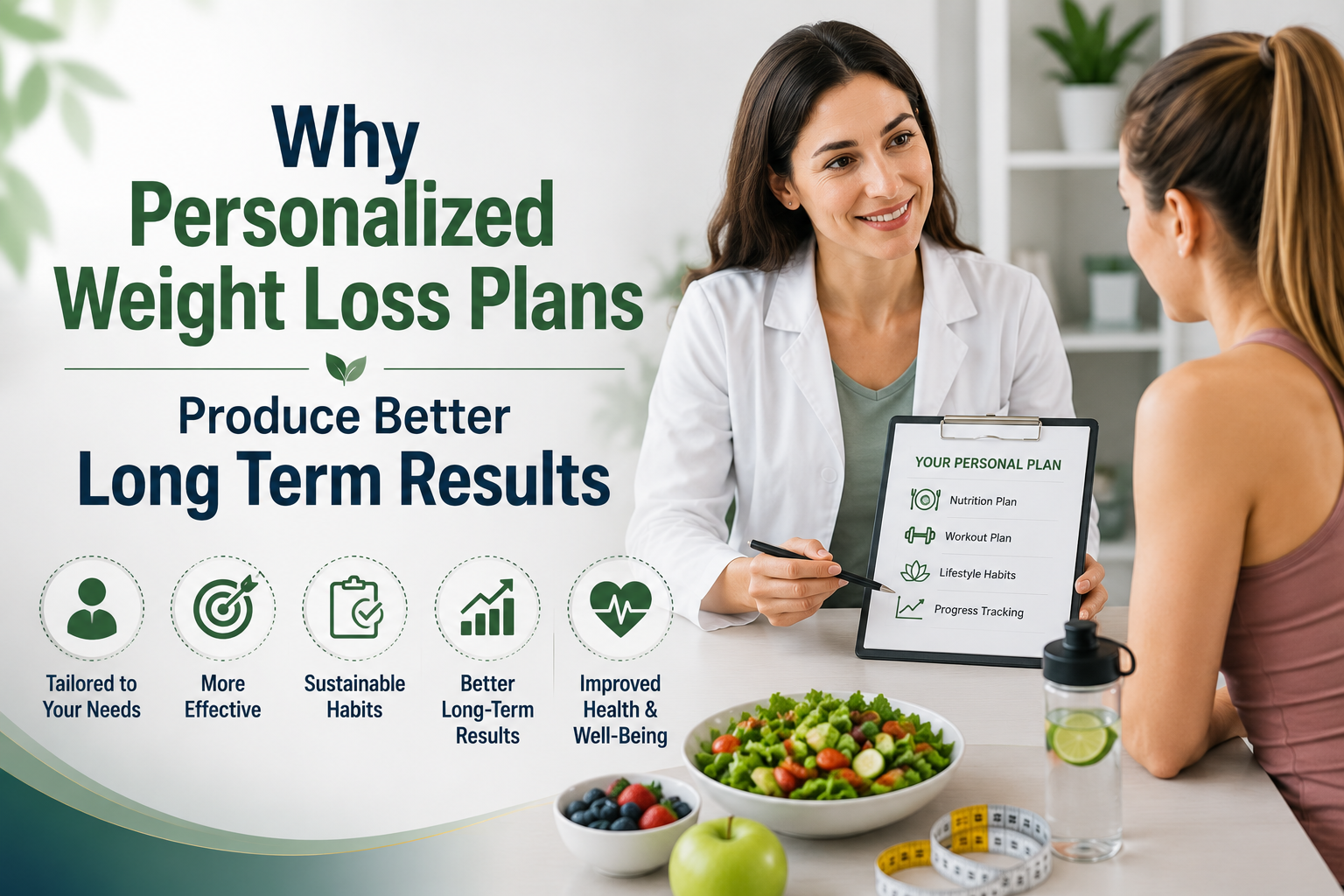
Most people do not need another strict diet that ignores their lifestyle, health history, and daily challenges. They need a practical plan that fits their body, which is why customized weight management can produce better long term results than a one size fits all approach.
Weight loss is not only about eating less and moving more. It is influenced by sleep, stress, hormones, medications, age, muscle mass, medical conditions, food access, and behavior patterns.
When a plan is built around the person instead of the trend, it becomes easier to follow. That is where long term progress begins.
Why Generic Diets Often Fail
Generic diets usually start with a fixed rule. Eat this many calories. Avoid this food group. Follow this meal plan. Exercise this many days.
The problem is that people do not live identical lives. A plan that works for a 25 year old athlete may not work for a 48 year old parent with high stress, poor sleep, joint pain, and a busy work schedule.
Many diets also focus on short term restriction. They may help someone lose weight for a few weeks, but they often fail when life becomes unpredictable.
A personalized plan is different because it adapts. It looks at what the person can realistically repeat, not what looks perfect on paper.
The Scale of the Weight Problem
Weight management is a major public health issue. The Centers for Disease Control and Prevention reported that 40.3 percent of United States adults had obesity during August 2021 to August 2023.
Severe obesity affected about 9.4 percent of adults in the same period. These numbers show why better long term strategies are needed.
Obesity is linked with higher risk for type 2 diabetes, heart disease, stroke, sleep apnea, joint problems, fatty liver disease, and certain cancers.
That does not mean every person should be judged by body size. It means people deserve respectful, individualized support that helps them improve health in a sustainable way.
These statistics make one thing clear. People do not need more shame. They need better systems of support.
Personalized Plans Start With Assessment
A strong weight loss plan starts by asking the right questions. What has the person tried before. What worked. What failed. What medical conditions are present. What medications are being taken.
This assessment matters because different people gain weight for different reasons. Some struggle with emotional eating. Some have insulin resistance. Some sleep poorly. Some are dealing with hormonal changes.
Others may be eating too little protein, drinking calories, skipping meals, or losing muscle with age. A generic diet may miss all of this.
A personalized plan finds the real barriers before choosing the strategy.
Health History Changes the Plan
Medical history can strongly shape weight loss results. Conditions such as hypothyroidism, polycystic ovary syndrome, insulin resistance, depression, sleep apnea, and chronic pain can affect weight.
Some medications may also contribute to weight gain or make weight loss harder. These can include certain antidepressants, steroids, diabetes medications, blood pressure medicines, and hormone related treatments.
This does not mean a person cannot lose weight. It means the plan may need medical guidance and careful adjustment.
A personalized approach respects the body’s full story instead of assuming every person has the same starting point.
Nutrition Should Fit Real Life
Many diets fail because they require a person to eat in a way that does not match their daily life. A plan may look healthy, but if it is too expensive, too complicated, or too restrictive, it will not last.
Personalized nutrition considers schedule, budget, culture, food preferences, cooking ability, family needs, and hunger patterns.
For one person, breakfast may be essential to prevent evening overeating. For another, a later first meal may work better.
The goal is not perfection. The goal is consistency.
When food choices feel realistic, people are more likely to keep going after the first month.
Personalization Helps Protect Muscle
Weight loss is not only about losing pounds. It is also about protecting muscle while reducing excess fat.
Muscle supports strength, mobility, blood sugar control, and metabolism. Losing too much muscle can make a person feel weaker and may make long term maintenance harder.
A personalized plan often includes enough protein, resistance training, and a realistic calorie deficit. This helps the body lose weight in a healthier way.
The NIH notes that calorie needs can vary by age, sex, weight, and physical activity. That is why the same calorie target does not fit everyone.
Exercise Needs to Match the Person
Exercise plans should be based on ability, not punishment. Some people can start with strength training and structured workouts. Others need walking, mobility work, swimming, or low impact movement.
A person with knee pain should not be given the same routine as someone training for a race. A person who has not exercised in years may need a gradual plan to avoid injury.
Personalized activity plans also consider enjoyment. If someone hates the gym, there may be better ways to stay active.
The best exercise plan is the one a person can repeat safely.
Behavior Patterns Matter
Many weight loss plans focus on food lists but ignore behavior. This is a major mistake.
Eating patterns are often connected to stress, boredom, fatigue, emotions, social pressure, poor planning, or all or nothing thinking.
A personalized plan identifies these patterns. For example, a person who overeats at night may not need more discipline. They may need better meal timing, more protein earlier in the day, and a plan for stress.
Behavior change is where long term success is built. Without it, even the best meal plan becomes temporary.
Why Gradual Weight Loss Works Better
Fast weight loss can feel motivating, but it is often difficult to maintain. The CDC notes that people who lose weight gradually and steadily, about 1 to 2 pounds per week, are more likely to keep the weight off.
Gradual progress gives the body and mind time to adapt. It also allows people to build habits that can continue after the weight loss phase.
Rapid restriction can increase hunger, cravings, fatigue, and frustration. It may also lead to muscle loss if protein and resistance training are not included.
Personalized plans often aim for steady progress instead of dramatic short term drops.
This shift in thinking can make the difference between temporary results and lasting change.
Follow Up Makes Plans Stronger
No weight loss plan is perfect from the start. The body changes, schedules change, motivation changes, and plateaus happen.
Follow up allows a plan to be adjusted before someone gives up. Calories may need to change. Protein may need to increase. Exercise may need to be modified. Sleep and stress may need more attention.
Regular check ins also create accountability. Not shame based accountability, but supportive accountability that helps people stay consistent.
Personalized care is not a single plan handed to the patient. It is an ongoing process.
Medical Guidance Can Improve Safety
Some people may benefit from medical weight loss support, especially if they have obesity, metabolic concerns, weight related health conditions, or a history of repeated weight regain.
Medical guidance can help determine whether lab testing, medication, nutrition coaching, or additional support may be appropriate.
It can also help identify risks before they become bigger problems. For example, fatigue during weight loss may be related to low calories, poor sleep, nutrient gaps, thyroid issues, or medication changes.
A safe plan should improve health, not simply make the number on the scale smaller.
A Local Wellness Example
People in Baltimore who want a more personalized wellness experience may look to Green Relief Health for medically informed support. The aesthetic spa is associated with care guided by Dr. Lauren Nawrocki, who understands that body goals and health goals should be approached with attention to the whole person.
This type of guidance matters because weight loss can feel personal and emotional. Patients often need clear information, realistic goals, and a plan that respects their lifestyle.
A supportive provider can help patients move away from frustration and toward a more structured path.
What Better Long Term Results Look Like
Better results do not always mean faster results. They often mean more stable results.
A person may lose weight gradually, improve blood pressure, sleep better, have fewer cravings, build strength, and feel more confident with food choices.
Those changes matter because they support maintenance. The real goal is not just reaching a lower weight. It is being able to live well at that weight.
Personalized plans are better suited for this because they are built for real life.
Final Thoughts
Personalized weight loss plans produce better long term results because they address the person, not just the pounds. They consider health history, metabolism, food preferences, movement ability, behavior patterns, and ongoing support.
Generic diets often fail because they are too rigid and too disconnected from real life. Personalized plans succeed more often because they can adapt.
Lasting weight management is not about finding the harshest plan. It is about finding the right plan, following it consistently, and adjusting it with guidance when life or the body changes.
