
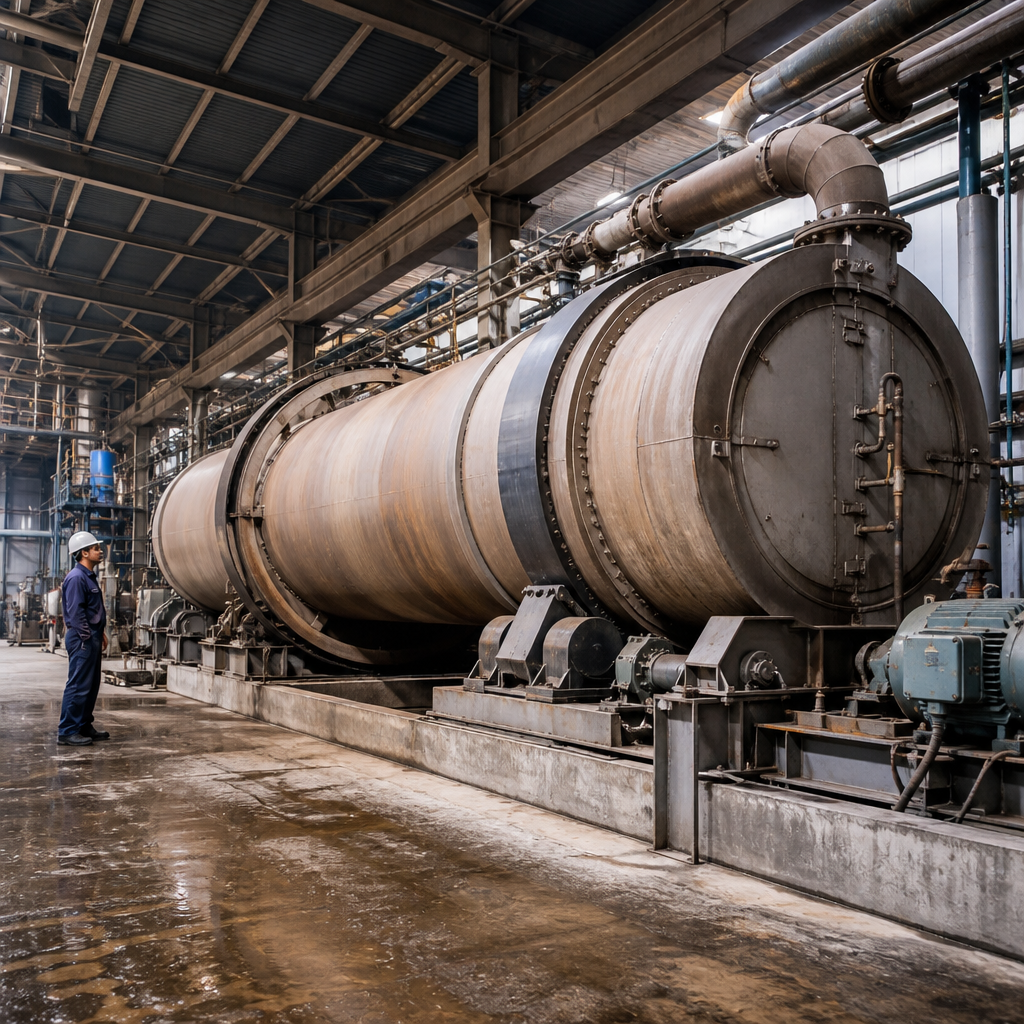
Industrial drying technology has evolved considerably over the past several decades, yet the rotary steam tube dryer remains one of the most reliable and thermally efficient solutions available to process engineers worldwide. Whether you operate in the food processing, chemical manufacturing, mineral processing, or agricultural sector, understanding the value of this equipment — and how to source it wisely — can have a lasting impact on your operational efficiency and capital expenditure strategy.
Understanding the Rotary Steam Tube Dryer and Its Industrial Role
A rotary steam tube dryer is an indirect heat dryer that uses steam-filled tubes arranged inside a rotating drum to transfer heat to the material being processed. Unlike direct-fired dryers, this design keeps the drying medium entirely separate from the product, making it ideal for heat-sensitive, dusty, or combustible materials. The rotating drum gently tumbles the material over the steam tubes, ensuring consistent and uniform moisture removal without exposing the product to open flame or combustion gases.
This design is particularly valued in industries where product purity is non-negotiable. In food-grade applications, for example, contamination from combustion byproducts is simply not acceptable. Similarly, in pharmaceutical precursor processing or fine chemical manufacturing, maintaining the integrity of the material throughout the drying cycle is critical to downstream product quality. The steam tube configuration addresses all of these concerns while delivering impressive thermal efficiency ratings.
Thermal Efficiency and Energy Considerations
One of the most compelling arguments for choosing a rotary steam tube dryer over alternative drying technologies is its superior thermal efficiency. Because heat transfer occurs through direct contact between the material and the steam-heated tubes, very little energy is wasted heating large volumes of exhaust air. This translates directly into lower operating costs and a reduced carbon footprint — two factors that are increasingly important in today’s regulatory and sustainability-conscious environment.
Steam, as a heat transfer medium, is also highly controllable. Operators can modulate steam pressure to fine-tune drying temperatures, giving process engineers precise control over the final moisture content of the product. This level of control is difficult to achieve with direct-fired systems, where temperature fluctuations can lead to inconsistent product quality or even thermal degradation of sensitive materials.
The Case for Purchasing Used Process Equipment
Capital equipment budgets in industrial settings are rarely unlimited. For many plant operators, purchasing brand-new process equipment for every application simply is not financially viable — nor is it always necessary. Used and refurbished process equipment, when sourced from reputable suppliers, can deliver performance virtually indistinguishable from new machinery at a fraction of the cost. This is especially true for robust, mechanically straightforward equipment like rotary dryers, which are built to last for decades with proper maintenance.
Sourcing a used rotary steam tube dryer from a trusted industrial equipment dealer allows plant operators to access high-quality, proven machinery that has already demonstrated its reliability in real-world production environments. This approach also significantly reduces lead times compared to ordering new custom-built equipment, which can take months or even years to manufacture and deliver. For facilities facing urgent capacity needs or equipment failures, the used equipment market can be a genuine lifeline.
What to Look for When Evaluating Used Rotary Dryers
Not all used equipment is created equal, and due diligence is essential before committing to a purchase. When evaluating a used rotary steam tube dryer, buyers should pay close attention to the condition of the steam tubes themselves. Corrosion, scaling, or mechanical damage to the tubes will directly impair heat transfer efficiency and may require costly repairs. A thorough inspection of the tube bundle, including non-destructive testing where appropriate, is strongly recommended.
The condition of the drum shell, trunnion wheels, drive system, and seals should also be carefully assessed. Worn trunnion wheels can lead to misalignment and accelerated wear on the drum shell, while deteriorated seals may allow product contamination or heat loss. Buyers should request full maintenance records where available and, if possible, witness a test run of the equipment before finalizing any purchase agreement.
Integration with Modern Process Systems
A common misconception is that used equipment cannot be effectively integrated into modern, automated process environments. In reality, rotary steam tube dryers are mechanically robust and relatively straightforward to retrofit with contemporary instrumentation and control systems. Variable frequency drives, modern PLC-based control panels, and advanced moisture measurement sensors can all be added to older dryer units, bringing their operational capabilities in line with current industry standards.
This adaptability makes used rotary dryers an attractive option even for facilities that are investing in broader process modernization programs. Rather than replacing the entire dryer, operators can upgrade the control and monitoring infrastructure while retaining the proven mechanical core of the machine. The result is a cost-effective hybrid approach that delivers modern performance without the full capital outlay of a new unit.
It is also worth noting that the principles governing rotary dryer performance are well-established and extensively documented in engineering literature. Much like how compact mechanical tools can deliver outsized performance — as explored in this fascinating look at compact lifting equipment — industrial machinery does not always need to be the newest or largest to be the most effective. Proven design, proper maintenance, and intelligent application are often more important than novelty.
Laboratory and Pilot-Scale Considerations
Before committing to full-scale production using a rotary steam tube dryer, many process engineers choose to validate their drying parameters at laboratory or pilot scale. This is particularly important when processing novel materials or when transitioning from a different drying technology. Pilot-scale testing allows engineers to establish optimal steam pressures, drum rotation speeds, and feed rates before scaling up, reducing the risk of costly process failures at full production scale.
For those working in synthesis and filtration alongside drying operations, integrated laboratory reactor systems can streamline the development workflow considerably. A compact lab reactor designed for synthesis and filtration in a single system exemplifies the kind of integrated approach that modern process development demands, enabling faster iteration and more reliable scale-up data.
About International Process Plants
International Process Plants is a globally recognized supplier of used and refurbished industrial process equipment, with an extensive inventory spanning dryers, reactors, heat exchangers, distillation columns, and complete plant systems. With decades of experience serving clients across the chemical, pharmaceutical, food processing, and mineral industries, the company has built a reputation for rigorous equipment inspection, transparent condition reporting, and responsive customer service. Their team of experienced engineers and equipment specialists works closely with buyers to match the right equipment to each application, ensuring that every purchase delivers long-term value and operational reliability.
Conclusion
The rotary steam tube dryer is a time-tested workhorse of industrial processing, offering exceptional thermal efficiency, precise moisture control, and broad material compatibility. For plant operators seeking to expand or upgrade their drying capacity without overextending their capital budgets, the used equipment market offers compelling opportunities. By working with reputable suppliers, conducting thorough pre-purchase inspections, and investing in modern control system upgrades where appropriate, facilities can acquire high-performing drying equipment that serves their production needs reliably for years to come. In an era of rising energy costs and tightening operational margins, the smart procurement of proven process equipment is not just a financial decision — it is a strategic one.
