
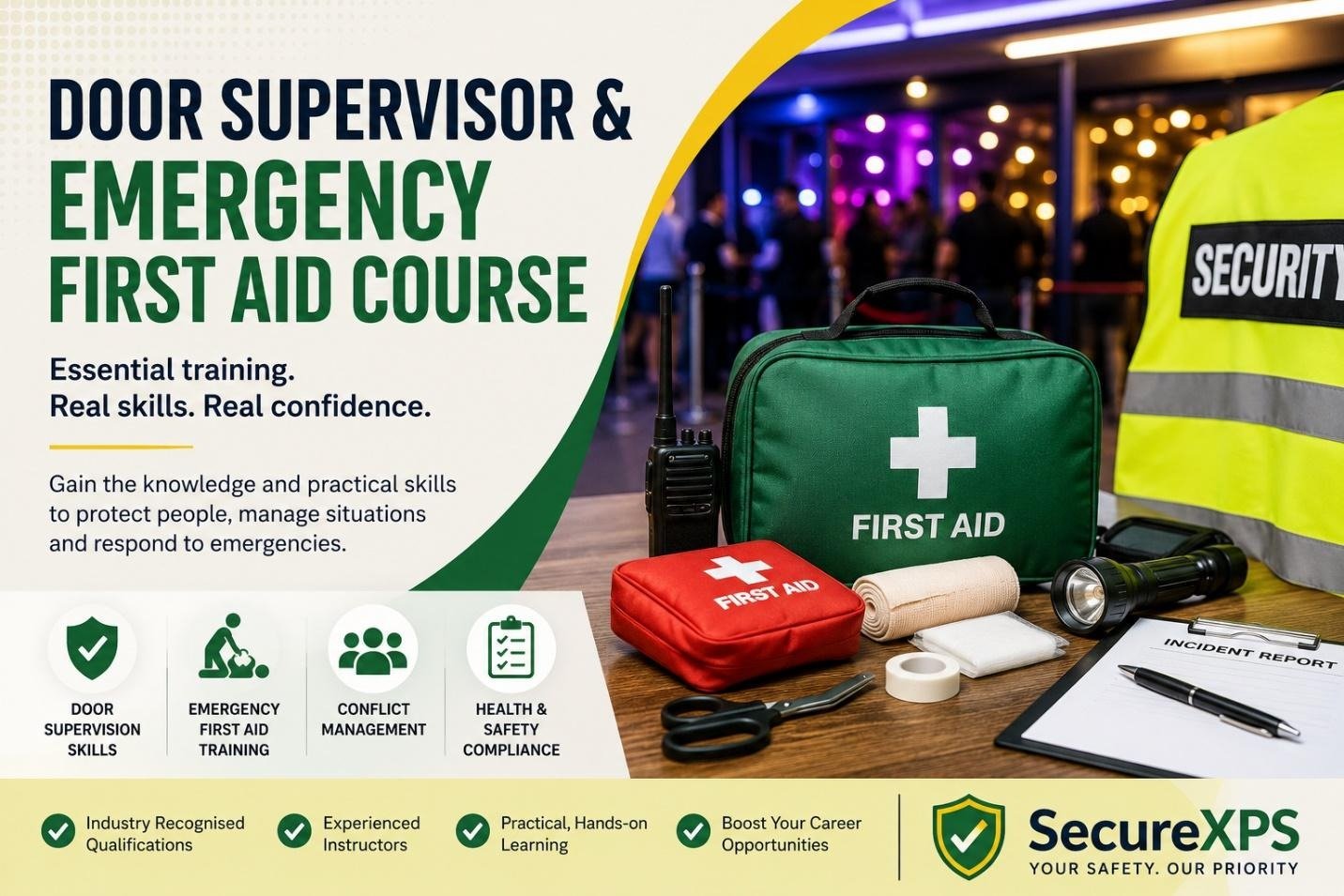
The private security industry continues to demand professionals who are prepared for a wide range of situations. Completing a door supervisor and emergency first aid course gives learners the practical knowledge required to meet current training expectations while building confidence in both security and emergency response. As security roles become more diverse, combining licence training with first aid knowledge offers clear advantages for those entering the profession.
Today’s door supervisors are responsible for much more than checking identification or monitoring entrances. They regularly assist members of the public, manage conflict, respond to emergencies, and support police or ambulance services when incidents occur. This makes comprehensive training more valuable than ever before.
What Is a Door Supervisor and Emergency First Aid Course?
A door supervisor qualification prepares learners for one of the UK’s most recognised private security roles. Alongside this, emergency first aid training teaches essential life-saving skills that may be required before professional medical help arrives.
The combination allows learners to develop knowledge across several important areas, including:
- Conflict management
- Physical intervention awareness
- Customer service
- Health and safety
- Emergency procedures
- Basic life support
- Incident reporting
- Casualty assessment
Bringing these subjects together provides a more complete foundation for individuals beginning their careers in the security sector.
Why Emergency First Aid Is Becoming Increasingly Important
Security professionals are often among the first people to witness medical emergencies.
Whether working in shopping centres, entertainment venues, sporting events or hospitality environments, door supervisors may need to respond quickly when someone becomes ill or injured.
Emergency first aid training helps learners understand how to react calmly while waiting for emergency services. This may include recognising common medical conditions, protecting casualties, controlling severe bleeding, and performing cardiopulmonary resuscitation (CPR) where appropriate.
Having these skills improves workplace preparedness while supporting public safety.
Benefits of Completing a Door Supervisor and Emergency First Aid Course
Choosing combined training offers several practical benefits beyond simply meeting qualification requirements.
Better Career Opportunities
Many employers prefer candidates who already possess first aid knowledge alongside their security qualifications. This reduces additional training requirements after recruitment and demonstrates commitment to professional development.
Greater Confidence
Understanding how to respond during emergencies gives new security professionals greater confidence when working in busy public environments.
Practical Skills
Training focuses on realistic workplace situations rather than theory alone. Learners practise communication, decision-making and incident management through practical exercises.
Improved Employability
Holding both qualifications can strengthen job applications across multiple sectors, including:
- Licensed premises
- Corporate security
- Retail security
- Events and festivals
- Hotels
- Universities
- Public venues
The Modern Role of a Door Supervisor
The responsibilities of door supervisors have changed considerably over recent years.
While maintaining safety remains the primary objective, professionals are now expected to deliver excellent customer service alongside effective security management.
Daily duties may include:
- Managing queues
- Preventing disorder
- Monitoring venue capacity
- Assisting vulnerable people
- Supporting emergency evacuations
- Reporting incidents accurately
- Liaising with emergency services
Professional conduct, communication skills and sound judgement are now considered just as important as physical presence.
Why Professional Training Matters
Quality training provides much more than a certificate.
Experienced instructors introduce learners to realistic scenarios that reflect situations regularly encountered within the security industry. This practical approach helps students understand how legislation, communication and risk assessment work together in real environments.
Interactive learning also encourages teamwork and problem-solving, helping learners build confidence before entering employment.
Choosing a recognised training provider ensures the course content remains aligned with current industry expectations and regulatory standards.
Skills Employers Value Most
Recruiters increasingly look beyond qualifications when selecting security personnel.
Employers value candidates who demonstrate:
- Professional communication
- Reliability
- Situational awareness
- Calm decision-making
- Customer service skills
- Emergency response knowledge
- Teamwork
- Adaptability
Combined training helps develop these qualities from the very beginning of a security career.
Continuing Professional Development
The security industry continues to evolve with new legislation, technology and public safety expectations.
Professionals who invest in ongoing learning often put themselves in a stronger position for promotion to supervisory or management roles.
Additional qualifications in CCTV operations, security guarding, conflict management and refresher training can further expand long-term career opportunities.
Continuous professional development demonstrates a willingness to maintain high standards throughout a security career.
Choosing the Right Training Provider
Not all training providers offer the same learning experience.
When selecting a provider, prospective learners should consider factors such as:
- Experienced instructors
- Accredited qualifications
- Modern training facilities
- Practical learning sessions
- Positive learner feedback
- Flexible course dates
Choosing an established provider helps ensure learners receive high-quality instruction that prepares them for real working environments rather than simply passing assessments.
Building a Successful Security Career
Starting a career within the private security industry requires both commitment and preparation.
Completing recognised training provides the knowledge needed to work confidently while supporting the safety of colleagues, customers and the wider public.
Providers such as SecurexPS.co.uk continue to support learners with industry-recognised security training designed to help individuals begin and develop successful careers within the UK’s growing private security sector.
Key Takeaways
A successful door supervisor requires more than confidence and good communication. Today’s security professionals must understand legislation, customer care, conflict management and emergency response while remaining calm under pressure.
Combining door supervisor training with emergency first aid equips learners with practical knowledge that can make a real difference in everyday situations. Whether entering the industry for the first time or preparing for future career progression, investing in comprehensive training provides valuable skills that remain relevant throughout a professional security career.
