
There is a particular frustration that comes with wanting to improve your home but feeling like every project either costs a fortune, takes months to complete, or requires skills you do not have. Most of the renovation content out there focuses on major transformations — gut renovations, full room rebuilds, professional-grade outcomes that take weeks and significant investment.
But a lot of the most satisfying home improvement happens in small bursts. One solid weekend, the right project, and you come out the other side with a space that genuinely feels better. That is what this article is about — realistic weekend projects that give you visible, meaningful results without derailing your life.
Before You Start: Set Yourself Up to Finish
The graveyard of half-finished home projects is enormous. Most projects stall not because they are too difficult but because they were not properly set up before the first tool was picked up. You ran out of supplies mid-project. The prep took longer than expected and ate into the time available. You started on Saturday and realized on Sunday morning that you needed a tool you did not have.
Before any weekend project, take a proper planning hour. Watch a video of someone completing exactly the task you are about to do. Write down every supply and tool you will need. Buy them all before the weekend, not the morning of. Make sure you have two full days available, not just one — almost every project takes longer than the estimate.
Following home improvement news and DIY communities online gives you realistic time estimates from real people, not idealized instructional guides. Real accounts of how a project actually went are worth more than any how-to article.
Project One: Refresh a Bathroom Without Touching Plumbing
Bathrooms carry a lot of weight in how a home feels. They are small, enclosed, and the contrast between a tired one and a fresh one is dramatic. The good news is that most bathrooms can be meaningfully improved without touching a single pipe.
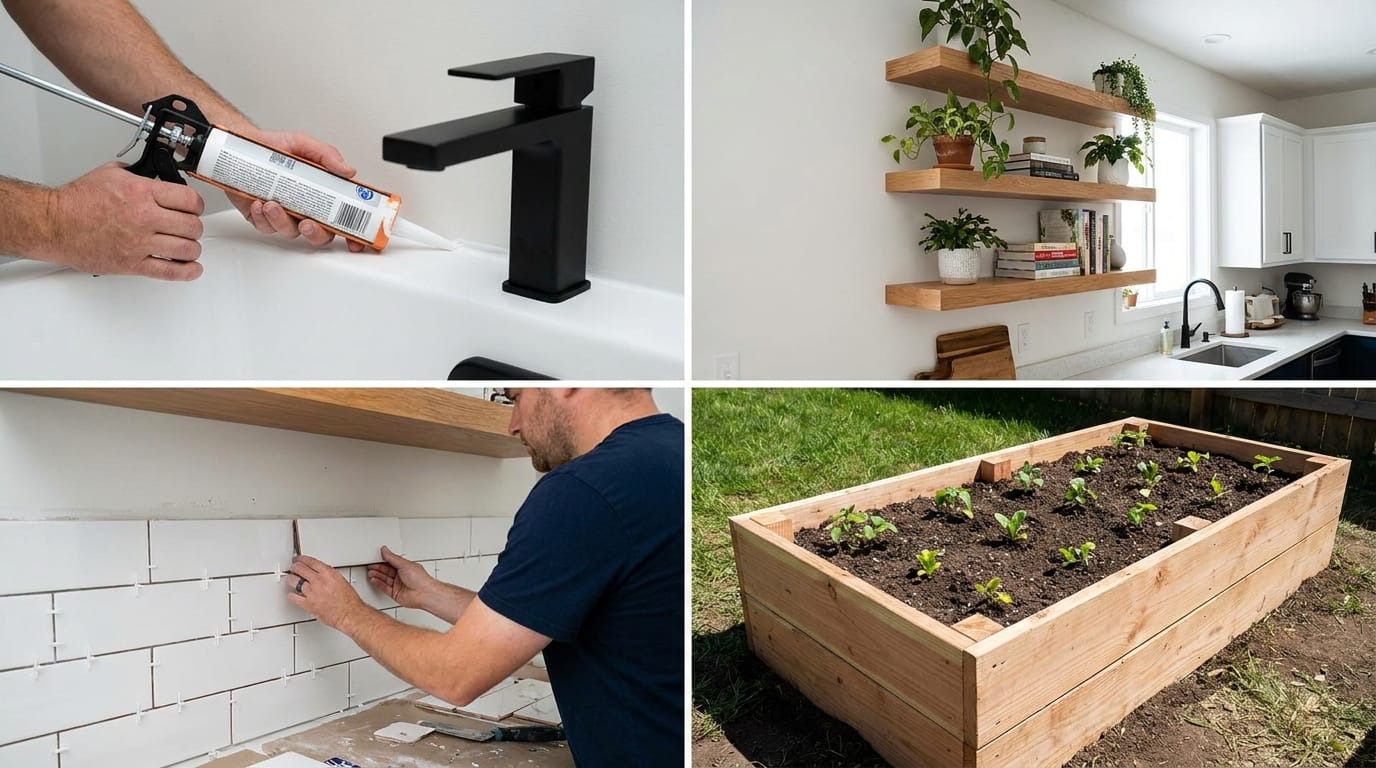
Start with the caulk. Old, discolored caulk around the tub, shower, and sink makes a bathroom look grimy even when it is clean. Removing old caulk and replacing it with fresh white caulk is a few hours of work and costs almost nothing — but the before-and-after difference is striking.
Then look at the accessories — towel rails, toilet paper holder, mirror frame, light fitting. If these are in an older chrome or brushed steel finish, swapping everything to a matching matte black or brushed gold set creates instant visual cohesion. You can buy a complete matched set of bathroom accessories for a reasonable price, and the unified look makes the whole room feel like someone thought about it.
A new mirror — or just a new frame around your existing mirror — makes a big difference. Mirrors are both functional and visual, and a good one adds to the room in ways that few other accessories can.
Project Two: Install Floating Shelves
Floating shelves are genuinely transformative in the right space. They add storage, they create display areas, they add depth to flat walls, and done well, they look like they have always been there.
The kitchen is an obvious spot — a row of floating shelves above a counter or beside the refrigerator can replace cabinet space while feeling more open and accessible. The living room is another natural home for them — books, plants, and a few meaningful objects on a well-placed shelf can anchor an entire wall.
The critical step is finding the studs and anchoring properly. Floating shelves loaded with books are heavy, and a shelf that pulls out of the wall after a month is both a safety issue and a cosmetic disaster. Use a stud finder, use the right anchors, and check that everything is level twice before you drill.
Finish the job properly. Fill any wall damage from previous attempts, touch up the paint, and clean up before you start arranging things on the shelves. How the finished project looks matters as much as whether it functions.
Project Three: Lay a New Backsplash in the Kitchen
A kitchen backsplash is one of the more satisfying home improvement projects you can complete in a weekend because the change is immediately visible and genuinely dramatic. A tiled backsplash behind the stove or sink takes a kitchen from unfinished to complete in a way that is hard to achieve with any other single change.
Peel-and-stick tile options have improved enormously and are a legitimate choice for renters or anyone who wants a lower-commitment installation. The better versions are realistic, water-resistant, and removable when needed. If you are comfortable with actual tile work, a simple subway tile in a classic brick pattern is a beginner-friendly choice that looks timeless.
The prep is the critical part of a tiling job. Clean surfaces thoroughly, make sure everything is level, and plan your layout before you start — especially around outlets and the edges of cabinets where cuts will be needed. A poorly planned tile layout will haunt you every time you cook.
Project Four: Transform an Outdoor Space with a Weekend Build
A single weekend can produce significant progress on an outdoor area. Building a simple raised garden bed for garden decorations is one of the most accessible woodworking projects a beginner can take on — four boards, some corner brackets, some screws, and you have a structure that will last years and immediately improve the look of any garden.
If you want something more substantial, a simple timber deck over a problematic area — a bare patch of ground, a sloping bit of yard, an area that floods in rain — is a weekend project for someone with moderate DIY confidence. Pre-made deck tiles that click together are even faster if you want a completely tool-free option.
Adding a pergola frame over an existing patio is another weekend-scale project that dramatically changes what an outdoor space feels like. Even a basic rectangular frame with four posts and cross beams overhead creates a sense of enclosure and purpose that an open patio lacks.
Project Five: Repaint a Room Properly
Painting sounds simple, but most people do it badly because they skip the preparation. They do minimal masking, no priming, one thin coat, and the result looks amateurish within a year.
Done properly, a repaint is a two-day project and the results rival professional work. Day one: clear the room, fill all holes and dents, sand when dry, clean all surfaces, tape everything carefully, prime if needed, and do the first coat. Day two: second coat, remove tape while the paint is still slightly tacky to avoid pulling, touch up edges, put the room back together.
Choose your paint carefully. Better quality paint covers in fewer coats, has better finish durability, and looks significantly more professional. The extra cost per litre is real, but when you consider that you are also paying with your time, using good materials makes sense.
Project Six: Upgrade Your Entryway
The entryway is the first impression your home makes, both on you coming home and on anyone who visits. Yet it is often the most neglected space — a dumping ground for shoes, bags, coats, and post rather than a considered room.
A weekend is more than enough to completely transform a typical entryway. A fresh coat of paint on the walls and door. A proper coat hook system or open wardrobe unit for bags and outerwear. A shoe bench or shoe cabinet to keep footwear organized and off the floor. A small mirror to check yourself on the way out.
Good lighting matters here more than almost anywhere else because the entryway often has no natural light. A proper wall light or ceiling fitting that gives warm, welcoming illumination immediately makes the space feel intentional rather than like a corridor.
Project Seven: Seal and Refresh Grout
This is the least glamorous project on this list and one of the most impactful. Old, dirty grout in bathrooms, kitchens, and on floors ages a space significantly. Refreshing it changes the look of every tiled surface in your home.
Start by deep cleaning existing grout with a specialist cleaner and a stiff brush. In many cases, cleaning alone makes a dramatic difference. Where grout is cracked or missing, regrout those sections. Then seal everything with a grout sealer, which protects against future staining and keeps it looking cleaner for longer.
For grout that is structurally sound but has permanently stained over years of use, grout paint is a genuinely effective product that covers old staining and gives tiled surfaces a fresh, clean look without the work of full regrouting.
The Difference a Weekend Makes
None of these projects requires advanced skills or professional tools. What they require is planning, patience, and the willingness to do them properly rather than quickly. The temptation when doing a project yourself is to cut corners in ways a professional would not — skipping the primer, not filling the holes, not cleaning up properly at the end.
Resist that temptation. The quality of your own home improvement work directly reflects the quality of your living environment. Taking an extra hour to do something right means you get to live with a result you are proud of rather than one that reminds you of the shortcuts you took every time you look at it.
Good home improvement is not about big budgets or professional involvement. It is about caring enough to do things properly, one weekend at a time. The cumulative effect of a year of good weekend projects is a home that feels genuinely transformed.
