
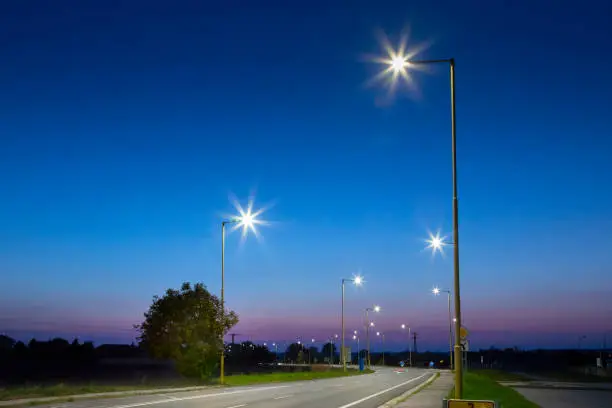
Introduction: The Evolution of Sustainable Urban Infrastructure
Rapid global urbanization has placed unprecedented pressure on city planners and municipal engineers. The urgent need to accommodate continuously growing populations must be balanced with the strict imperative to reduce municipal carbon footprints. As smart cities evolve, every structural aspect of urban infrastructure is being scrutinized for maximum operational efficiency.
Historically, municipal street lighting was viewed simply as a basic public utility. Today, it is widely recognized as a massive energy drain and a prime candidate for technological modernization. Reimagining how municipalities deploy and manage light is now critical for future-proofing urban environments and minimizing environmental degradation.
Energy efficiency is no longer just a green buzzword; it is a strict financial and operational necessity. Upgrading to smart LED street lighting represents a pivotal shift in sustainable infrastructure management. This essential transition forms the backbone of a resilient, low-carbon urban power grid.
By integrating Solid-State Lighting (SSL) with advanced digital control systems, cities can drastically reduce their baseline power demands. This comprehensive guide explores the engineering, environmental, and financial rationales driving the global shift toward intelligent luminaire technologies.
The Hidden Costs of Traditional Municipal Lighting
When scaling municipal infrastructure, the energy consumption from outdated lighting systems can severely drain city budgets. Upgrading to advanced luminaire technologies, such as those engineered by specialized commercial LED lighting manufacturers like WOSEN, can reduce energy expenditure by up to 70% while drastically improving nighttime visibility, safety, and operational reliability.
Legacy infrastructure across the globe still heavily relies on High-Intensity Discharge (HID) technologies. Specifically, High-Pressure Sodium (HPS) and Metal Halide (MH) lamps have dominated roadways and commercial facilities for decades. While these were once the industry standard, their long-term hidden costs have become financially staggering.
These archaic systems force municipalities into a continuous cycle of high energy consumption and reactive maintenance. Furthermore, HID lamps suffer from extended restrike times, meaning they cannot be instantly turned back on after a power drop. To fully understand this operational burden, we must analyze the specific failures of these legacy technologies.
Maintenance and Operational Inefficiencies
Traditional municipal lighting systems suffer from notoriously short functional lifespans. An average HPS lamp requires complete replacement every 24,000 hours, whereas MH lamps degrade even faster. This frequent, predictable replacement cycle translates directly to exorbitant, recurring maintenance costs.
Cities must regularly deploy specialized bucket trucks, traffic management teams, and electrical crews simply to change a burnt-out bulb. The Total Cost of Ownership (TCO) for legacy lighting is heavily skewed by these relentless labor and equipment expenses. Key operational inefficiencies include:
- High failure rates leading to unlit, unsafe public zones that increase municipal liability.
- Increased labor costs for the routine replacement of internal ballasts, igniters, and fragile bulbs.
- Significant downtime and disruption to municipal traffic flows during overhead maintenance.
- Inefficient warm-up times, drawing massive power surges before reaching full luminosity.
These operational bottlenecks make legacy systems completely financially unsustainable for modern smart cities. The logistical nightmare of reactive maintenance drains municipal budgets that could be purposefully allocated elsewhere.
Environmental Impact and Light Pollution
Beyond the severe financial drain, legacy lighting systems have a profound negative impact on the local and global environment. Traditional bulbs operate with extremely poor luminous efficacy, meaning they convert a massive portion of consumed electricity into wasted heat rather than usable light.
This inherent inefficiency directly correlates to higher greenhouse gas emissions from regional power plants. Furthermore, legacy fixtures are notorious for omnidirectional light spillage. This uncontrolled optical dispersion creates severe light pollution, commonly referred to as sky glow.
The ecological and environmental consequences are substantial and far-reaching:
- Disruption of nocturnal wildlife behaviors, insect populations, and avian migratory patterns.
- Wasted electrical energy illuminating the night sky instead of targeting the pavement.
- Increased carbon footprint due to excessive, non-targeted municipal energy consumption.
- Violations of modern Dark Sky compliance standards mandated in progressive urban zones.
Addressing these critical environmental hazards is now a core objective for modern sustainability consultants and urban planners worldwide.
Core Engineering Advantages of Modern Commercial LEDs
Transitioning to modern Light Emitting Diodes (LEDs) unequivocally solves the fundamental flaws of legacy municipal systems. The advantages go far beyond simple energy reduction, rooted deeply in the advanced physics of solid-state lighting. These commercial-grade fixtures are engineered from the ground up for unparalleled endurance.
Superior Thermal Management and Lifespan
One of the most critical engineering feats of commercial LEDs is their advanced heat dissipation technology. Unlike incandescent or halogen lamps, LEDs do not radiate infrared heat directly into the surrounding environment. Instead, they efficiently draw heat away from the semiconductor junction through highly engineered heat sinks.
Effective thermal management prevents lumen depreciation and fundamentally protects the sensitive internal electronic drivers. This robust, solid-state architecture yields incredible lifespans, often exceeding 100,000 operational hours. The precise engineering benefits of this thermal control include:
- Massive reductions in thermal degradation, ensuring consistent brightness over decades.
- Utilization of heavy-duty die-cast aluminum housings for optimal thermal conductivity.
- Protection against harsh climatic conditions via IP66-rated, weatherproof enclosures.
- Enhanced longevity of the LED driver, which is typically the most vulnerable component.
By mitigating internal heat effectively, industrial LEDs virtually eliminate the costly reactive maintenance cycle that plagues older lighting technologies.
Photometric Performance and Directed Lumens
Another transformative engineering advantage is the unmatched photometric precision of modern LED technology. Traditional HID lamps emit light in a full 360-degree sphere, requiring bulky internal reflectors to force the light downward. This optical bouncing process inherently loses a significant percentage of the initial lumen output inside the fixture.
LEDs, conversely, are inherently directional light sources. Using customized, precision-molded optical lenses, LEDs deliver light exactly where it is needed with virtually zero waste. This targeted optical approach dramatically improves the Uniformity Ratio of street lighting, eliminating dangerous dark spots between poles.
- Precise optical distribution reduces harsh glare, drastically enhancing driver and pedestrian safety.
- Zero upward light emission effectively eliminates unnecessary sky glow and meets Dark Sky regulations.
- A significantly higher Color Rendering Index (CRI) ensures true-to-life visibility for security cameras.
- Customizable BUG (Backlight, Uplight, Glare) ratings allow for exact site-specific photometric planning.
This highly efficient use of directed lumens ensures that every single watt consumed translates directly into productive, visible light on the target surface.
Financial Implications for Large-Scale Commercial Projects
Upgrading an entire municipality or large-scale commercial complex to smart LED infrastructure requires a substantial upfront capital investment. However, the financial rationale and subsequent payback period are undeniably compelling for stakeholders. Cities can typically recoup their initial capital expenditure within two to four years through massive energy and maintenance savings alone.
This exceptionally rapid Return on Investment (ROI) makes commercial LED retrofits one of the most lucrative municipal upgrades currently available. Beyond just the hardware, integrating these modern lights with intelligent IoT controls allows for dynamic dimming, maximizing off-peak electrical savings.
The initial capital expenditure required for retrofitting urban grids is quickly offset by long-term savings. According to comprehensive market analyses from the International Energy Agency (IEA), the global transition to energy-efficient lighting is projected to eliminate millions of tons of carbon emissions annually, solidifying its role as a cornerstone of modern urban economic strategy.
The long-term, verifiable financial benefits of this transition include:
- A guaranteed 50% to 70% reduction in monthly municipal electricity consumption.
- The near-total elimination of routine maintenance, bucket truck dispatch, and replacement budgets.
- Eligibility for substantial green energy government grants, tax incentives, and utility rebates.
- Increased local property values and commercial appeal due to superior nighttime aesthetics and safety.
By drastically lowering the Total Cost of Ownership (TCO), city planners can confidently reallocate saved capital funds to other critical urban development and infrastructure projects.
Conclusion
The inevitable transition to smart LED street lighting is an imperative step for any modern urban planning initiative. Continuing to rely on legacy high-pressure sodium or metal halide systems is an indefensible drain on both municipal financial resources and the global environment. The technological gap between solid-state lighting and traditional bulbs is simply too massive to ignore.
By leveraging superior thermal management, robust electronic drivers, and precise photometric performance, commercial LEDs offer an unparalleled technical solution. They definitively resolve historical maintenance bottlenecks while significantly mitigating the ecological impacts of light pollution. Furthermore, their compatibility with future smart-city digital networks makes them an incredibly versatile municipal asset.
Ultimately, the empirical data speaks for itself. Upgrading global urban infrastructure with advanced, commercial-grade LED solutions is not merely an environmental mandate. It is a highly strategic, fiscally responsible necessity for building the sustainable, efficient, and safe cities of tomorrow.
