
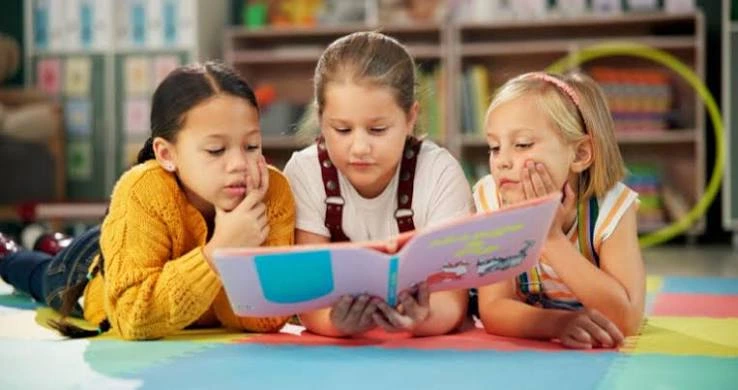
Students Who Read Above Grade Level Usually Start With One Habit at Home
When parents ask how to help their children become stronger readers, many expect the answer to involve expensive tutoring, specialized programs, or classroom interventions. Yet research and educational practice consistently reveal a simpler truth. The single habit that distinguishes students reading above grade level from their peers often originates at home, long before formal instruction makes a measurable difference. This foundational practice shapes not just reading ability, but also vocabulary, comprehension, and a lifelong relationship with learning.
The Daily Reading Routine
The most powerful habit that sets advanced readers apart is a consistent daily reading practice at home. Students who read every day, even for brief periods, develop stronger decoding skills and encounter new vocabulary far more frequently than peers who read sporadically. When reading becomes part of the daily routine, similar to brushing teeth or eating breakfast, children internalize the behavior and require less parental reinforcement over time. A child who reads for 20 minutes each day encounters roughly 7,000 words annually, compared to a child who reads only occasionally, and that volume of exposure accelerates learning in ways that irregular sessions cannot match.
Parents who establish this habit early often notice measurable shifts in their children’s academic performance within months. The routine need not be rigid or formal; some families read together after dinner, others before bed, and still others use car rides for audiobooks. The specific timing matters far less than the regularity. When children know that reading happens every single day, they begin to anticipate it, select books independently, and gradually build the stamina to tackle longer, more complex texts.
Exposure to Books and Language
Advanced readers almost always grow up in environments rich with books and spoken language. When books sit on shelves, occupy bedside tables, and fill baskets around the house, children naturally browse, select, and explore at their own pace. This accessibility removes barriers to engagement and allows children to find stories that genuinely interest them. A range of formats, from picture books and chapter books to comic books and magazines, ensures that every child can find something that resonates with their current reading level.
Beyond the physical presence of books, homes that produce above-grade-level readers tend to feature rich oral language. Parents and caregivers engage children in conversations that extend beyond simple questions and answers, discussing stories in detail, asking open-ended questions about plot and character, and modeling sophisticated vocabulary in everyday speech. When children hear complex language used naturally, they begin to internalize sentence structures and word meanings without explicit instruction. Children who observe parents discussing ideas, sharing interesting facts, or narrating their own thinking absorb these behaviors and apply them to their own reading.
Parental Modeling and Engagement
One habit that often goes unrecognized is parental modeling of reading itself. When children see their parents reading for pleasure, whether printed books, digital articles, or other written content, they internalize the message that reading is a normal adult activity worth pursuing. This modeling is particularly powerful during early years when children observe and imitate adult behavior as a primary learning mechanism. If reading appears in a parent’s daily routine, children come to view it as a natural, valued part of life rather than a chore imposed by teachers.
Parental engagement with children’s reading creates another critical layer of support. Parents who ask questions about what their children are reading, discuss favorite characters, and express genuine interest in their child’s literary choices reinforce that reading matters. Simple conversations like “What happened in your book today?” or “Which character did you like best?” create opportunities for children to practice articulation and reflection. When parents respond positively to reading efforts, whether the child reads fluently or struggles with certain words, they build confidence and motivation that helps children persist through challenging texts.
Access to Age-Appropriate Challenges
Students who read above grade level typically have access to books that stretch their abilities just slightly beyond their current level. This zone of productive difficulty keeps engagement high while building skills progressively. When children have access only to books far below their level, reading feels unstimulating; books that are too difficult lead to frustration and disengagement. Parents who understand their child’s reading level can select materials strategically, gradually introducing slightly more complex texts as skills develop. For families navigating this process during the middle grades, a private middle school in Colorado structures its academic program to match students with appropriately rigorous reading and coursework, helping parents understand what productive challenge looks like at each stage of development.
The habit of accessing appropriately challenging materials also extends beyond traditional books. Comics, graphic novels, magazines, and series books all contribute to reading development, particularly when they engage a child’s specific interests. A child passionate about animals might eagerly read wildlife magazines or informational books about particular species, while a child interested in adventure might devour graphic novel series. When parents facilitate access to reading materials that align with their child’s interests, engagement increases substantially, and self-directed reading produces the highest gains in comprehension and vocabulary because intrinsic motivation drives effort and attention.
Creating a Print-Rich Home Environment
Homes where children read above grade level typically feature print throughout every room. Books visible and accessible, family reading lists on the refrigerator, and newspapers or magazines around the house create an environment where written language is part of the physical space. Children grow accustomed to seeing words everywhere, which builds familiarity with written language and provides low-pressure reading practice as children naturally notice signs, labels, and messages in their surroundings. Over time, this casual exposure builds decoding fluency and sight word recognition without feeling like formal instruction.
Parents who intentionally create print-rich environments often involve their children in the process. Reading menus together at restaurants, discussing directions on a recipe, or examining instructions for a new toy all expose children to functional print with real-world purpose. When children see print being used to accomplish actual goals, they understand that reading serves practical purposes beyond entertainment. This functional understanding increases motivation and demonstrates that reading skills have concrete value in daily life.
Conclusion
The habit that typically distinguishes students reading above grade level is the establishment of consistent daily reading at home, supported by a print-rich environment, accessible books at appropriate challenge levels, and engaged parental participation. This habit does not require expensive materials, specialized credentials, or extensive time commitments. Instead, it reflects a prioritization of reading as a core family value and a commitment to making books and written language a normal part of daily home life. When this foundational habit takes root early and remains consistent throughout childhood, the benefits compound year after year, building confidence and capability that influences a student’s entire educational trajectory.
