
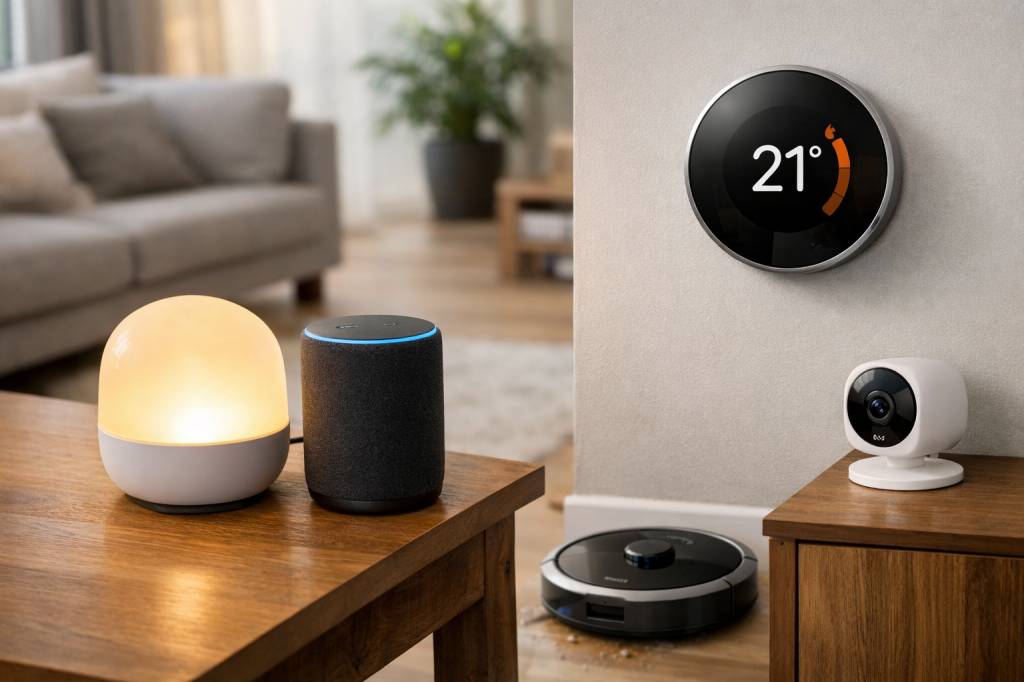
As the year 2026 rolls in, UK shoppers are increasingly turning to smart home gadgets to enhance convenience and save on household expenses. The demand for these innovative devices is growing, driven by advancements in technology and the need for greater efficiency and cost-effectiveness at home. Let’s explore some of the most popular smart gadgets making waves in UK households. Don’t forget to check out the Hit Products discount codes for any potential savings on these must-have devices.
The Rise of Smart Thermostats
Smart thermostats have quietly become one of the most “boring-but-brilliant” upgrades UK households are making in 2026—because they cut waste without you having to think about it. Instead of blasting the heating on a fixed timer (classic: warming an empty house), a smart thermostat lets you control your heating from your phone, set smarter schedules, and tweak temperatures room-by-room if you’ve got smart radiator valves in the mix.
The big win is how they handle the little habits that drain money. Many models learn your routine over time, automatically easing off when you’re out and nudging the heating back on before you return. Add geofencing (it uses your phone’s location, with permission) and it can dial the temperature down when the last person leaves—then bring it back up on the way home. Simple idea, surprisingly effective.
A few features UK shoppers are paying attention to in 2026:
- Energy reports and usage tracking: You can actually see when you’re spending the most, then adjust without guesswork.
- Weather-aware tweaks: Some thermostat systems pre-empt cold snaps or mild days so you’re not overheating for no reason.
- Voice assistant integration: Handy when you’re busy—“turn the heating down” is faster than hunting for the old wall dial.
- Zoned control (with compatible setups): Heat the rooms you use, not the whole house “just in case.”
If you’re trying to save money, the best approach is keeping comfort but tightening control: lower the temperature slightly overnight, avoid heating empty rooms, and stop running the boiler like it’s 1998. A smart thermostat doesn’t magically make energy cheap—but it does cut the sloppy, expensive bits of how most homes heat themselves.
Intelligent Lighting Systems
Smart lighting has quietly become one of the easiest “why didn’t I do this earlier?” upgrades in UK homes. Instead of relying on a wall switch and hoping everyone remembers to turn lights off, you get control that actually fits how people live: schedules, sensors, and quick tweaks from your phone (or by voice) when you’re halfway up the stairs.
The big win is automation. You can set lights to come on at sensible times (dark mornings, post-school chaos, evenings), then dim automatically later so you’re not blasting full brightness at 11pm. Motion sensors take it further—hallways, bathrooms, utility rooms—lights only run when someone’s there, which cuts those classic “left it on all night” moments.
Cost-wise, most systems lean on LEDs, which already use far less power than older bulbs. Pair LEDs with routines like “all off when leaving home” and you reduce waste without thinking about it. Some setups also let you track usage room-by-room, which is oddly motivating when you realise the landing light is basically on a full-time contract.
And it’s not just practical—it’s vibe control. Many smart bulbs can shift warmth and colour temperature, so you can go bright and cool for working, then warmer for evenings. If you want colour scenes, they’re there too, but the everyday value is the boring stuff: fewer wasted hours of lighting, fewer arguments about who left what on, and a house that behaves like it knows what time it is.
Home Security and Surveillance
If there’s one smart-home category UK shoppers are spending on in 2026, it’s security—and not just because it feels reassuring. A good setup can save you time, hassle, and sometimes real money (think fewer missing parcels, fewer call-outs, fewer “did I lock the door?” panic drives back home).
Smart video doorbells are the gateway gadget. They let you see who’s at the door from your phone, whether you’re in the kitchen or on a train. Motion alerts mean you don’t have to sprint to the window every time a courier drops something off, and two-way talk is genuinely useful for telling delivery drivers where to leave packages. For UK terraces and flats especially, it’s a simple upgrade that earns its keep fast.
Then you’ve got outdoor/indoor security cameras that do more than record grainy clips. Newer models use smarter motion detection, so you can cut down on pointless notifications (cats, rain, tree shadows) and get alerts that actually matter. Some systems add facial recognition to distinguish family members from strangers—handy if you want fewer false alarms, or if you’re keeping an eye on who’s coming and going while you’re at work.
For a more complete approach, smart alarms and sensors (door/window sensors, glass-break sensors, and motion sensors) tie everything together. The real win is automation: arm the system when your phone leaves the house, get an instant alert if a door opens during set hours, and trigger lights or a siren if something looks off. It’s “set and forget” security—until you need it.
One thing UK shoppers are paying attention to in 2026: ongoing costs. Plenty of brands lock recordings behind subscriptions, while others offer local storage or partial functionality for free. Before buying, it’s worth checking what you get without a monthly fee: event history, cloud clips, smart notifications, and whether emergency or professional monitoring is optional or required.
Bottom line: smart security isn’t just about catching burglars on camera. It’s about making your home easier to manage, reducing the little everyday frictions, and keeping control in your pocket—wherever you are.
Voice-Activated Assistants
Voice assistants are basically the shortcut button for modern home life. In 2026, lots of UK homes have an Alexa speaker in the kitchen, Google Assistant on a phone, or Siri running through HomeKit—because it saves you those tiny, constant bits of effort that add up. Instead of opening apps and tapping around, you just say what you want: set a timer, add milk to the shopping list, turn off the lights downstairs, or drop the heating by a degree.
Where they really earn their keep is running your other smart gadgets. You can build simple routines like “Good morning” (turn on hallway lights, read the weather, start the radio) or “I’m out” (switch everything off, arm the alarm, lower the thermostat). It’s not futuristic—it’s just less faff. And if your household has kids, guests, or anyone who doesn’t want to learn five different apps, voice control is the easiest interface going.
As Tom Church, Co-Founder of hitproducts.com (a discount code platform), puts it: “Voice assistants are at their best when they reduce daily friction—simple routines, fewer taps, and the ability to control your home with one command.”
Money-saving is quieter but real. Pair a voice assistant with smart plugs, lighting, and a thermostat, and it becomes harder to “accidentally” leave things running. A quick “turn off everything” at bedtime, or “is anything still on?” can cut the background waste—especially with lamps, heaters, and entertainment setups that otherwise sit on standby.
A couple of practical tips UK buyers are leaning into: choose one main ecosystem early (Alexa, Google, or HomeKit) so devices play nicely together, and check compatibility before you buy anything. Also, use voice PINs for purchases and tighten privacy settings—because convenience is great, but you still want control over what’s being recorded and when.
Smart Kitchen Appliances
The kitchen’s where “smart” actually earns its keep. Not in a sci‑fi way—more in a “why am I still guessing if we’ve got milk?” way. UK shoppers in 2026 are snapping up connected appliances that cut food waste, trim energy use, and shave minutes off the daily cook-and-clean grind.
Smart fridges and pantry tracking are the obvious headline. The best ones don’t just chill your food; they help you stop buying duplicates. Inventory lists, expiry reminders, and quick “what’s in the fridge?” checks on your phone reduce the weekly shop’s accidental chaos. Even without a full-on smart fridge, cheaper add-ons (like smart labels or fridge thermometers) can still help you keep food safe and avoid throwing things out.
Smart ovens, air fryers, and multicookers are where time savings get real. Preheat on the commute home, get a notification when it’s up to temperature, or run guided cooking programmes that don’t require babysitting. A lot of UK households are leaning into connected multicookers and pressure cookers because they’re efficient and predictable—less hovering, fewer takeaways “because it’s late now.”
Kettles and coffee machines sound like gimmicks until you’re making 6:45am decisions with half a brain. Scheduling a boil, setting brew times, or having the machine warm up before you arrive in the kitchen is small, but it adds up. And for energy: boiling only what you need (and not re-boiling out of habit) genuinely helps over a year.
Dishwashers and smart taps are the quiet money-savers. Modern dishwashers already use less water than handwashing in many cases, but smart features push it further: off-peak scheduling, eco-cycle nudges, and leak alerts. Smart taps can also track usage and set precise volumes—handy if you’re trying to stop “running the tap while thinking.”
If you’re buying smart kitchen kit for savings (not just novelty), look for: energy monitoring, scheduling/off-peak modes, solid app support, and manual controls that still work when Wi‑Fi doesn’t. Bonus points if it plays nicely with Alexa/Google, because voice control in a kitchen is basically: hands full, timer yelling, everyone hungry.
Robot Vacuums and Cleaning Devices
Cleaning is one of those jobs that doesn’t feel “hard” until it’s 9pm, you’ve had a long day, and the crumbs have somehow multiplied. That’s why robot vacuums (and their newer sidekicks) are flying off shelves in the UK in 2026: they buy you back time, keep the place consistently presentable, and can even trim costs if you’re smarter about how you use them.
Modern robovacs aren’t the random bump-and-run discs they used to be. The good ones map your home properly (LiDAR or camera-based), learn the layout, and clean in neat passes instead of ricocheting off chair legs. You can set no-go zones for cables, pet bowls, or that one rug that sheds like it’s paid per fibre. Most apps let you schedule room-by-room cleans too—so the kitchen gets a quick run after dinner, while the rest of the flat stays on a lighter routine.
Where the money-saving angle kicks in:
- Less wear-and-tear from “panic cleaning.” When floors are maintained daily, you’re not constantly deep-cleaning carpets or scrubbing ground-in grit from hard flooring.
- Targeted cleaning beats blasting the whole house. Room selection and zoning means you’re not wasting battery (or time) cleaning spaces that aren’t used much.
- Cheaper than outsourcing. A solid robot vacuum is often a one-off purchase that offsets occasional paid cleans—especially in busy households.
The other big upgrade in 2026 is robot mopping. Many models now either mop with a damp pad or use spinning pads with better pressure, and some can lift the mop over carpets automatically. For UK homes with hard flooring in kitchens, hallways, and open-plan living spaces, that’s a genuine quality-of-life boost—muddy footprints and sticky patches get handled before they become a weekend job.
A few practical tips before you buy:
- Check running costs. Filters, brushes, dust bags (for self-emptying docks), and mop pads add up—budget for consumables.
- Match it to your home. Small flat? You can skip the mega battery. Lots of thresholds or thick rugs? Look for strong suction and decent obstacle handling.
- Pet owners: Prioritise tangle-resistant brushes and strong edge cleaning; fur loves skirting boards.
Bottom line: robot vacuums and automated cleaners aren’t just a “nice gadget” anymore. For a lot of UK shoppers in 2026, they’re the most straightforward way to keep a home looking clean without constantly spending time you don’t have.
Smart Home Hubs and Connectivity
If smart thermostats, lights, cameras, and a robot vacuum are the “stuff,” a smart home hub is the bit that stops it all feeling like five different apps arguing with each other. In 2026, UK shoppers are buying hubs (and better connectivity gear) for one simple reason: fewer faffy setups, fewer random dropouts, and more automation that actually sticks.
Tom Church, Co‑Founder of hitproducts.com (a discount code platform), puts it simply: “A hub is the glue—once you’ve got everything in one place, routines actually run, and you stop wasting time bouncing between apps.”
A good hub brings your devices into one control centre, so you can build routines like:
- “Out the door”: lights off, heating down, alarm on, doors locked.
- “Back home”: hallway light on, heating up, camera notifications quietened.
- “Night”: blinds down, doors locked, motion lights armed, thermostat set.
Why hubs save time (and your patience)
Without a hub, you’re often juggling different brands, separate apps, and devices that don’t talk nicely. A hub:
- Centralises control (one place for automations and scenes)
- Reduces duplicate setups (set rules once, not per app)
- Makes voice control less hit-and-miss by routing commands cleanly through one system
Why connectivity matters more than the gadget
A “smart” device is only smart when it stays connected. That’s why many households are also upgrading the unglamorous bits:
- Mesh Wi‑Fi systems to kill dead zones (common in older UK builds with thick walls)
- Thread/Zigbee hubs for low-power devices like sensors and bulbs that don’t need to clog up your Wi‑Fi
- Matter support so new devices are more likely to work across ecosystems without weird workarounds
The money-saving angle (it’s real, just not flashy)
Hubs don’t directly cut your bill like a thermostat can—but they enable the automations that do:
- Heating only when rooms are occupied (with motion/contact sensors)
- Lights that switch off automatically instead of running all evening
- Smarter scheduling that prevents “set-and-forget” waste
Bottom line: in 2026, UK shoppers aren’t just buying more smart gadgets—they’re buying the glue that makes them feel like one home, not a collection of gadgets.
