
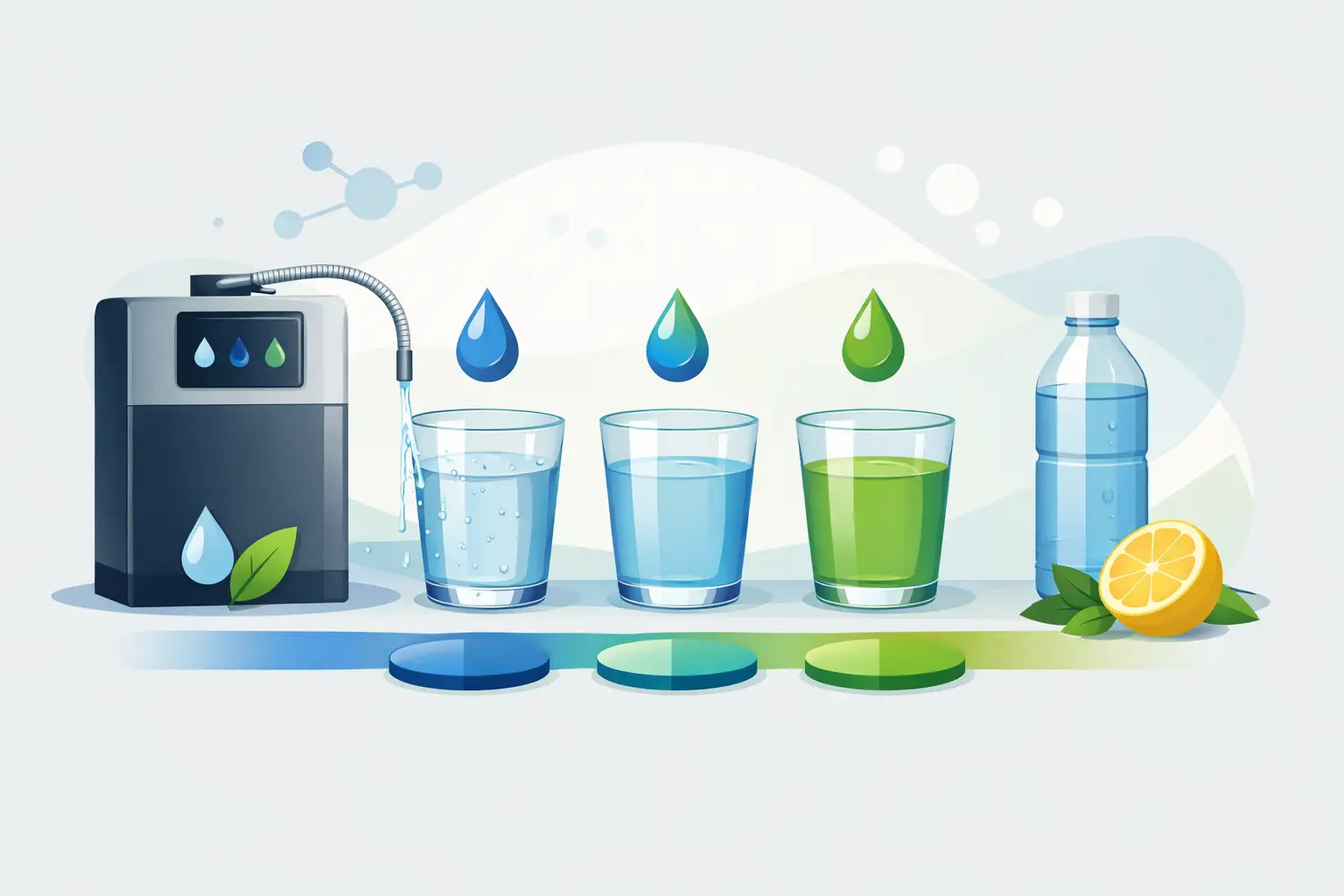
Access to clean, safe drinking water is the foundation of a healthy lifestyle. While municipal water is treated before reaching your tap, aging pipes, chlorine, and trace contaminants can often compromise its quality. This leads many homeowners to seek a reliable solution: a home water filtration system. But with so many options available—from simple pitchers to advanced reverse osmosis units—how do you know which one is right for your home?
In this guide, we will walk you through the essential steps to choosing the perfect filter, address common questions about safety, and help you understand which technology offers the best protection for your family.
How to Choose Water Filters?
Choosing the right water filter isn’t just about picking the most expensive model on the shelf. It is about matching the technology to the specific impurities present in your water supply. Follow these four steps to make an informed decision:
1. Test Your Water Quality
Before you invest in any system, you must know what you are filtering out. You can purchase a DIY home test kit or send a sample to a certified laboratory. Look for reports on:
- Hardness: High mineral content (calcium/magnesium) that causes scale buildup.
- Chemicals: Chlorine, chloramines, and pesticides.
- Heavy Metals: Lead, copper, arsenic, or mercury, often leached from old plumbing.
- Microorganisms: Bacteria or viruses (common in well water).
2. Identify Your Filtration Goal
Different filters target different contaminants. If your goal is simply to improve taste, a carbon filter might be sufficient. If you are concerned about health-hazardous heavy metals or PFAS, you need a more robust system like Reverse Osmosis.
3. Consider Your Living Situation
Are you a renter or a homeowner? Renters may prefer countertop filters or pitcher systems that require no plumbing modifications. Homeowners might opt for “Point-of-Entry” (whole-house) systems or permanent “Point-of-Use” under-sink installations.
4. Check for Third-Party Certification
Always look for seals from organizations like the NSF (National Sanitation Foundation) or WQA (Water Quality Association). These certifications ensure that the system performs exactly as the manufacturer claims.
If you are looking for high-quality, reliable solutions to upgrade your home’s water quality, you can explore professional-grade systems here. Finding a system that balances efficacy with ease of maintenance is the secret to long-term satisfaction.
Do I Need to Boil Water After Filtering Water?
A common question among health-conscious individuals is whether filtration replaces the need for boiling. The short answer is: If you are using a high-quality, certified filtration system, you generally do not need to boil your water.
Why Filtration Is Often Superior to Boiling
Boiling is effective at killing microorganisms like bacteria and viruses, but it has significant limitations:
- Does not remove chemicals: Boiling cannot remove lead, pesticides, pharmaceuticals, or volatile organic compounds (VOCs). In fact, boiling can sometimes concentrate these contaminants by evaporating the water around them.
- Does not remove heavy metals: Minerals and metals remain in the water after boiling.
- Energy Inefficient: Boiling water daily for consumption is time-consuming and energy-intensive.
When Is Boiling Necessary?
There are very specific instances where you should boil your water, even if you have a filter:
- Boil Water Advisories: During a municipal emergency (like a pipe burst or contamination event), authorities may advise boiling to ensure absolute safety.
- Emergency Situations: If your filtration system fails or you are in a location with severe microbial contamination that your filter is not rated to handle, boiling is a necessary safety net.
- Basic Filters: If you are only using a basic sediment or low-grade carbon filter that doesn’t remove bacteria, boiling is recommended if the water source is suspect.
For most households using modern, multi-stage filtration, the process of purification is far more comprehensive than what boiling can achieve.
Which Water Filtration is Considered the Best?
There is no “one-size-fits-all” answer, as the best filter depends on your unique water profile. However, when comparing performance, certain technologies stand out as the gold standard.
1. Reverse Osmosis (RO) Systems
For most families, Reverse Osmosis is considered the top choice. It uses a semipermeable membrane with microscopic pores (about 0.0001 microns) to force water through, effectively stripping away up to 99% of contaminants, including fluoride, lead, arsenic, and nitrates.
- Pros: Exceptional purity, removes almost all harmful substances.
- Cons: Can be slow, may require a storage tank, and traditionally produces some wastewater (though modern units are much more efficient).
2. Activated Carbon Filters
These are the workhorses of the filtration world. They use charcoal to “adsorb” impurities. They are excellent at removing chlorine, bad odors, and unpleasant tastes.
- Pros: Very affordable, easy to install, great for improving taste.
- Cons: Less effective at removing heavy metals, nitrates, or bacteria.
3. Ultraviolet (UV) Treatment
If you rely on well water or are in an area with high microbial risk, UV light is the best additive to any filtration system. It destroys the DNA of bacteria and viruses, rendering them harmless.
- Pros: Chemical-free, highly effective against pathogens.
- Cons: Needs a pre-filter (to remove sediment that could block the light) and requires electricity.
The Verdict: Multi-Stage Systems
The “best” filtration system is typically a multi-stage system that combines technologies. For example, a system that starts with a sediment filter (to catch dirt/rust), follows with an activated carbon block (to remove chemicals/taste), and finishes with an RO membrane or UV light provides the most comprehensive protection.
Conclusion
Investing in a water filtration system is an investment in your long-term health. By testing your water, understanding the limitations of boiling, and selecting a system—such as those designed for high-performance home purification—you can ensure that your family has access to the cleanest possible water every single day.
