
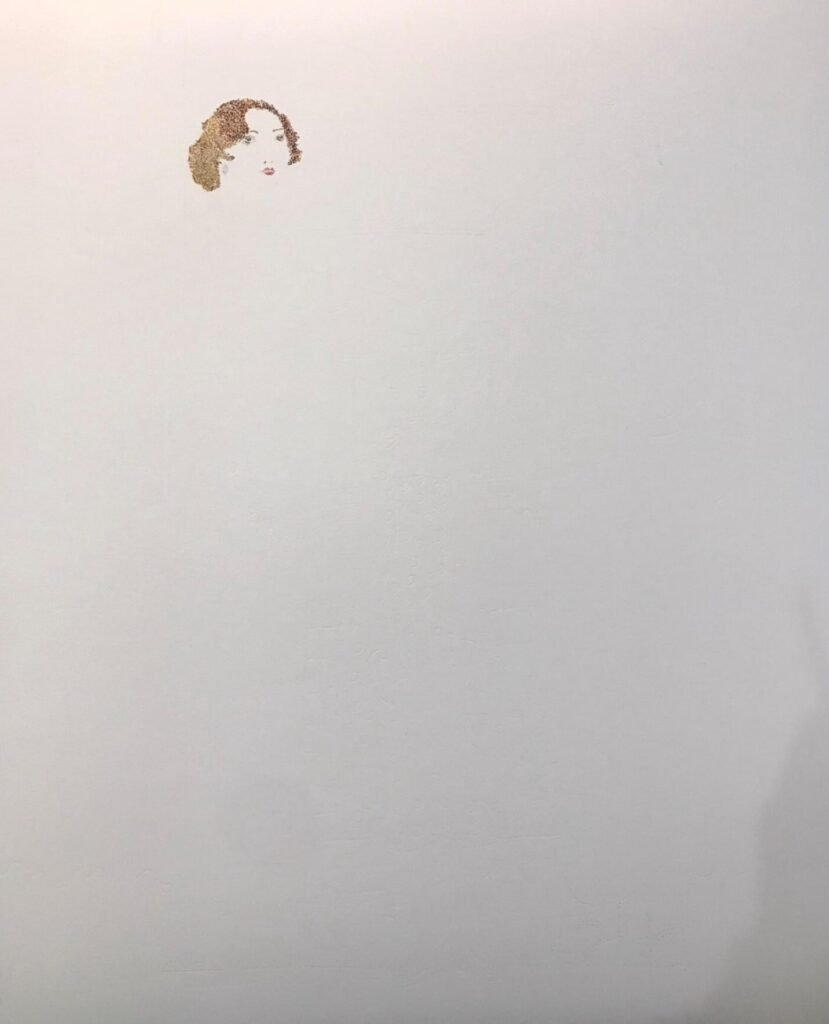
At a time when images can be reproduced endlessly, trends can travel around the world in hours, and successful creative formulas are quickly repeated, L. C. Atencio is pursuing something deliberately harder to duplicate.
For L. C. Atencio, an original painting is meant to remain exactly that: an original.
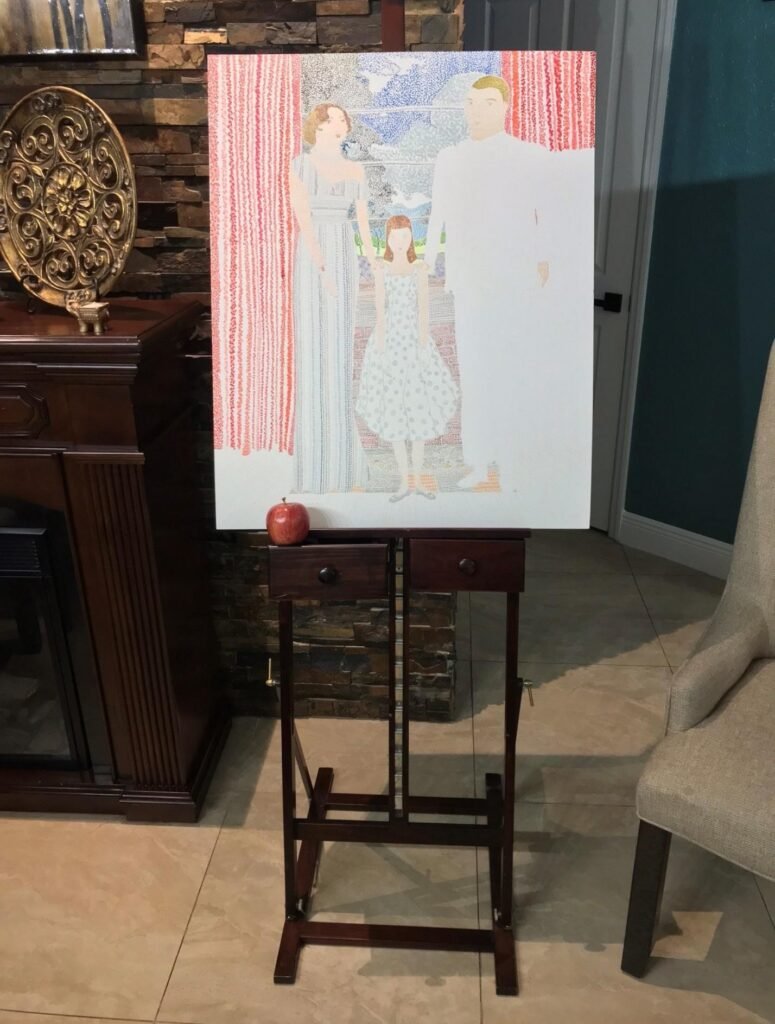
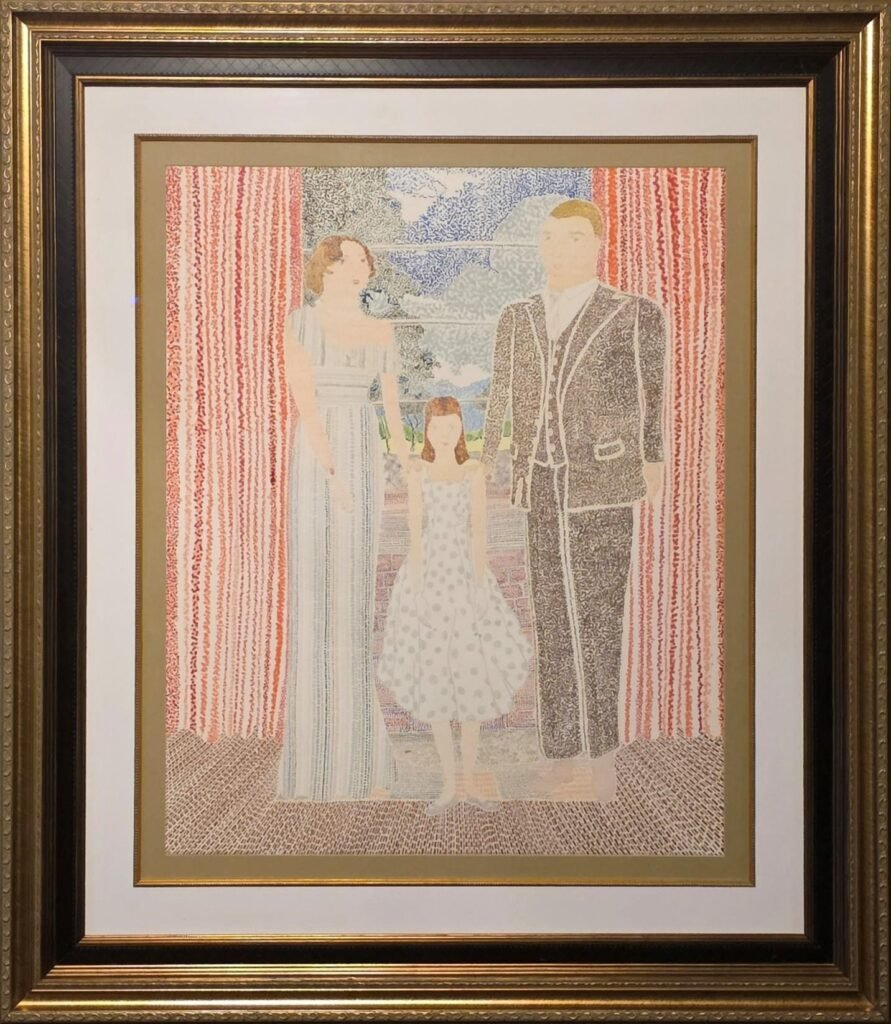
He describes his one-of-one works as the fullest expression of his artistic vision. They are physical objects in which the surface, texture, paint thickness, and response to changing light all contribute to an experience that cannot be completely reproduced on a screen or through a print.
“There’s nothing better than seeing an original work of art in person,” L. C. Atencio says.
This principle influences not only how he paints, but also what happens to a work after it leaves his hands.
Why L. C. Atencio Will Not Paint the Same Original Twice
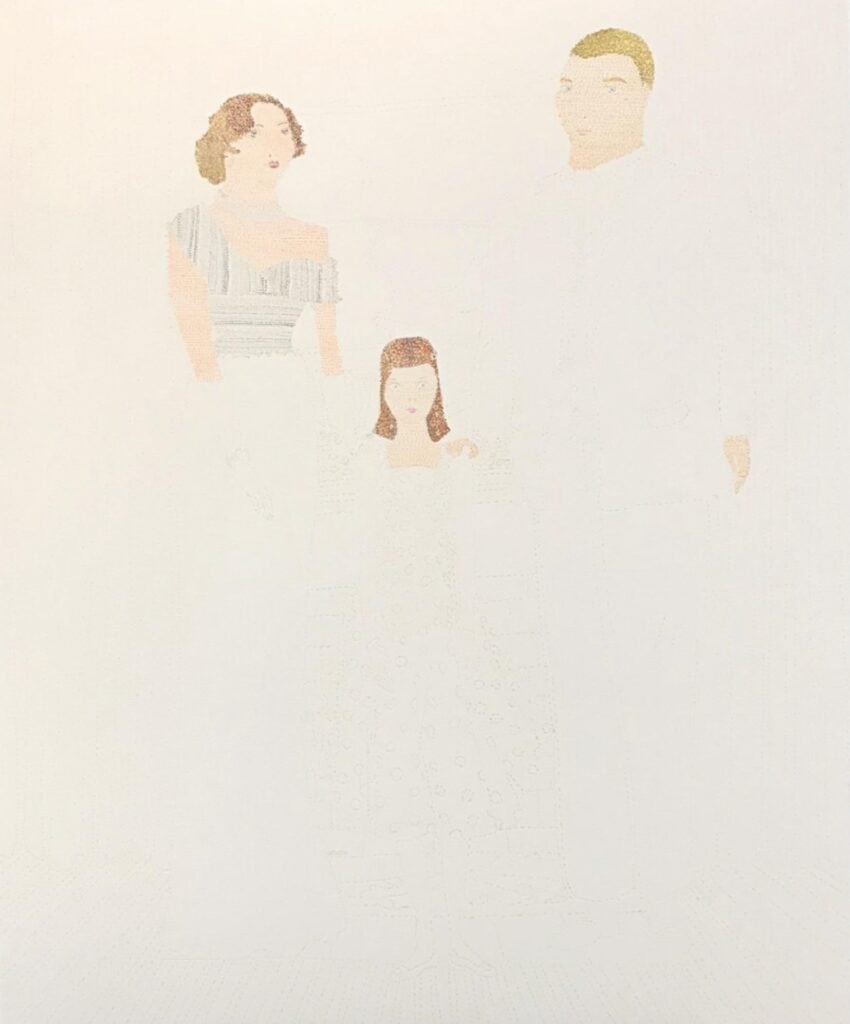
L. C. Atencio says he will not recreate an original painting after it has been sold.
The reason is partly artistic and partly a commitment to collectors. If somebody acquires an original work, L. C. Atencio wants that person to know there is no second identical version elsewhere.
Some paintings can take months to complete. Once one enters a collection, its owner possesses that particular physical work and all the individual decisions, textures and variations that came with its creation.
“No, I cannot make the same original artwork twice because that would inherently decrease the value of the original,” L. C. Atencio says, adding that he considers doing so unfair to collectors.
That position has had commercial consequences.
L. C. Atencio has declined opportunities with retail chains interested in turning his artwork into mass-produced prints for framed retail products. For an artist trying to make a living from creative work, refusing wider reproduction can mean turning away potential commercial exposure. But for L. C. Atencio, exclusivity is part of what an original artwork represents.
Influence Is Not the Same as Imitation
No artist creates without encountering the work that came before.
L. C. Atencio has studied fine art extensively and values learning from other artists, particularly when it comes to technique and the practical tools of painting.
But he draws a sharp distinction between learning how something can be done and borrowing what another artist has already imagined.
“I don’t allow imitation,” he says.
If something he creates begins to remind him too closely of work he has encountered before, he says he abandons it.
That standard is informed partly by his knowledge of art history. Familiarity with established styles and well-known imagery gives L. C. Atencio a mental reference point for what already occupies the cultural landscape. His aim is then to move away from it.
“I have no interest in creating something that has already been made,” he says. “I see no point in that.”
L. C. Atencio Sees a Culture of Repetition
The concern extends beyond painting.
L. C. Atencio believes contemporary creative industries have become increasingly dependent on established properties, remakes and concepts with proven audiences.
His argument is not that original creators have disappeared. Rather, he believes businesses often find established ideas easier to finance because consumers have already demonstrated that they will pay for them.
In his view, that creates a cycle. Businesses keep investing in familiar properties because audiences keep buying them, while original work has to compete for attention and investment.
L. C. Atencio believes artists can face a similar temptation.
Following an existing trend may seem like a clearer route to commercial success, especially when an artist can see what is already attracting attention online or selling well.
He cautions against allowing that pressure to determine the work.
“I think artists can feel compelled to do what is trending because they also want to get paid,” he says, “but I would caution against it because the audience can feel when something is not authentic.”
For L. C. Atencio, originality is therefore not simply a visual preference. It involves accepting some of the commercial uncertainty that comes with making something without an established formula.
What L. C. Atencio Thinks About AI Art
Generative artificial intelligence has introduced another dimension to the debate about originality.
L. C. Atencio takes a strongly human-centred view of the distinction between AI-generated imagery and art made by a person.
He argues that artificial intelligence cannot replicate the emotional experience behind human artistic creation.
“A.I. has no heart,” he says.
That is L. C. Atencio’s personal assessment, not a technical claim about what AI systems can or cannot generate. His concern is with the relationship between an artwork and the human experience behind its creation.
A physical painting also contains characteristics that are difficult to appreciate through a digital representation alone. Paint can sit thickly on one section of canvas and thinly on another. Light interacts differently with different parts of the surface. Individual brushstrokes remain embedded in the finished object.
For L. C. Atencio, those physical characteristics matter.
So do imperfections.
Why Imperfection Matters
“Imperfections are what make original art most relatable,” L. C. Atencio says.
The statement goes against the assumption that artistic development necessarily means eliminating every irregularity.
He argues that people are imperfect, and some of an original work’s humanity lies in the individual decisions and variations made during its creation.
A reproduction can preserve an image. It cannot necessarily reproduce the original canvas’s full physical experience.
This also helps explain why L. C. Atencio places so much importance on one-of-one work. The object is not merely a carrier for an image. Its surface is part of the artwork.
‘Tu Allumes Le Feu Dans Mon Cœur’
One painting that L. C. Atencio believes demonstrates this philosophy particularly well is Tu Allumes Le Feu Dans Mon Cœur.
The work depicts a couple embracing outside their home during a snowfall.
Yet one of its defining features is what L. C. Atencio chose not to paint.
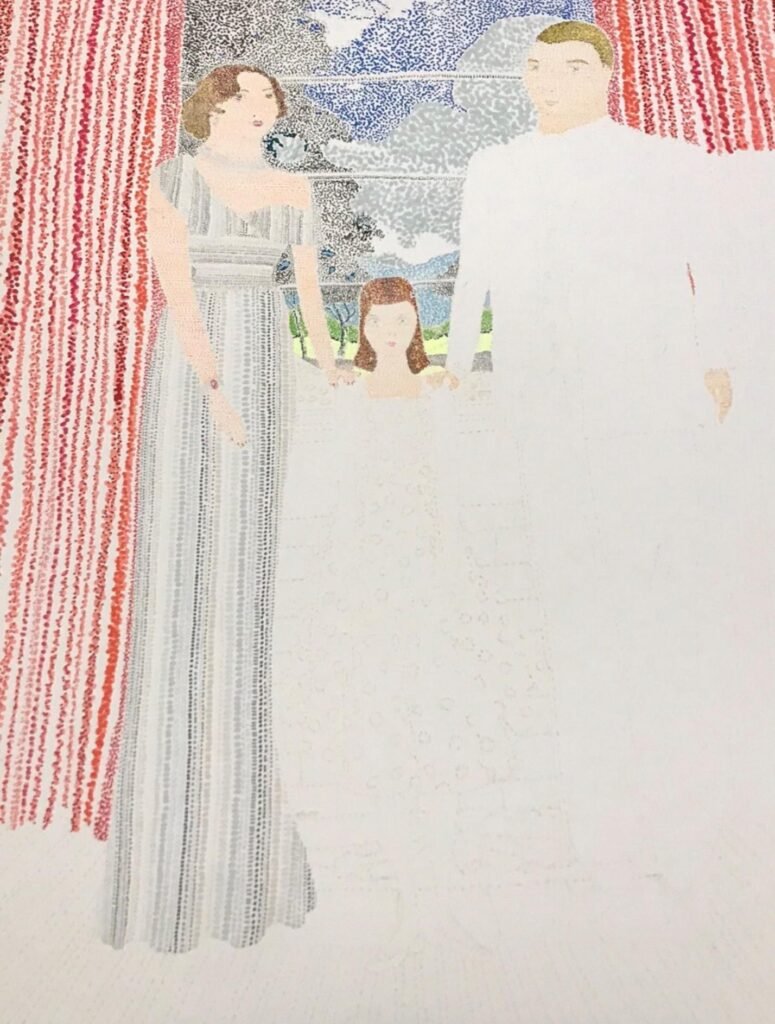
Rather than covering the entire canvas, he deliberately left substantial areas of the original white surface exposed. He applied paint only where he believed the composition required it.
For L. C. Atencio, the decision challenges the assumption that completing a fine-art painting necessarily requires covering the canvas with successive layers of paint.
Sometimes absence can become part of the image.
In Tu Allumes Le Feu Dans Mon Cœur, the untouched white canvas participates in the snowy environment rather than functioning merely as space.
The technique also demonstrates the distinction L. C. Atencio makes between technical knowledge and artistic vision. Understanding paint provides the tool; deciding not to use it across much of the canvas becomes the creative decision.
A Recognisable Style Without a Formula
Despite his emphasis on originality, L. C. Atencio recognises recurring characteristics in his work.
He points to his use of colour contrast, silhouettes and an atmosphere intended to communicate love and serenity.
But he does not regard those elements as a formula that every painting must follow.
That distinction matters because recognisability and repetition are not necessarily the same thing.
An artist can develop a visual identity without recreating the same composition. A collection can share an aesthetic language without each work becoming another version of its predecessor.
L. C. Atencio is comfortable expanding an existing collection when its distinctive style offers room for further exploration. He does not want commercial success in one style to keep him from experimenting elsewhere.
His explanation is simple:
“I believe my greatest work is the one I have not yet made.”
That outlook leaves little room for settling permanently into whichever formula happens to sell best.
The Artwork Eventually Belongs to the Viewer
Another side to L. C. Atencio’s insistence on originality.
For all the importance he places on making something distinctive, he does not want future viewers to stand before his paintings primarily thinking about him.
Asked what he would want somebody encountering one of his original paintings 50 years from now to understand about its creator, L. C. Atencio does not propose a message about his career, technique or artistic philosophy.
He would rather the viewer enjoy the work.
“I don’t want them to think of me or of what it took to get to the point where they encountered my original painting,” he says. “I would just want them to enjoy seeing it just as much as I enjoyed making it.”
That answer provides an interesting counterpoint to his determination to create something unmistakably original.
The process may be intensely personal. The commitment to one-of-one work may be deliberate. The refusal to imitate may influence every stage of creation.
But once the painting is finished and enters somebody else’s life, L. C. Atencio does not insist on controlling what that person should take from it.
The originality belongs to the artwork.
The experience belongs to whoever is standing in front of it.
