
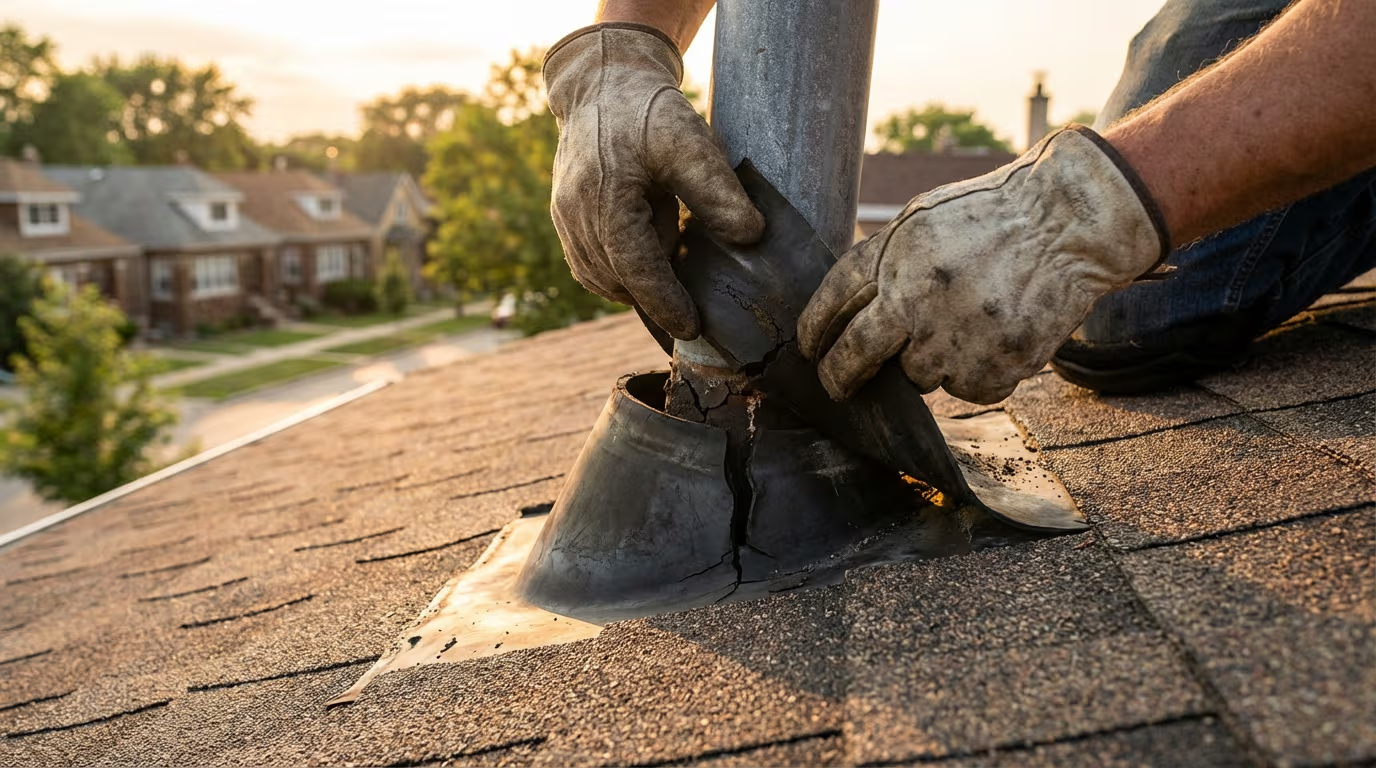
One shingle. Gone. Most homeowners glance up, shrug, and add it to the mental list — after the holidays, maybe spring. Months slip by. Meanwhile, water’s been threading through that gap the entire time, rotting lumber, feeding mold colonies, buckling the deck beneath your feet. Ceiling stains show up. By then, the rot runs deep. A $50 call has ballooned into something that’ll hollow out a savings account.
What’s Actually Happening Below the Surface
Water doesn’t need much of an invitation. A narrow gap where a shingle used to sit is more than enough — moisture slips through, hits the roof deck, and starts degrading wood almost immediately. Plywood swells. Rafters drink it in. Mold can take hold within weeks, sometimes faster when humidity’s high. The part that blindsides most homeowners? Damage rarely stays localized. It travels laterally along the deck, spreading well past the original breach. By the time you catch a musty smell in the attic or a brownish stain creeping across the ceiling, you’re already dealing with structural compromise — not a surface problem.
How Water Actually Moves Through a Roof System
It doesn’t drip straight down. That’s the trap. Water chases the path of least resistance — tracking along the underside of the deck, wicking into insulation batts, crawling toward interior wall cavities. Wood dries eventually, sure. But it doesn’t bounce back. Dried-out wet wood stays weakened. Permanently. Mold and mildew settle wherever moisture lingers, turning a structural issue into a health hazard on top of everything else. Metal fasteners rust out. Connections loosen. What started as a single missing shingle begins undermining an entire roof section.
The Domino Effect Nobody Plans For
One missing shingle is rarely the whole story. Usually it signals the roof is aging — and that the shingles surrounding it are already under stress. Skip the repair. Then the next storm peels off three more. Now there are multiple entry points and the infiltration accelerates fast. When you finally file a claim? Some carriers reject it outright — deferred maintenance, they say. You’re holding the full bill yourself. Roofers see this pattern constantly. Catch it early and it’s manageable. Let it slide, and the damage multiplies in ways that stop feeling theoretical very quickly.
The Actual Scope of Structural Repairs
Once water damage gets serious, nobody’s swapping out a single shingle anymore. Contractors have to pull up damaged decking, cut out rotted framing members, treat mold, and rip out soaked insulation — and all of that happens before new roofing material even enters the conversation. In bad cases the damage has crept into wall cavities. Drywall comes out. Trusses get sistered or replaced entirely. For homeowners staring down years of deferred maintenance and widespread deterioration, Roofing replacement addresses every compromised material at once rather than patching over problems that’ll resurface anyway. That $50 fix ten months ago? Now it’s thousands in structural remediation. The math is brutal.
Prevention Is the Only Financial Strategy That Makes Sense
Fix the shingle. Now. That’s the whole strategy — stop the cascade before it starts. After any significant storm, get eyes on the roof. Hire someone if you need to. Cracked shingles, curling edges, bare patches — any of it warrants a call to a roofing professional. Don’t wait for interior symptoms to appear. By that point the structure’s already been compromised, and you’re playing catch-up. Preventative repairs cost a fraction of what structural remediation runs. Every single time, without exception.
Conclusion
A missing shingle isn’t cosmetic. It’s an open door — and water is extraordinarily patient. It’ll rot the deck, weaken framing, and seed mold colonies long before you notice anything from inside the house. Weeks. Sometimes that’s all it takes. And if an insurer decides the damage traces back to deferred maintenance, you’re covering every dollar yourself. Act when you spot damage. The gap between early action and late action isn’t marginal — it’s the difference between a minor repair bill and a five-figure reconstruction project that nobody saw coming until it was too late.
