

Picture this – you run a small business, you’ve always played by the rules, but overnight, a new law changes what those rules actually are. This is the reality facing thousands of UK businesses and individuals right now. The Employment Rights Act 2025, new data protection duties and sweeping immigration reforms are already reshaping daily working life. Staying informed is no longer optional; it’s the difference between compliance and costly legal exposure. Let’s get real for a second — staying on top of UK law isn’t easy, especially when the rules change all the time. If you run a business or simply turn up for work each day, you’d be surprised at how often the legal landscape impacts you. Which is precisely why having a solicitor or law firm you can trust in your corner isn’t a luxury, it’s an absolute necessity.
What Is the Employment Rights Act 2025, and Why Is Everyone Talking About It?
If you haven’t heard about the Employment Rights Act 2025 yet, you soon will – because it’s changing the rules for almost every workplace in the UK.
It became law on 18 December 2025 and is rolling out in phases in 2026 and 2027. Widely seen as the most significant overhaul of employment law in a generation, it covers everything from sick pay and parental leave to zero-hours contracts, trade union rights, and workplace harassment protections.
For employees, it means stronger protections and more rights from day one of a new job. For employers, it means updated contracts, revised policies, and a much smaller margin for error when things go wrong.
The stakes could hardly be higher. Tribunal time limits are getting ever shorter, compensation caps are falling away, and fines for failure are rising. Getting it wrong is no longer merely inconvenient; it can be expensive.
Whatever your role in Watford as either an employer or employee, talking to a seasoned Employment Lawyer in Watford can put you firmly in the picture about how things really stand under the latest rules and what you should do well ahead of the next round of changes.
Ever worked a zero-hours contract and had no idea what you’d earn that week? You’re not alone. Millions of UK workers have faced that uncertainty for years. But the good news is the Employment Rights Act 2025 is finally putting guaranteed hours and proper shift notice into law.
Don’t wait until there is a dispute to find out your position.
Is the UK’s Legal Landscape About to Change Everything for You?
The UK is going through one of the biggest legal shake-ups in living memory, and most people have no idea it’s happening.
From April 2026, a wave of new laws will quietly be reshaping the rules around employment, data privacy, immigration, and business compliance. Some of these changes have already kicked in. Others are rolling out month by month through 2026 and into 2027.
Whether you’re an employee who wants to know your rights, a small business owner juggling contracts and compliance, or a company director trying to stay on the right side of the law, these changes affect you directly
The problem is, most people only find out about legal changes when something goes wrong. By then, the damage is often done, a tribunal claim, a regulatory fine, or a contract dispute that could have been avoided entirely.
Some of these changes are already in force. Others are weeks or months away. Either way, the time to understand them is right now, not when it’s too late.
What New Rights Are Workers Actually Getting in 2026?
This is the bit the country’s employees have been waiting for, and these changes will be far-reaching, even though many don’t yet fully appreciate their impact.
Under the Employment Rights Act 2025, workers are being given a clutch of new rights that rebalance the relationship between worker and employer. Here is what is changing and when:
From 6 April 2026, Statutory Sick Pay (SSP) will become accessible to more staff without an income floor and without the current three-day wait. So whether you catch flu on your first day in a new job or suffer a work-related accident just after starting, you will now receive sick pay from the outset, something that was previously impossible.
Parental leave is also changing: employees are now entitled to Paternity Leave and Unpaid Parental Leave from their very first day; previously, you had to wait before qualifying.
Bereaved partners are also getting new protections from April 2026. Fathers and partners can take up to 52 weeks of Bereaved Partners Paternity Leave if the mother/primary adopter of their child passed away within 1 year of birth/adoption.
Whistleblower protections are being strengthened too from 6 April 2026, reporting workplace sexual harassment is now classified as a qualifying disclosure, meaning workers are legally protected from dismissal/retaliation.
And from October 2026, every employer, whatever the size of their business, will be required to tell workers about their right to join a trade union. Tribunal claim windows will also extend from three months to six months, giving employees more time to pursue legitimate claims.
These are no small tweaks. They are an actual and enduring shift in what staff can anticipate from their bosses.
Your family life doesn’t pause for legal change either. Whether you’re navigating a separation or protecting your children’s future, speaking with an experienced family solicitor alongside understanding your employment rights can make a real difference.
If you’re unclear as to how these changes impact your particular circumstances, reaching out for a chat with a good solicitor in Watford could make all the difference. Knowing your rights, clearly, before there becomes a problem, is always the best possible place to begin.
What Must Businesses Do Now and What Happens If They Don’t?
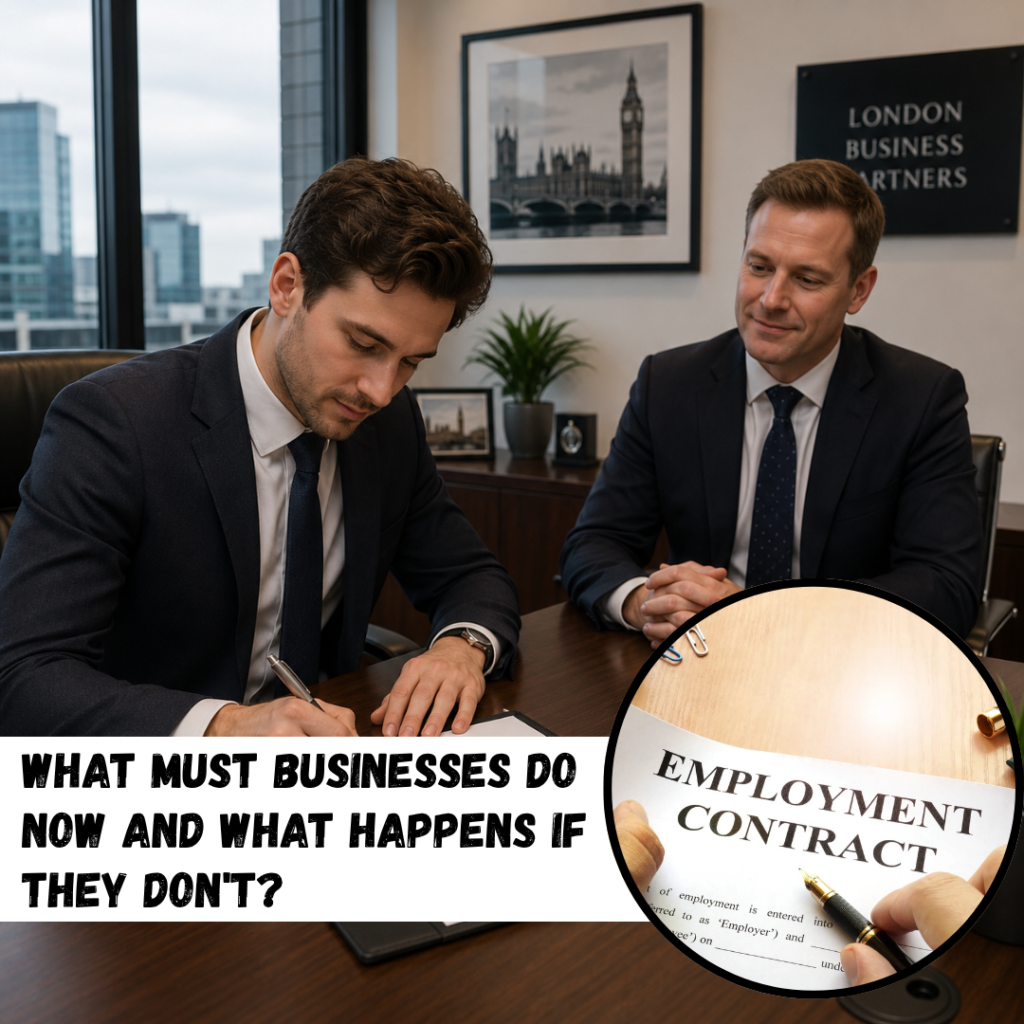
Start With Your Contracts – Every employment contract needs a fresh pair of eyes. Right now, many standard contracts in use today simply don’t reflect what the law now requires. Day-one rights for parental leave, updated sick pay terms, and zero-hours protections all need to be reflected in writing before the relevant deadlines hit. Businesses that hand new starters outdated contracts are already technically behind, and that’s a risk no employer should be comfortable taking.
Update Your Policies & Procedures – It’s not just contracts; your internal HR policies around harassment, whistleblowing, tipping, and trade union rights all need a look-over too and should be rewritten where necessary. From October 2026, employers must actively inform workers of their right to join a trade union. This needs to be built into your onboarding process, not left as an afterthought. Employers must also keep detailed records of annual leave and holiday pay going back at least six years from April 2026. If you’re not tracking this properly right now, you’re already behind.
Know What ‘Fire-And-Rehire’ Now Means For You – The practice of firing employees and rehiring them on worse terms has effectively been outlawed from October 2026; it’ll only be permitted in genuine cases where a business faces serious financial difficulty with no alternatives available. If your business has ever relied on this practice as a negotiating tool, that option is gone, and flexibility clauses in contracts are now more important than ever.
Understand the Financial Consequences – Protective award for failure to carry out collective redundancy consultation correctly doubled (from 90 days to 180 days pay per employee). Cap on unfair dismissal compensation removed (from Jan 2027), so one bad dismissal could end up costing your business more than ever before. Claims to employment tribunal can now be brought up to six months after an incident, giving ex-employees more time to come forward against you.
Non-compliance is no longer just an HR headache; it’s a serious financial and reputational risk that can hit businesses of any size.
The businesses that will sail through 2026 are those who are acting now, reviewing, updating and preparing instead of waiting until a deadline forces their hand.
Are Zero-Hours Contracts Finally Coming to an End?
First, What Actually Is a Zero-Hours Contract?
A zero-hours contract is an arrangement where an employer isn’t obliged to offer any minimum working hours, and a worker isn’t obliged to accept any work offered.
For years, they have been common in hospitality, retail, delivery, care work and the gig economy sectors where businesses wanted maximum flexibility, and workers often had little choice but to accept it. On paper, they offered flexibility for both sides; in reality, millions of workers were left not knowing from one week to the next whether they would earn enough to pay their bills.
What Is Actually Changing in 2026?
The government isn’t banning zero-hours contracts outright, but it is fundamentally changing how they work and stripping away the one-sided power they gave employers. Workers on zero-hours and variable-hours contracts will now have the right to guaranteed hours based on their average working pattern over a reference period, meaning if you regularly work 30 hours a week, your employer can’t simply cut that without consequence.
Employers must give reasonable notice of shift changes and cancellations, and workers must be compensated when shifts are cancelled at short notice (something that was never legally required before).
What does this mean for gig economy workers?
Delivery drivers, freelance couriers, beauty therapists, and platform workers who have long operated in a legal grey area are now firmly within the scope of these new protections. The government has confirmed that agency workers will receive the same guaranteed hours protections, closing a loophole that many businesses have used to avoid employment obligations. For individuals who have built their livelihoods around gig work, this brings long-overdue financial stability and predictability that simply didn’t exist before.
Financial uncertainty at work often spills into personal life, too. If relationship breakdown is part of your picture right now, Divorce and Family Law Solicitors can help you protect what matters most while everything else is changing around you.
What should businesses in these sectors do right now?
Any business relying heavily on zero-hours or casual contracts needs to urgently review its workforce model. The old way of operating isn’t legally safe anymore. Start tracking your workers’ average hours now, you have hard evidence when the guaranteed hours rules bite. Being caught out by the deadline will be expensive. Businesses should also review their shift scheduling and cancellation processes. Compensation for late-cancelled shifts needs to be factored into their budgets.
Are Workplaces Doing Enough to Protect Employees from Harassment?
What Has Actually Changed?
- Workplace harassment laws have been significantly strengthened under the Employment Rights Act 2025, and the bar for what employers must do has been raised considerably higher than before.
- From October 2026, simply having an anti-harassment policy sitting in a drawer is no longer enough; employers must now take “all reasonable steps” to actively prevent harassment from happening in the first place.
- Crucially, this duty now extends to third-party harassment, meaning businesses are legally responsible for protecting their staff from harassment by customers, clients, and contractors too.
What Does This Mean for Workers?
- From 6 April 2026, reporting workplace sexual harassment is now a protected whistleblowing disclosure, meaning you can’t be dismissed, demoted, or treated unfairly for speaking up.
- Workers finally have real, enforceable protection, not just a policy on paper but a legal guarantee that their employer must act, not just acknowledge.
What Must Employers Do Right Now?
- Review and rewrite your harassment policies immediately; vague, outdated documents won’t satisfy the new “all reasonable steps” standard that regulators will be measuring you against.
- Train your managers, brief your teams, and document everything because if a harassment claim lands on your desk, you’ll need to prove you took genuine preventative action, not just reactive measures.
How Will the Immigration Law Overhaul Affect Who You Can Hire?
Hiring has never been more complicated, and the new immigration rules are about to make it even more demanding for UK businesses.
The Border Security, Asylum and Immigration Act 2025 has significantly extended who businesses are responsible for checking. It’s no longer just about your ‘direct’ employees; right-to-work (RTW) checks are now extending to contractors, sub-contractors, gig economy workers, and zero-hours staff, whether you engage them directly or indirectly. Get it wrong, and you face both civil and criminal sanctions.
And the costs are rising too, as the Immigration Skills Charge jumped up by 32% back in December 2025, making sponsoring overseas workers considerably more costly than it was just months ago.
For individuals, the road to settlement is getting more difficult. The qualifying period for most migrants is rising from five to ten years, with tighter rules on earning, English language proficiency and clean criminal records.
International business visitors are also impacted. From February 2026, non-visa nationals can’t enter the UK without an approved Electronic Travel Authorisation – something many businesses with overseas clients or colleagues aren’t even aware of yet!
These changes need to be addressed, especially if you employ international staff or contractors.
If cost is an issue, did you know that some people are eligible for help through Immigration Solicitors Legal Aid, meaning that expert legal advice may be more affordable than many think?
Are UK Businesses Ready for the New Data Privacy Rules?

What’s Changed & Why It Matters:
The Data Use and Access Act 2025 is one of the biggest updates to UK data protection law since GDPR, and it’s already setting urgent compliance deadlines you can’t ignore.
Unlike GDPR, the Act doesn’t replace current data protection laws; instead, it strengthens the existing framework. It brings some welcome, practical changes that every organisation processing personal data needs to start preparing for today.
The first and probably most daunting deadline has already passed. Every organisation handling personal data was expected to have a formal complaints process in place by 19th June 2026, with zero exceptions for SMEs.
What Does It Really Look Like In Practice?
Hiding a privacy policy at the bottom of your website isn’t enough anymore; you’ll need a written complaints procedure, an appointed ‘responsible person’, and a documented log of every complaint received and dealt with.
Automated and AI-driven decisions that seriously impact individuals must now be explainable. You’ll need to map out exactly when those decisions are being made and document the safeguards around them clearly.
When it comes to Subject Access Requests (SARs), there are clearer rules around pausing your clock, giving businesses some breathing room, but much higher expectations around transparency and comms.
What should you do immediately?
If your data complaints process isn’t in place yet, this must be your immediate top priority. There are no exemptions here that will fly with the regulators.
Assign a responsible person internally to “own” data protection, not just a piece of paper. Someone accountable for making sure complaints are handled promptly and appropriately.
Know New Obligations as a Company Director?
Identity Verification is No Longer Optional – If you’re a UK company director, verifying your identity with Companies House is now a legal obligation, not just a recommendation, or something you should consider down the road, but something you have to do right now.
Existing directors must complete identity verification by the date of their first confirmation statement due after 18 November 2025. If that deadline has passed and you haven’t done it, chances are you’re non-compliant already.
And there’s another group of people who need to know about verification too: Persons With Significant Control (PSCs) who aren’t directors have their own separate window they must verify within the first 14 days of their birth month during 2026, a detail that many PSCs are completely unaware of.
Corporate Directors Are Being Shut Down – The era of using corporate entities as company directors looks set to come to an abrupt halt. New restrictions mean that unless you’re a UK-registered corporate director with a board consisting entirely of natural persons, you won’t be allowed to operate in the role going forward.
Businesses that currently use non-UK corporate directors are going to have to start thinking about reorganising their board arrangements sooner rather than later; delaying until the actual implementation date arrives at your peril.
Financial Reporting Standards Are Going Up – For premium listed companies, boards must now proactively monitor and report on the effectiveness of their internal financial controls from periods starting in January 2026 and onwards.
This isn’t a tickbox exercise; directors must identify any deficiencies, write those deficiencies down truthfully, then explain what steps they’re taking to remedy them in their annual report.
The Message For Every Company Director In 2026 Is Clear – Your personal accountability has increased. Your obligations are clearer, and the consequences of ignoring them are more serious than ever before.
While you’re reviewing your legal position, it’s also worth considering what happens to your assets if the unexpected occurs. Will Writing Services Watford can help ensure your wishes are protected, whatever the future holds.
What Should Businesses & Individuals Actually Do Right Now to Stay Compliant?
If You Are An Employee Or Worker: Read your current employment contract closely and ensure it reflects your day-1 rights around parental leave, sick pay & flexible working. If it doesn’t, then raise it with your employer in writing. Know your whistleblower protections if you experience harassment, financial wrongdoing or any other form of workplace misconduct, then you’re better protected than ever before from speaking up. Mark October 2026 on your calendar; that’s when Tribunal time limits double to 6 months, trade union rights strengthen and tipping protections come into effect, each of which affects you personally.
If You’re A Small Business Owner: Audit every working arrangement in your business right now, employees, contractors, freelancers & gig workers fall under new obligations & assuming “we’re good” is a risk you can no longer afford to take. Get your employment contracts reviewed and rewritten by a professional. Outdated contracts are one of the most common (and costliest) compliance mistakes businesses are making right now, heading into these changes. Build the rising costs of immigration sponsorship, skills charges and potential tribunal claims into your 2026/7 finances. These aren’t optional costs; these are legal realities.
If You’re A Company Director: Complete your Companies House identity verification now if you haven’t already done so. This isn’t optional, and there are consequences for non-compliance. Review your board structure if you use corporate directors. Restrictions are coming, and restructuring takes time, so the sooner you begin, the less disruptive it will be. Assign clear internal ownership of data protection, harassment prevention and employment law updates. These can’t rest with anybody in your org and hope for the best.
Conclusion
This isn’t a distant forecast. The UK’s legal landscape in 2026 is already shifting beneath our feet. The changes we’ve walked you through in this article aren’t proposals sitting in some government inbox; they’re live, landing in phases throughout this year, and they’re affecting real people and businesses right now.
For workers, this is genuinely good news. Stronger sick pay, day-one family rights, better harassment protections and longer windows to seek justice are all steps in the right direction. The rights that millions of people deserved for years are finally becoming a reality.
For businesses, the message is just as clear – only it carries more urgency. Outdated contracts, missed identity verification deadlines, weak harassment policies, and poor data compliance are no longer just administrative oversights. They’re financial and reputational risks that can hit hard and fast, often when you least expect them.
The businesses and individuals that will come out of this period stronger aren’t necessarily the ones with the deepest pockets. They are the ones that took the time to understand what changed, acted early, and made compliance part of how they operate every single day.
2026 is a reset. The rules have changed, expectations have risen, and the gap between those who are prepared and those who aren’t will only widen as the year goes on.
So the real question isn’t whether these changes affect you – they do. The question is what you’re going to do about it today.
At Fosters Legal Solicitors, we help individuals and businesses navigate exactly these kinds of challenges—clearly, practically, and without unnecessary jargon. Get in touch with our team today and let us help you stay ahead of the curve.
