
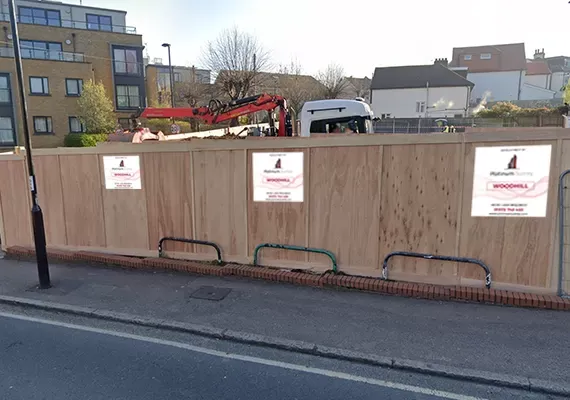
Site hoarding boards serve a clear practical purpose, securing a construction site and protecting the public from the activity within it. But treating them as nothing more than a barrier misses a genuine opportunity. With the right design approach, site hoarding boards can promote a brand, communicate with the local community, and add visual interest to an otherwise unremarkable stretch of fencing, all while still doing the essential job of keeping the site secure.
Why Site Hoarding Boards Deserve More Design Thought Than They Usually Get
It is easy to treat hoarding as a purely functional requirement, something that needs to go up to satisfy site security and safety regulations, with little further thought given to how it looks or what it communicates. But site hoarding boards often stay in place for months, sometimes years, and are seen repeatedly by the same local residents, commuters, and passers-by. That repeated exposure is genuinely valuable if the design makes use of it.
Protection: Getting the Practical Requirements Right First
Before any promotional or design thinking comes into play, hoarding panels need to meet the basic practical requirements that justify their existence in the first place.
Core Protective Requirements for Hoarding Signage
- Adequate height to prevent unauthorised access and obscure sightlines into the site
- Secure fixing methods that withstand wind loading and prevent panels coming loose
- Robust materials that hold up to weather exposure over the duration of the project
- Compliant gates and access points that maintain security without compromising the rest of the barrier
- Clear safety signage required by site regulations, displayed prominently and legibly
Getting these fundamentals right is non-negotiable, and any design or promotional content added to the hoarding needs to work within these practical constraints rather than compromising them.
Promotional Design Ideas That Work Well on Hoarding Signage
Once the protective basics are in place, hoarding panels become a genuinely useful promotional canvas. The ideas that work best tend to share a common thread, they respect the fact that people will see this content repeatedly, and they reward that repeated attention rather than relying on a single glance.
| Content Idea | What It Achieves |
| Architectural renders of the finished development | Builds excitement and helps the public visualise what is coming |
| Brand storytelling panels | Introduces the developer or contractor to the local community |
| Progress photography updated periodically | Gives passers-by a reason to look again as the build progresses |
| Clear contact details and a call to action | Generates genuine enquiries from interested members of the public |
| Local community acknowledgement | Builds goodwill by recognising the disruption the build causes |
Designing for Both Day and Night Visibility
Hoarding panel are seen at all times of day, and good design accounts for this. In busy urban areas particularly, panels need to remain legible whether viewed in bright daylight or under streetlighting in the evening.
Practical Considerations for All-Hours Legibility
- High-contrast colour combinations that hold up well in low light
- Avoiding overly dark colour schemes that disappear after dusk
- Reflective or light-coloured elements that catch available light at night
- Adequate font size for key messages, readable from a reasonable pedestrian distance
Balancing Branding With Genuine Community Value
The most effective hoarding panel designs tend to strike a careful balance between promoting the development or the company behind it, and offering something of genuine value or interest to the people who pass it every day.
Ways to Add Community Value Within the Design
- Including information about local employment opportunities created by the build
- Acknowledging specific community concerns and explaining how they are being addressed
- Commissioning local artwork or design elements that reflect the character of the area
- Sharing a realistic timeline so residents know what to expect and when
This approach tends to reduce the likelihood of vandalism or graffiti, since hoarding that is seen as a genuine part of the community’s environment, rather than an imposed inconvenience, is generally treated with more respect.
Practical Production Considerations for Hoarding Panel
When it comes to actually producing the panels, several practical factors affect both the quality and durability of the finished result.
What to Confirm Before Production Begins
- The correct panel size and format for the specific hoarding system being used
- Weather-resistant printing and lamination appropriate for the expected duration of the installation
- Clear instructions for installation, particularly if multiple panels need to align correctly to form a continuous image
- A plan for updating panels at key milestones, if progress photography or countdown content is part of the design
How Long Hoarding Panel Typically Need to Last
Construction projects can run for extended periods, and hoarding panel need to be specified with the expected duration in mind. A short residential refurbishment may only need hoarding for a few months, while a major commercial development could require panels to remain in place and looking presentable for several years, a significant difference that affects material choice, lamination, and overall build quality.
Conclusion
Hoarding panel do not need to be a purely functional necessity tolerated by the local community until the building work is finally finished. With thoughtful design that respects the practical requirements while adding genuine promotional and community value, hoarding panel can protect a site effectively and contribute something positive to the area around it at the same time. Hoarding Print Company works with developers and contractors who want exactly this combination, producing hoarding panel that protect, promote, and add real value throughout the life of a project.
Author Bio: Nimesh Kerai
Nimesh Kerai, the Printing Head at Hoarding Printing Company London, has a proven track record of delivering large format prints of unparalleled quality to customers. He is a technical expert as well as deeply understands the market and trends. His contribution to the company’s growth is undeniable. He often loves to share his extensive industry knowledge and market insights with a larger audience through interesting blog posts.
