
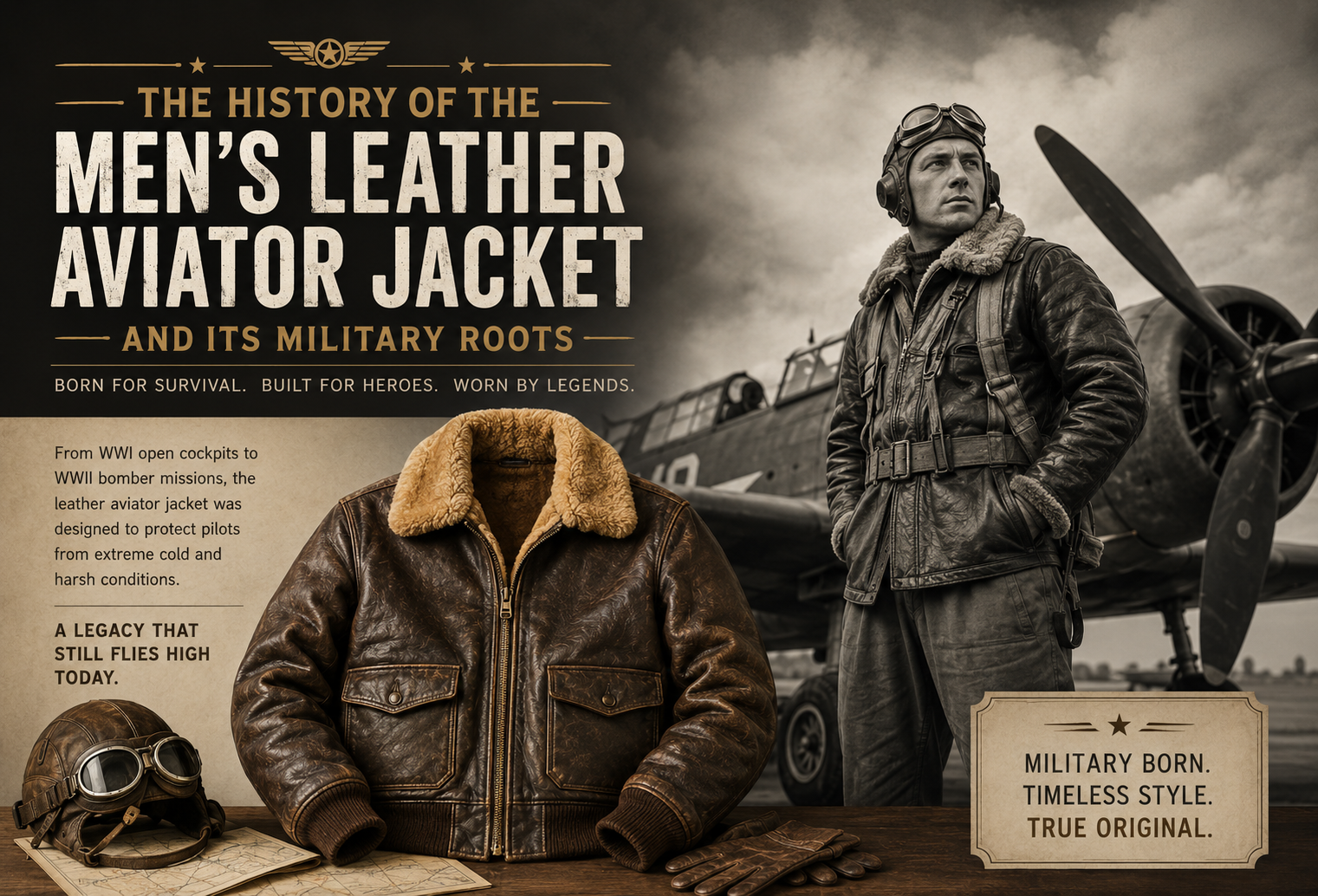
Picture a pilot in an open cockpit. It’s freezing cold. He needs a jacket that can save his life.
That’s how the men’s leather aviator jacket was born. It wasn’t made for style. It was made for survival.
Today, this jacket sits in almost every man’s closet. But its roots go back over 100 years, to the battlefields and skies of war. Let’s look at how a piece of army gear became one of the most loved jackets in the world.
Why Pilots Needed Leather in the First Place
Early planes had no roof. No walls. No heat. Pilots sat out in the open air, thousands of feet up, where the wind cuts like a knife.
Cotton and wool jackets didn’t stand a chance. The wind ripped right through them. Pilots got cold fast, and cold hands make it hard to fly a plane.
Leather solved this problem. It blocked wind. It held in body heat. It didn’t rip easily, even in rough weather.
World War I: The Jacket’s First Flight
The story really starts around 1915. The British Royal Flying Corps needed jackets for their pilots. So did other air forces across Europe.
These early jackets were thick and heavy. Some were made from horsehide. Others used sheepskin, with the wool turned inward for warmth.
They didn’t look like the sleek jackets we know today. But they did the job. Pilots stayed warmer, and warmer pilots flew safer.
An American company called G8 helped shape early designs, but it was the U.S. Army that pushed the jacket into its most famous shape.
The A-2 Jacket: A Legend Is Born
In 1931, the U.S. Army Air Corps created a jacket called the A-2. This is the jacket most people picture when they hear “aviator jacket” today.
The A-2 had a few key features. It had a fitted waist. It had knit cuffs and a knit waistband. It had a simple front zipper instead of buttons.
Every part had a job. The tight fit kept cold air out. The knit cuffs sealed around the wrist. The zipper worked fast, even with gloves on.
Pilots in World War II wore the A-2 constantly. Many painted art on the back, like pin-up girls or squadron symbols. These jackets became personal, almost like a diary worn on the body.
The B-3: Built for Extreme Cold
Not all pilots flew in planes with heated cabins. Bomber crews often sat in freezing metal planes for hours at a time.
For them, the Army made the B-3 jacket. It used thick sheepskin, with fur on the inside and out. It was bulky, but it worked.
The B-3 wasn’t pretty. It wasn’t meant to be. It was built to keep a man alive at 20,000 feet, in temperatures far below zero.
This jacket shows us something important. Every stitch on a real leather aviator jacket had a reason. Fashion came later. Function came first.
From War Gear to Everyday Wear
After World War II, soldiers came home. They kept their jackets, and they wore them on the street.
People noticed. The jacket looked tough. It looked cool. It had a story behind it, even if most people didn’t know the full history.
By the 1950s and 1960s, the jacket had left the military world completely. Movie stars wore it. Musicians wore it. It became a symbol of rebellion and freedom.
Steve McQueen wore one. So did other icons of that era. The jacket said something without any words: this person is strong, and this person doesn’t follow the crowd.
Why the Design Still Works Today
Good design doesn’t need to change much. The leather aviator jacket proves this. The shape from the 1930s still looks right in 2026.
Here’s why the old features still matter:
- The fitted body still keeps cold wind out.
- The ribbed cuffs and hem still seal in warmth.
- The front zipper still beats fumbling with buttons.
- The shirt-style collar still folds up for extra cover.
None of these features are just for looks. They all came from a real need, decades ago. That’s part of why the jacket still feels honest.
What to Look for in a Good Aviator Jacket
Not every jacket sold today respects this history. Some use thin, fake material. Some skip the small details that made the original design work.
A strong men’s leather aviator jacket should have real leather, or at least high-quality faux leather. It should have proper knit cuffs, not just a plain hem. The stitching should be tight and even, not loose or messy.
Fit matters too. The jacket should sit close to the body, not baggy. A loose aviator jacket loses the warmth and the sharp look that made this style famous in the first place.
At Glory Store UK, this history shapes how the jackets are made. Each leather aviator jacket in the collection keeps the classic military details alive, while fitting into modern daily wear. You can check out the full range of Leather Aviator Jackets to see these classic features up close.
A Jacket With a Real Past
Most jackets in stores today don’t have a story. This one does. It survived two world wars before it ever walked down a city street.
That’s rare in fashion. Most trends fade in a year or two. This jacket has lasted over a century, and it still looks right with jeans or dress pants.
So next time someone wears a leather aviator jacket, they’re wearing more than a jacket. They’re wearing a small piece of flight history, stitched into leather and worn on their back.
