
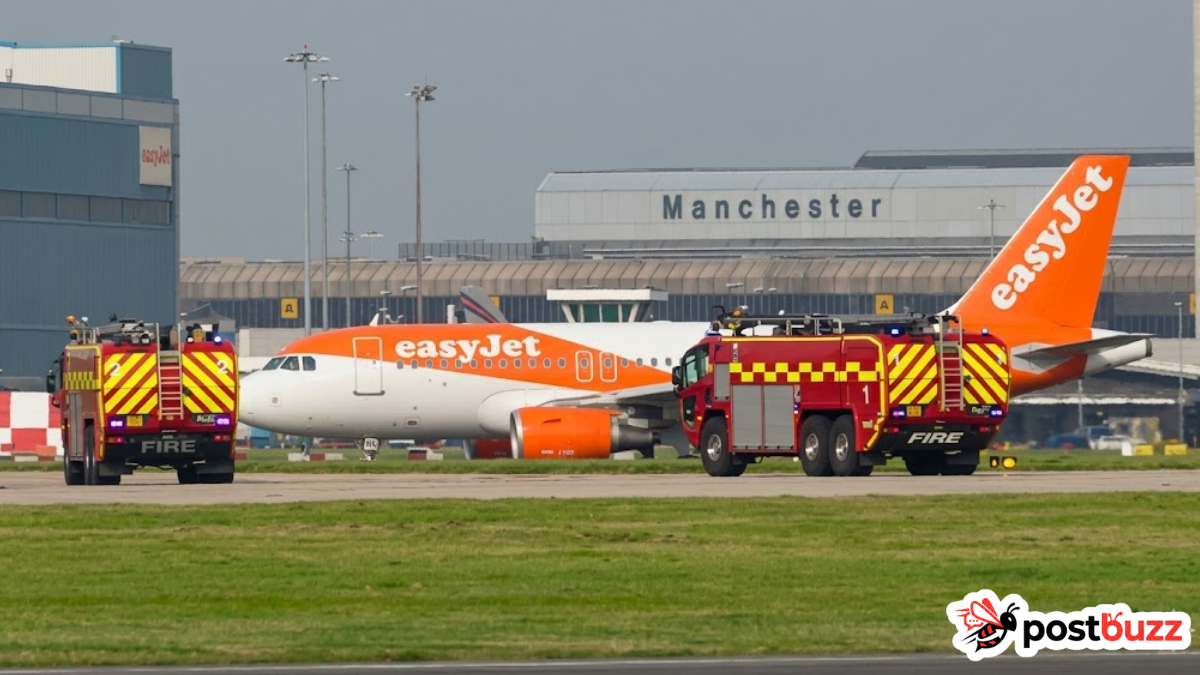
A Routine Flight Takes an Unexpected Turn
Most passengers boarding a short evening flight from Copenhagen to Manchester expect nothing more eventful than a couple of quiet hours in the air, a snack, and a smooth descent. That assumption changed on October 27, 2025, when the easyJet flight U2238 emergency landing Newcastle incident unfolded mid-journey, turning what should have been a routine short-haul service into a fast-moving story that quickly spread across aviation forums, news outlets, and flight-tracking communities.
What began as a normal departure soon escalated after a passenger on board required urgent medical attention partway through the flight. The cabin crew responded immediately, the pilots requested priority handling from air traffic control, and the aircraft was redirected away from its planned route toward the nearest suitable airport. This article walks through exactly what happened, in chronological order, relying on verified statements and credible reporting rather than the speculation that has circulated online since the event.
Flight Overview: EasyJet U2238 and EZY2238 Explained
EasyJet flight U2238 was operating a scheduled commercial service between Copenhagen Airport in Denmark and Manchester Airport in the United Kingdom, flown using an Airbus A320, one of the most widely used short-haul aircraft in European commercial aviation. The flight is referenced under two different labels depending on the source: U2238, which is the ticketing code passengers see when booking, and EZY2238, the designator used on radar systems and by air traffic controllers when communicating with the cockpit during the flight.
This dual-naming convention is standard across the airline industry but frequently causes confusion among readers searching for details after an incident like this one. Some online discussions have mistakenly mixed up this flight with unrelated easyJet services that share similar numbering. To be clear, the easyJet flight U2238 emergency landing Newcastle event refers specifically to the Copenhagen-to-Manchester route on the night of October 27, 2025, and not to any other flight operating under a comparable code elsewhere in the network.
Full Timeline of the Diversion
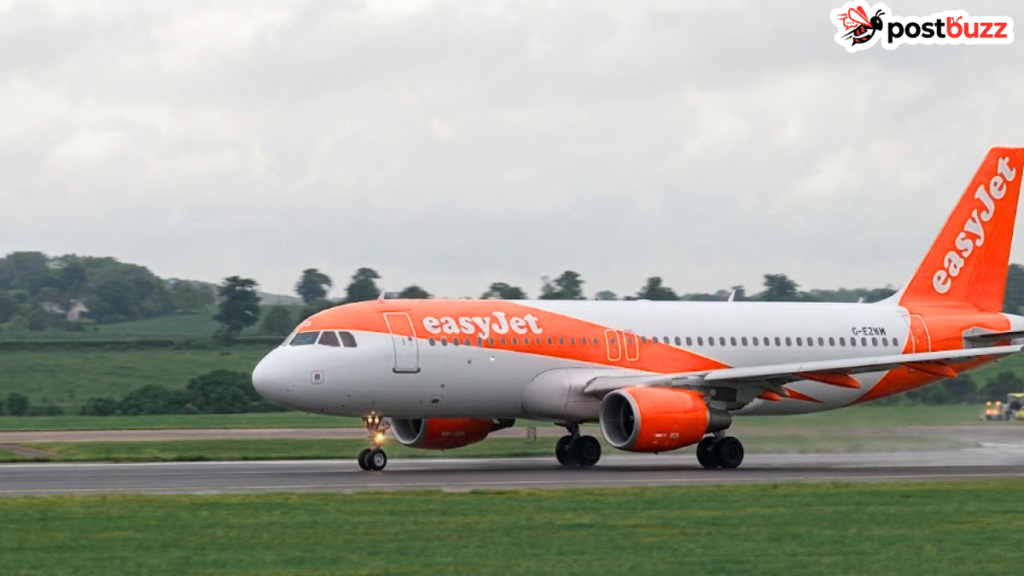
The aircraft pushed back from Copenhagen later than its originally scheduled departure time, climbing normally through its initial ascent before a passenger’s condition began to deteriorate during the cruise phase of the flight. Cabin crew assessed the situation quickly and alerted the flight deck, prompting the pilots to declare an emergency and request priority clearance toward the nearest airport capable of handling the situation safely and efficiently.
Rather than continuing on toward Manchester as planned, the crew redirected the aircraft toward Newcastle International Airport, descending and lining up for an unscheduled approach. Before initiating the descent, the pilots transmitted Squawk 7700 on the aircraft’s transponder, a universal code that immediately flags a flight as a general emergency to every air traffic control facility monitoring the surrounding airspace. The plane touched down at approximately 10:52 PM local time, where paramedics were already positioned on the tarmac waiting to assist.
The aircraft was carrying 178 passengers and six crew members at the time of the diversion, all of whom landed safely in Newcastle without further incident. Notably, another aircraft, Air France flight AFR1558, was placed in a holding pattern overhead so that the easyJet flight U2238 emergency landing Newcastle could proceed without delay, illustrating how quickly air traffic control prioritized the situation once the emergency was declared. After roughly an hour on the ground while the passenger received care, the flight departed Newcastle again just after midnight and reached Manchester around twenty-seven minutes later, completing the journey with only a modest delay overall.
Why Newcastle Was Chosen as the Diversion Point
Newcastle International Airport sits close to the natural flight path connecting Copenhagen and Manchester, making it a logical and time-efficient diversion target once the medical emergency was identified. Pilots are trained to select the nearest airport capable of safely accommodating an unscheduled landing, weighing factors such as distance from the current position, runway length and suitability, weather conditions, and the availability of emergency medical services on the ground at the chosen location.
In this particular case, Newcastle offered a strong combination of proximity and readiness, allowing paramedics to reach the aircraft within minutes of touchdown rather than waiting on standby for an extended period. This balance of speed and preparedness is largely why the easyJet flight U2238 emergency landing Newcastle situation resolved so efficiently compared with incidents that require longer diversions or airports with fewer emergency resources immediately on hand.
What Caused the Emergency: The Medical Situation Clarified
Official statements from the airline confirm that the diversion was triggered by a passenger requiring urgent medical attention during the flight, not by any technical or mechanical fault with the aircraft itself. Several lower-quality websites circulating online have incorrectly described the cause as a technical issue, likely due to AI-generated content repeating unverified claims without checking primary sources. This article relies instead on confirmed airline statements and established news reporting to ensure accuracy throughout.
Cabin crew receive extensive training to recognize early signs of medical distress and to respond using onboard first-aid equipment, oxygen supplies, and basic life-support procedures when necessary. Once the situation onboard was assessed as serious enough to require professional medical care beyond what could be provided in the cabin, the decision to divert was made swiftly, reflecting standard aviation protocol that consistently prioritizes passenger wellbeing above schedule adherence or operational convenience.
Once the aircraft landed, paramedics from the North East Ambulance Service boarded almost immediately and took over from the cabin crew, who handed over a summary of the symptoms observed and the care already administered in flight. The affected passenger was then transferred to the Royal Victoria Infirmary, a major hospital in Newcastle equipped to handle emergency medical cases, ensuring continuity of care from the moment the aircraft reached the gate.
EasyJet’s Official Response to the Incident
EasyJet issued a public statement shortly after the aircraft landed safely in Newcastle, confirming that flight EZY2238 had diverted “due to a customer onboard requiring urgent medical attention.” The airline also thanked its flight and cabin crew for their swift, professional handling of the situation, and reassured passengers and the public that the matter had been managed calmly and in line with established emergency procedures throughout the diversion.
This kind of prompt, transparent communication has become standard practice across the airline industry following any unscheduled diversion or emergency landing. By issuing a clear statement quickly, EasyJet helped limit the spread of inaccurate secondhand reporting and speculation, while also reinforcing public confidence in how seriously the airline treats passenger safety whenever an unexpected situation arises during one of its scheduled flights.
EasyJet also addressed the practical impact on travelers, describing the disruption as outside the airline’s control and classifying it as an extraordinary circumstance under standard aviation regulations. This distinction matters to passengers because it affects how compensation claims for delays are typically handled, since diversions triggered by medical emergencies are generally treated differently from disruptions caused by airline operational failures.
Passenger Experience During the Diversion
Accounts shared by passengers who were onboard describe an initial wave of uncertainty as the aircraft unexpectedly changed course, followed by a noticeable sense of reassurance once the crew explained the situation calmly and clearly over the cabin intercom. Several travelers later noted that regular, honest updates from the cabin crew throughout the diversion played a significant role in easing tension and preventing panic during an otherwise stressful and unfamiliar moment in the flight.
Once the aircraft landed safely on the ground in Newcastle, passengers waited patiently as paramedics boarded and attended to the affected individual before the flight was cleared to continue its journey. Many travelers later commented that the professionalism shown throughout the easyJet flight U2238 emergency landing Newcastle incident left them feeling genuinely confident in the crew’s ability to handle unexpected emergencies competently and without unnecessary delay or confusion.
How Emergency Landings Work in Commercial Aviation
Not every diversion signals danger to the aircraft itself, and this case is a clear example of that distinction. In most situations, including this one, an emergency landing is a precautionary, protocol-driven response to a passenger health issue rather than evidence of any mechanical failure or structural concern with the plane. Flight crews undergo extensive, recurring training specifically designed to help them make rapid, safety-first decisions under real-world pressure and time constraints.
Diversions triggered by onboard medical emergencies happen more frequently across the aviation industry than most passengers realize, and the overwhelming majority conclude without serious incident, exactly as seen here. Once the affected passenger received appropriate care on the ground, the aircraft was inspected, cleared, and able to safely continue on to its original destination shortly afterward, underscoring how well-established these emergency procedures generally function in practice.
Verifying the Flight: Tracking Tools and Common Confusion
Readers wanting to independently confirm details of the easyJet flight U2238 emergency landing Newcastle event can check historical flight data through publicly available tracking platforms such as FlightAware, searching under either the U2238 or EZY2238 designato to view departure times, routing, and the recorded diversion itself. These tools offer a reliable way to cross-check claims found across different news articles and social media posts discussing the incident.
It is worth noting that a separate, much shorter easyJet route operating between Newcastle and Bristol uses a similarly formatted flight code, which has led to some inaccurate or confused reporting elsewhere online. Cross-referencing the specific flight number alongside the confirmed date of October 27, 2025, and the Copenhagen-to-Manchester route remains the most reliable way to ensure you are reading accurate information about the correct, verified incident.
Conclusion
The easyJet flight U2238 emergency landing Newcastle incident is, at its core, a story about a well-rehearsed system working exactly as intended. A passenger needed urgent medical help, the cabin crew responded without hesitation, air traffic control cleared a fast and efficient diversion, and ground-based medical teams were ready and waiting the moment the aircraft touched down safely in Newcastle. The flight resumed within roughly an hour and reached Manchester shortly afterward with minimal further disruption.
While unscheduled diversions can understandably feel alarming to passengers in the moment, this case highlights the multiple layers of training, coordination, and established protocol that exist specifically to handle exactly these kinds of situations safely and efficiently. Rather than representing a failure of any kind, the response to this emergency landing serves as a useful reminder that modern aviation safety systems are designed to manage unexpected health emergencies smoothly, professionally, and with passenger welfare placed firmly above schedule.
Frequently Asked Questions
What happened on EasyJet flight U2238?
The flight, traveling from Copenhagen to Manchester, diverted to Newcastle Airport after a passenger experienced a medical emergency during the journey, prompting the crew to request an unscheduled landing.
When did the EasyJet U2238 emergency landing happen?
The diversion occurred on the evening of October 27, 2025, with the aircraft landing safely in Newcastle at approximately 10:52 PM local time.
Why did the flight divert to Newcastle instead of continuing to Manchester?
Newcastle was the nearest suitable airport along the existing flight path, allowing emergency medical services to reach the affected passenger as quickly as possible.
Is U2238 the same flight as EZY2238?
Yes. U2238 is the ticketing code used by easyJet for bookings, while EZY2238 is the designator used on radar and flight-tracking systems for that same scheduled service.
Did the flight eventually reach Manchester?
Yes. After roughly an hour on the ground in Newcastle, the aircraft departed again and landed safely in Manchester about twenty-seven minutes later.
Was the emergency caused by a technical issue with the aircraft?
No. EasyJet confirmed the diversion was due to a passenger requiring urgent medical attention, not any technical or mechanical fault with the plane.
How common are medical diversions on commercial flights?
Medical-related diversions occur fairly regularly across the airline industry worldwide and are typically resolved safely, much like the outcome seen in this particular case.
Where can I check flight history for U2238 or EZY2238?
Public flight-tracking platforms such as FlightAware allow users to review historical data, including departure times, routing information, and the recorded diversion itself.
Medical and technical diversions aren’t unique to easyJet. For another recent example, read our coverage of the United Airlines flight UA770 emergency diversion, which breaks down a similar unscheduled landing in detail.
