Quick Summary
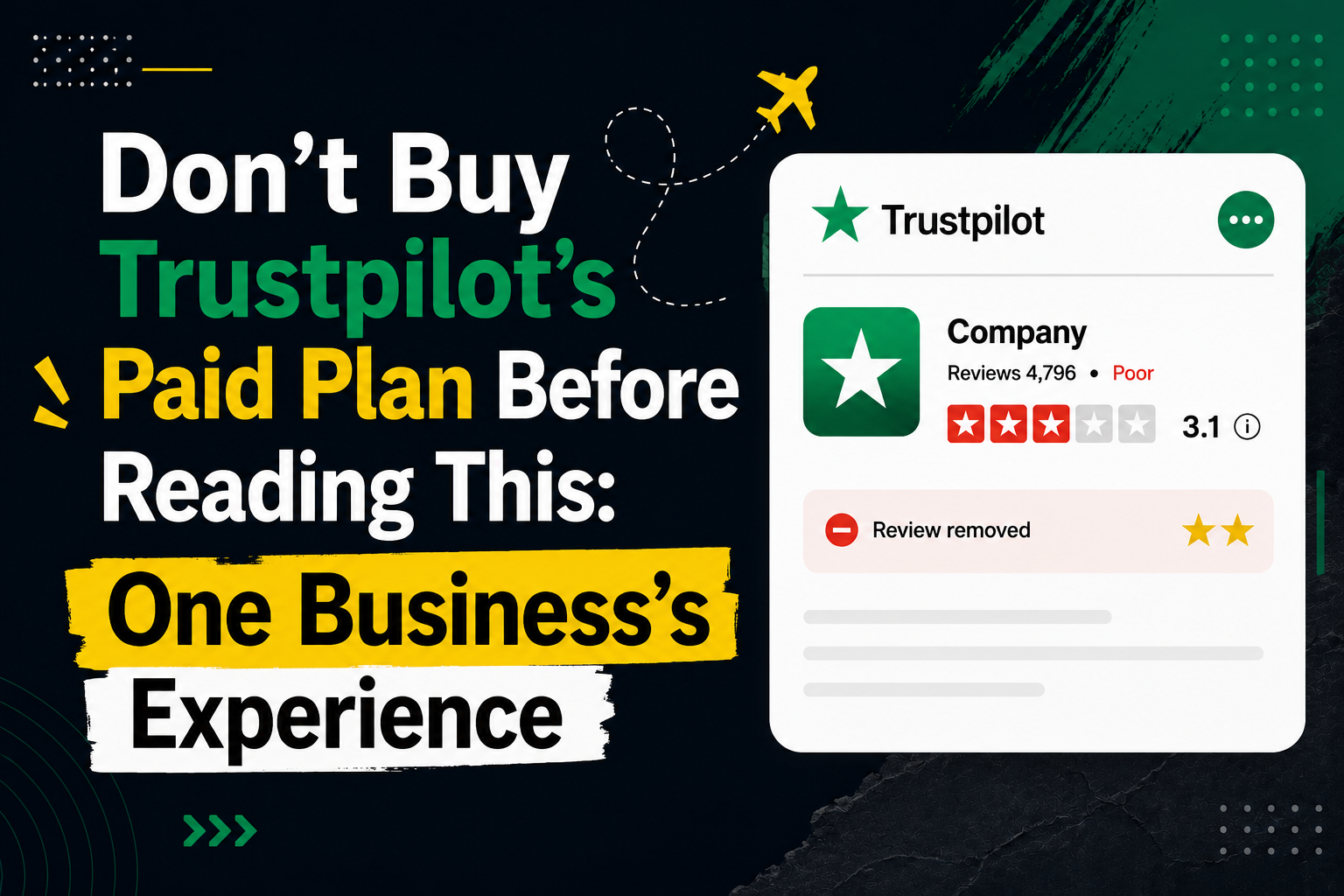
- Trustpilot encouraged Thrillophilia to move to its paid review collection system.
- Positive reviews later began disappearing in large numbers.
- More than 500 reviews were removed within 15 days, impacting ratings and reputation.
- Repeated requests for review IDs, evidence, and explanations went unanswered, according to the company.
- The issue raises broader questions about transparency and accountability in automated review moderation.
Trustpilot is one of the largest online review platforms in the world, used by millions of consumers and businesses to collect feedback, evaluate companies, and guide purchasing decisions. It currently holds more than 330 million reviews.
Over the years, though, a growing number of businesses have raised concerns about how Trustpilot moderates reviews, pointing to genuine reviews being removed, limited transparency around those decisions, and mounting pressure to move onto paid subscription plans.
Independent reports, consumer complaints, and business forums have documented similar patterns, suggesting the platform can operate on something close to a pay-to-play basis, and raising real questions about how a review platform balances fraud prevention with fairness and accountability.
Unaware of any of this, and like countless businesses that lean on customer feedback to build trust, Thrillophilia’s reviews represented genuine traveler experiences and the confidence its travelers placed in the company. Over the years, thousands of travelers had shared honest feedback about their trips.
A closer look at Thrillophilia’s review history on Trustpilot helps explain how these concerns first came up.
How Trustpilot started pitching the plan to Thrillophilia
Thrillophilia maintained a Trustpilot rating of roughly 4.2 while collecting reviews directly from customers. As part of its normal feedback process, the company encouraged travelers to leave a review once their booking was complete, a practice followed by thousands of businesses worldwide, and Thrillophilia facilitated it accordingly.
But even after two years of collecting reviews and receiving positive feedback directly from customers, the company noticed its average rating had gradually slipped to 3.6, which is what prompted them to look into the matter.
How Trustpilot Sells Its Paid Plans
With the rating steadily dropping despite all the work put into review collection, Thrillophilia reached out to Trustpilot for answers. The initial response was that reviews collected outside Trustpilot’s official invitation system faced greater difficulty passing automated verification. Around that same time, Trustpilot’s sales team approached the company with an offer to upgrade to a paid subscription.
Trusting Trustpilot’s reputation, and confident in the authenticity of its own traveler reviews, Thrillophilia decided to go ahead with the upgrade following those discussions.
Looking back, it turned out to be less of an upgrade and more of a trap that led to reduced ratings and reviews over time. At the point of payment, Trustpilot’s team promised better brand visibility and rating growth, benefits that lasted only briefly before the reviews started being taken down.
It began in August 2024, when Thrillophilia subscribed to Trustpilot’s paid Plus plan at an annual cost of roughly £3,108. As stated in Trustpilot’s written communication during the sales process, genuine reviews collected correctly and in line with platform guidelines would not be removed. Trusting those instructions, Thrillophilia made sure every invitation went out with a verified booking reference and PNR number attached.
The company even moved entirely onto Trustpilot’s Automatic Feedback Service, and reviews were still being removed. That’s when Thrillophilia sent a gentle reminder, hoping for a genuine answer.
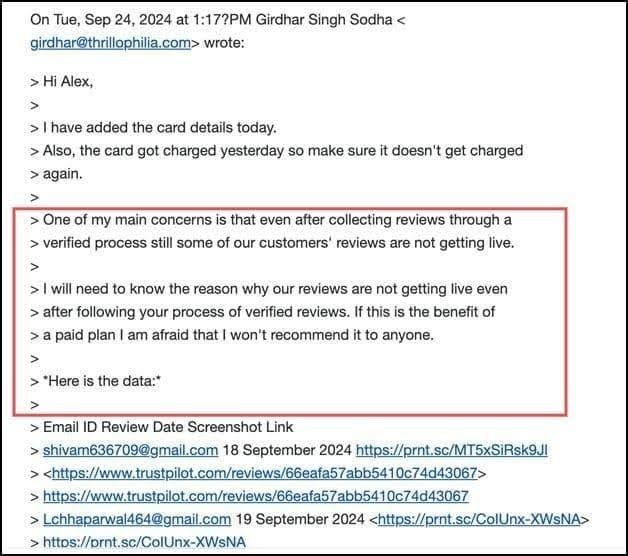
Thrillophilia’s rating did recover to roughly 4.1, but that same period also brought frequent review removals and rating fluctuations, something the company didn’t realize would eventually affect its credibility on a public platform. This was precisely what it had paid for, so seeing it compromised felt like a real setback.
Even so, throughout 2024 and again in 2025, the team continued raising multiple tickets with Trustpilot to flag these concerns, but kept receiving templated, automated responses with no human involved in the process.
Amid all the emails and review removals, the rating somehow held at 4.1. Here is a screenshot taken on August 19, 2025, where verified positive reviews made up 65% of over 5,000 total reviews.
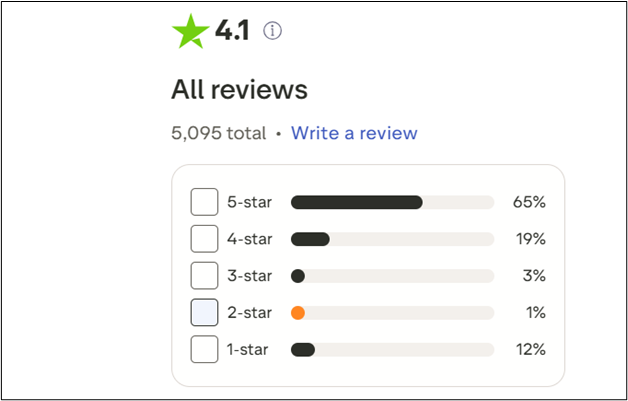
Screenshot Date: 19th August 2025
Mass Review Removals, Declining Ratings, Without any Transparency
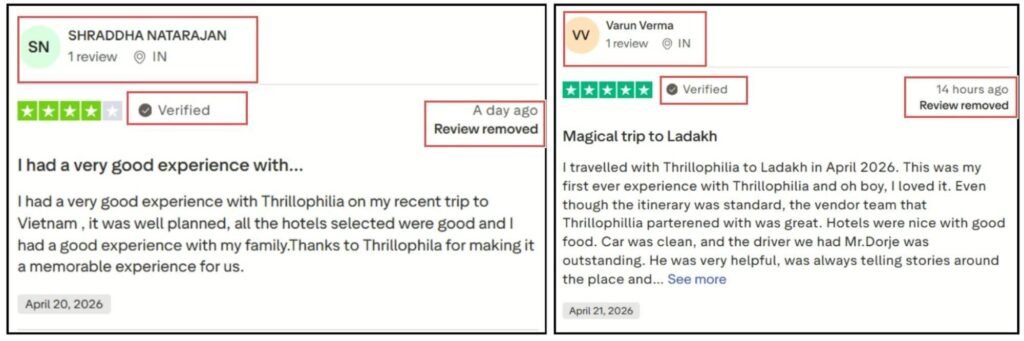
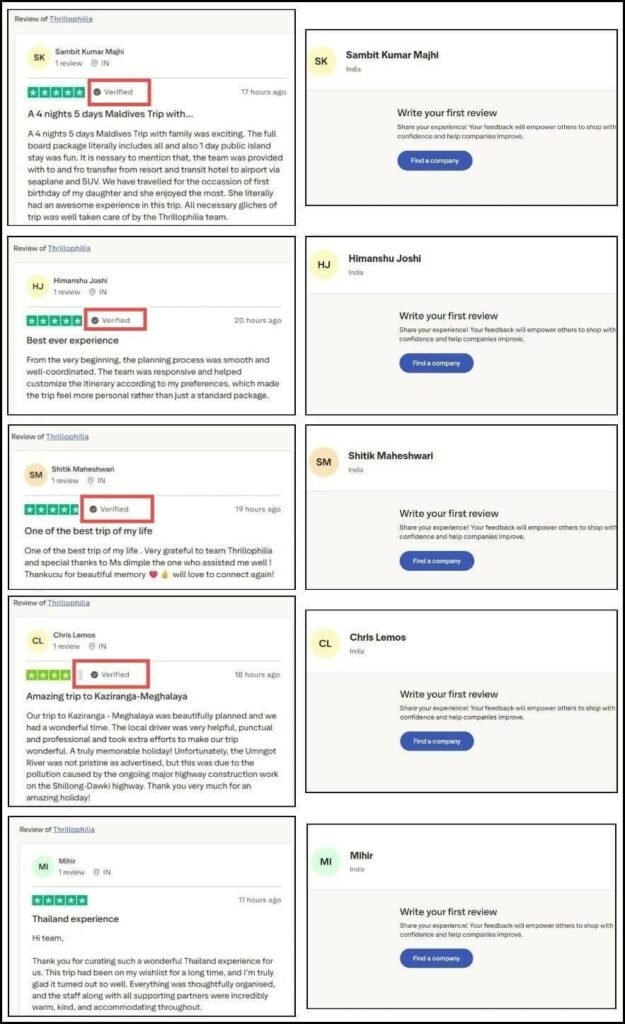
As the second year of the subscription approached, positive reviews began being removed at an alarming rate, often with no prior notice and no clear explanation. Here are a few examples of positive, verified reviews that were removed despite Trustpilot’s earlier assurances that verified reviews would not be taken down:
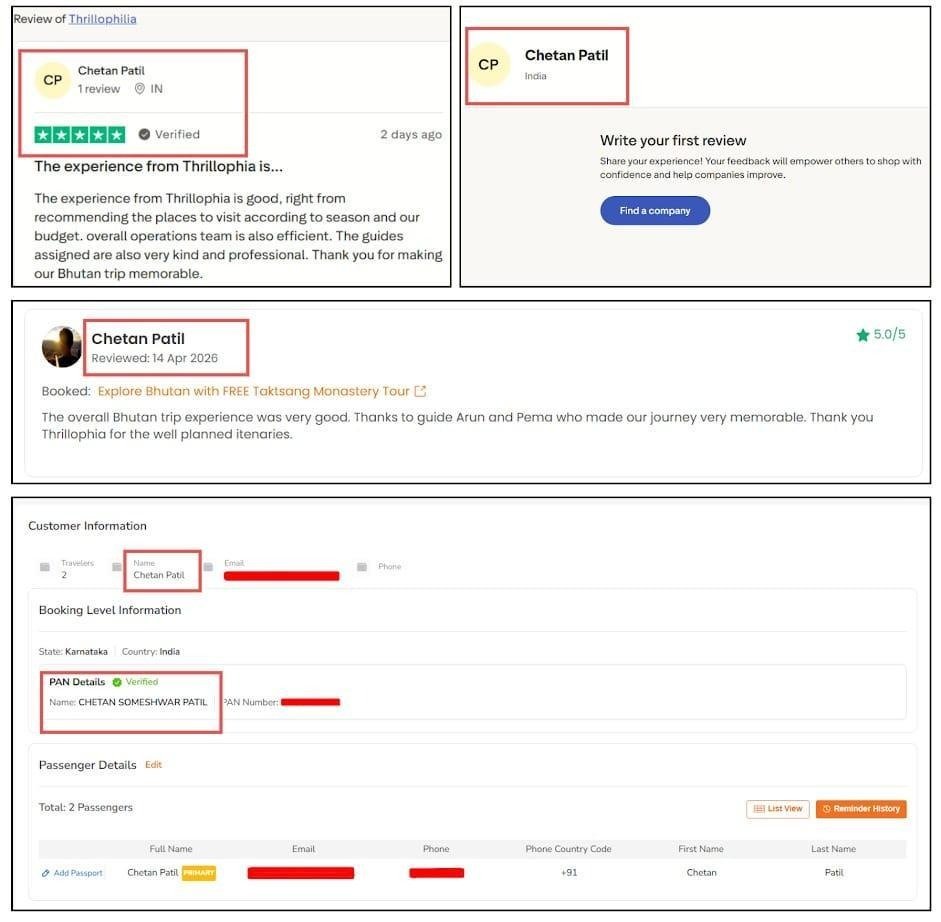
Here is an example of a verified review from a customer who also left the same feedback on Thrillophilia’s official website, and it was still taken down from Trustpilot. The company says it has thousands of similar cases, where the customer left feedback on the official website and yet the review was removed with no explanation:
Meanwhile, Thrillophilia renewed its second year’s subscription with Trustpilot on September 13, 2025, hoping the review removals would stop once it committed again to the paid plan and kept receiving verified reviews.
Shortly after, on October 12, 2025, the company began receiving warning notices from Trustpilot stating that a percentage of its reviews had been flagged as fake and were therefore in violation of platform guidelines.
Between 1 and 15 October 2025 alone, the review count dropped from 5,186 to 4,644, a reduction of more than 500 reviews in just two weeks. This, in turn, caused a sharp decline in Thrillophilia’s average rating on Trustpilot from 4.1 to 3.6, for which no review level explanation or justification was ever provided, despite the company’s continued requests.
That same month, to support the authenticity of its reviews, Thrillophilia submitted records for over 2,000 verified customer bookings, including booking references, PNR numbers, and customer details.
However, the company was told that reviewer verification could only be carried out directly with individual reviewers, which left Thrillophilia unable to understand which reviews were even being questioned or how to address the concerns raised. This left the company effectively helpless when it came to presenting counter evidence on behalf of genuine customer experiences.
Determined to prove the reviews were legitimate, Thrillophilia kept reaching out to Trustpilot, but every effort seemed to go nowhere, with no meaningful response from their team.
The team followed up 10 to 15 times with different Trustpilot departments, including the Content Integrity team, account managers, and senior management representatives, yet received no clear explanation for the flags, even though the reviews were sourced from genuine traveler data.
Every attempt to get in touch with Trustpilot went nowhere, leaving the company unable to defend itself even when it was in the right.
When a response finally came from Trustpilot’s account manager, Petra Kukuckova, on December 30, 2025, instead of outlining which guideline had supposedly been breached, the company was simply told it was non-compliant and asked to redirect its concerns to the Content Integrity team once again.
Despite the emails, justifications, and verified data, over the following couple of months Trustpilot reduced Thrillophilia’s average rating from roughly 3.6 to 3.1, which remains the company’s current rating on Trustpilot. Trustpilot maintained that review removals and reinstatements were controlled by automated systems, limiting any further human intervention.
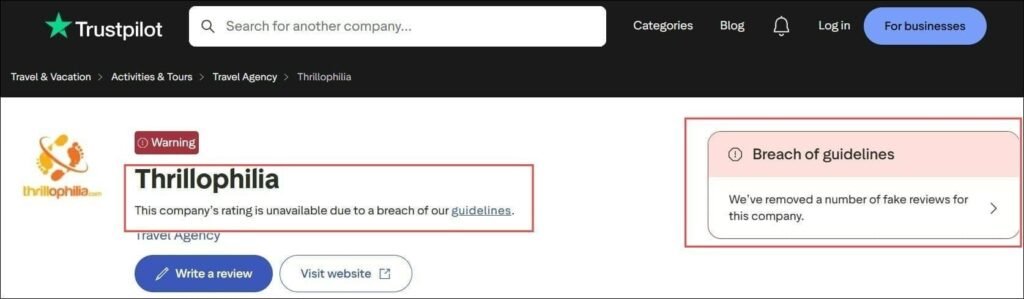
On May 6, 2026, Trustpilot issued a warning citing alleged platform misuse due to fake reviews, restricting Thrillophilia’s account features, including review invitations, TrustBoxes, and brand benefits, despite the company having offered proof of review authenticity.
Two Years of Requests Without Any Review IDs
Over a period spanning roughly 610 days, Thrillophilia repeatedly requested basic information from Trustpilot about the reviews being removed, including review IDs, removal dates, and the specific policy provisions allegedly breached. None of it was ever provided or addressed.
The company reached out yet again, hoping for a response, but what it received instead was an automated reply from the customer support team:
When Trustpilot’s Audit Numbers Raised Concerns
Finally, on June 10, 2026, nearly 20 months after concerns were first raised, Trustpilot shared a numerical summary of its review audit covering September 2025 to May 2026:
- 451 reviews were assessed
- 305 reviews were marked as positive
- 253 reviews were removed for alleged fabrication
- An 82% fabrication rate was reported for the positive reviews assessed
- No review IDs or review-level evidence were shared
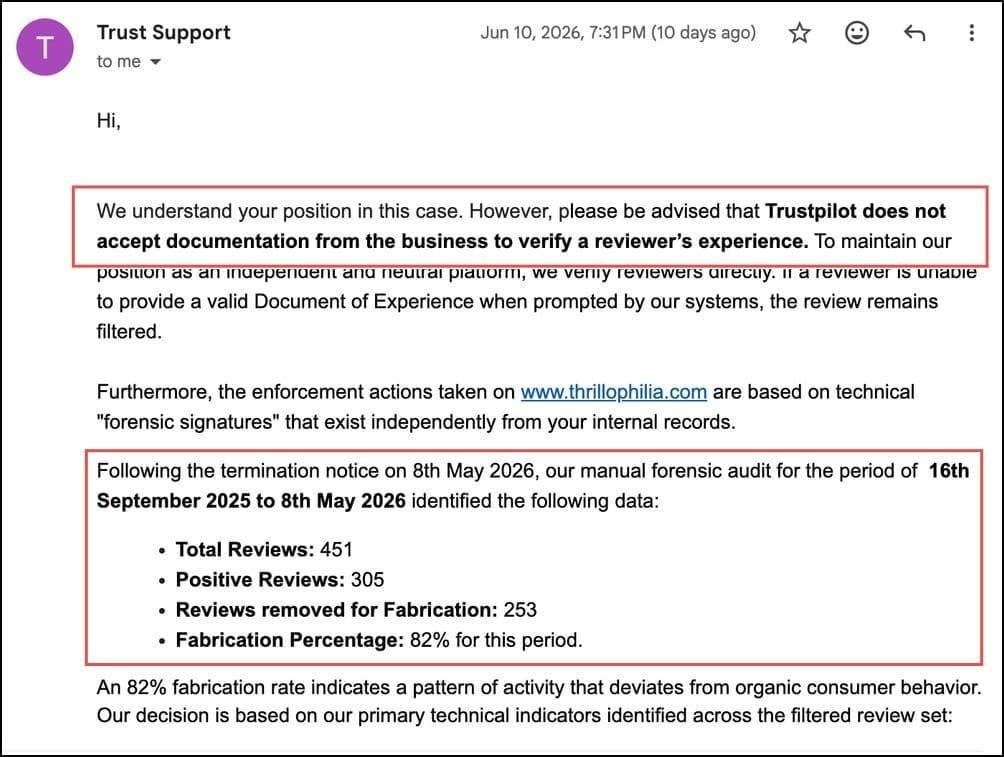
Trustpilot said the assessment was based on three factors: suspicious reviewer connections, suspicious reviewer behavior, and account and content pattern analysis. However, no specific examples or detailed explanations were provided alongside it.
At the same time, Thrillophilia’s public profile still showed 4,789 total reviews, with about 80% being 4 and 5-star ratings, reflecting largely positive customer feedback. Despite this, the TrustScore remained hidden behind a consumer warning.
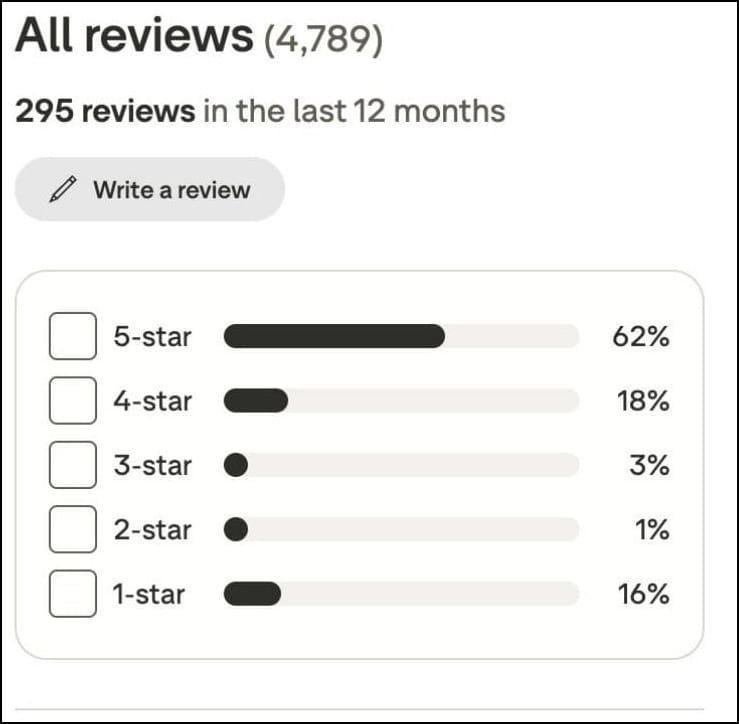
The gap between the audit’s findings, the visible review data, and the drop in TrustScore raised questions about Trustpilot’s process that remain unanswered.
Similar Concerns Raised Across Businesses and Independent Reports
For platforms like Trustpilot, moderation systems exist to help ensure fairness among businesses and to identify potentially fraudulent feedback.
However, while these systems are essential for protecting consumers and ensuring feedback authenticity, they aren’t flawless and can sometimes misclassify genuine reviews as suspicious.
Thrillophilia was not alone in facing this issue with Trustpilot’s automated moderation system. Similar concerns around unclear moderation processes and limited transparency have been raised by others too. In December 2024, investment research firm Grizzly Research published a report titled The Trustpilot Mafia, alleging that Trustpilot’s commercial model creates incentives that can work against the very businesses the platform claims to serve.
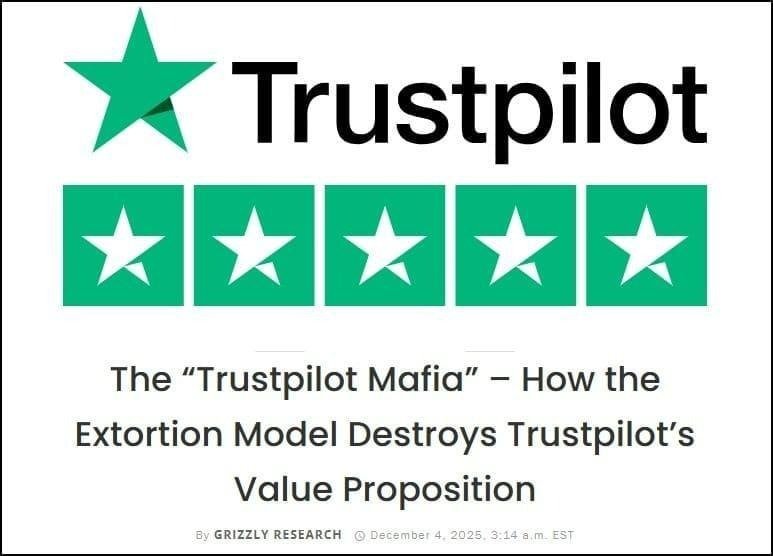
Among its findings, the report alleged that businesses frequently experience declining ratings, unexplained review removals, and increasing pressure to subscribe to paid plans just to maintain visibility and reputation on the platform.
The Telegraph newspaper in the UK published its own investigation into Trustpilot’s practices in December 2025. The report documented complaints from multiple businesses describing the same basic experience: reviews removed without a specific explanation, followed by commercial pressure to upgrade or maintain a paid subscription, with no clear independent way to contest the platform’s decisions.
Adding to that, a verified complaint submitted to the Better Business Bureau in 2026 described an experience almost identical to Thrillophilia’s. The business reported that Trustpilot refused to manually review the evidence it had submitted, citing its automated systems as final, and the business also reported being locked out of its paid Pro dashboard. The complaint was independently verified by the BBB.
Even beyond formal platforms, Reddit hosts an r/trustpilotcomplaints community where genuine complaints describe similar patterns of Trustpilot allegedly extorting money from other companies as well.
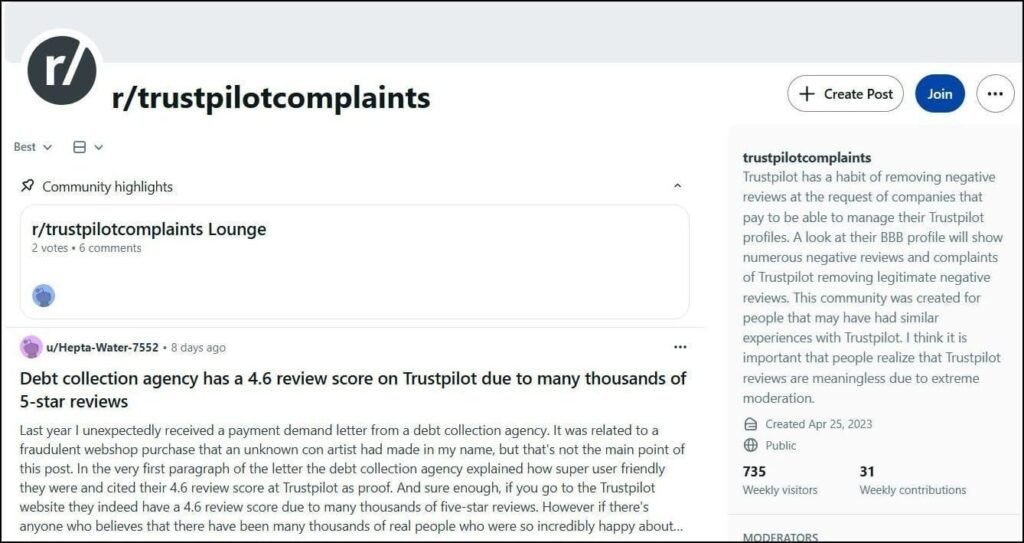
That community makes a clear case that Trustpilot exploits businesses, sells them paid plans, and starts a loop they can’t seem to escape. It raises an important industry question: how can fraud prevention be balanced with transparency, fairness, and due process when genuine customer feedback is challenged? Why is genuine customer feedback and review authenticity hinged on payment at all? And what’s the solution when a company’s trust is put on the line?
The Answers Thrillophilia Is Still Waiting For
For Thrillophilia, this was never really about invoices, verification processes, or the removal of individual reviews. It questions the company’s hard work, the trust it built over the years, the effort it put in, and the many attempts it made to reach Trustpilot.
It concerns the authenticity and trust Thrillophilia has built through thousands of genuine traveler experiences.
When the company was genuine, followed every practice carefully, didn’t breach the guidelines, and collected reviews exactly the way Trustpilot asked, and still ended up facing issues this serious, it’s clear something isn’t right with the process behind the scenes.
With verified customer voices being excluded without clear explanations, something about the internal process doesn’t add up.
Thrillophilia is only asking Trustpilot to provide the evidence underlying its decisions and to conduct an independent review of the actions taken against its profile.
For the last few months, all the company has been asking for is a transparent and accountable process that allows businesses to effectively challenge moderation decisions, particularly when those decisions directly shape how customers perceive a company’s credibility, reputation, and trustworthiness.
For Thrillophilia, every review represents a real journey and a relationship built on trust. Preserving those voices matters not just to the company, but to the fundamental trust its travelers place in it.
The company wants Trustpilot to provide proper evidence regarding this matter and to address the issues it experienced throughout the period during which it paid for Trustpilot’s services.
