
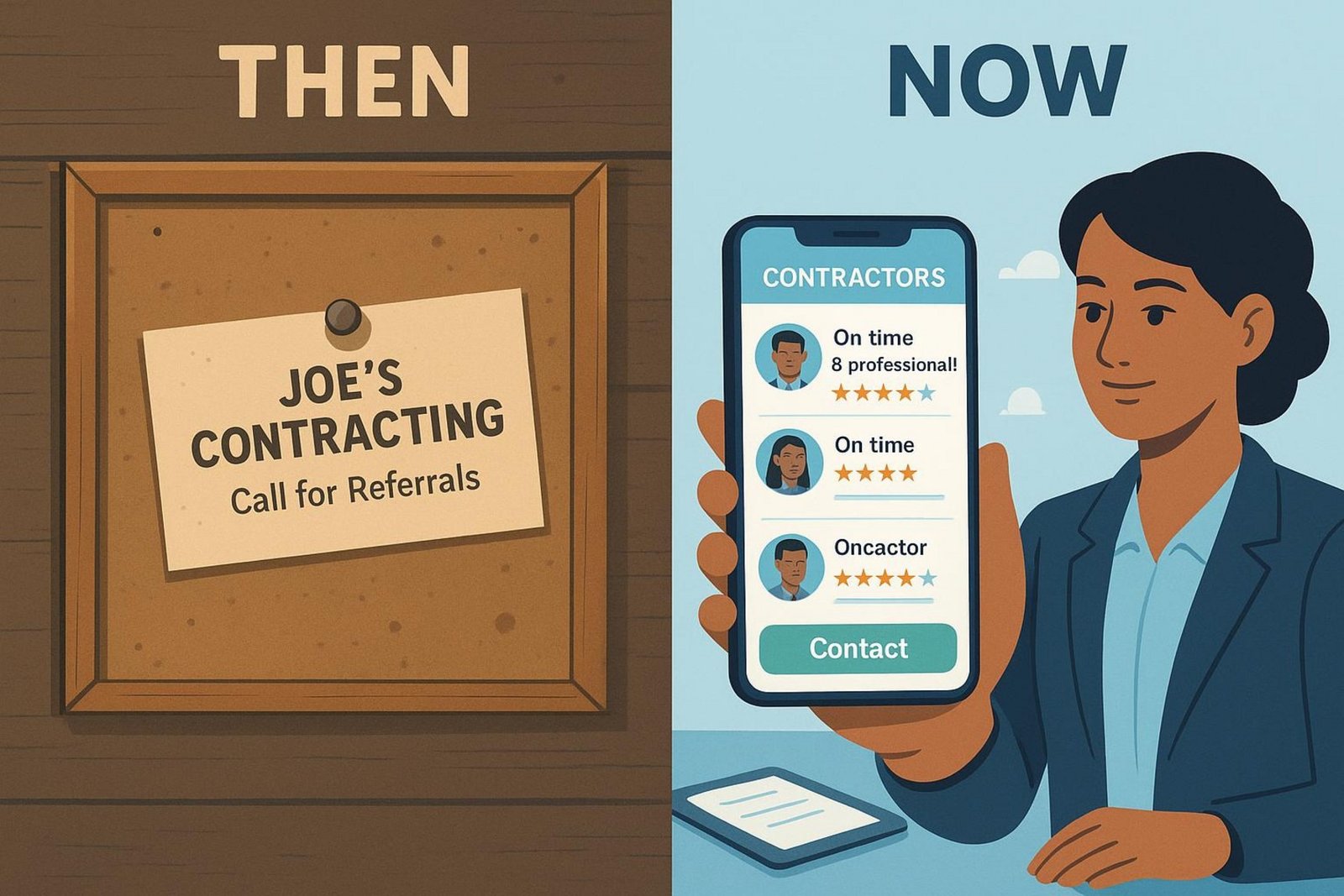
In today’s market, a construction industry marketing agency can be a key partner for construction companies. These agencies use a mix of digital methods to help builders, remodelers, and contractors compete and grow. Years ago, referrals and basic ads were often enough.
Now, most people-both homeowners and business buyers-go online to find contractors, compare options, and decide who to contact. Because of this, construction companies need a strong online setup that brings in leads, builds trust, and turns interest into phone calls and quote requests.
These agencies help with everything from improving a website to writing useful content and posting on social media. They focus on what works for construction businesses, using clear plans that increase visibility, bring in leads, and help create long-term customer relationships in an online-first market.
Why Invest in Digital Strategies for Construction Marketing?
The construction industry is strong, but it also has real pressure. Labor costs are rising (63% of contractors worry about this), and material costs are also going up (73% say this is a concern). That makes efficiency and steady lead flow more important than ever. Many construction companies also admit their marketing is not where it should be-55% say they struggle with outdated or weak marketing. Digital marketing helps close that gap.
People are searching online before they buy. About 96% of people research local businesses online before making a decision. If your company is hard to find online-or looks untrustworthy-you lose work to competitors. Your website is no longer just an online flyer. It’s often your main marketing tool and works like a salesperson that’s available 24/7.
Challenges Facing the Construction Industry Online
A common issue is the idea that construction is slow to use new technology. Many companies still depend mostly on referrals and traditional ads. Those can still help, but on their own they often lead to uneven lead flow, poor-fit prospects, and missed jobs. Online marketing can also feel confusing because platforms and search rules change often, and it can be hard to keep up without the right skills.
Also, trust matters a lot in construction. People are hiring you for expensive work, so a basic website is not enough. You need strong search visibility, helpful content, and good reviews to show you are reliable. Without a clear plan based on real numbers, many construction businesses end up invisible to people who are actively searching for their services.
Digital Marketing ROI for Construction Companies
Digital marketing can deliver clear, trackable results for construction companies. These strategies work together to build brand trust, increase website traffic, bring in qualified leads, and help book more projects. Unlike many traditional methods, digital marketing lets you measure return on investment (ROI) by carefully comparing what you spent with what you earned.
Email marketing is a good example. It often returns about $44 for every $1 spent. With tracking tools and analytics, agencies can see what is working, adjust campaigns quickly, and spend budgets where they perform best. This approach helps construction companies bring in more clients while also understanding what their marketing is really producing over time.
Core Digital Strategies Used by Construction Industry Marketing Agencies
A strong digital plan for a construction company usually includes several parts. Agencies choose a mix of strategies based on the company’s goals, service area, and the type of work they do-residential, commercial, remodeling, or all of the above.
Website Design and User Experience Optimization
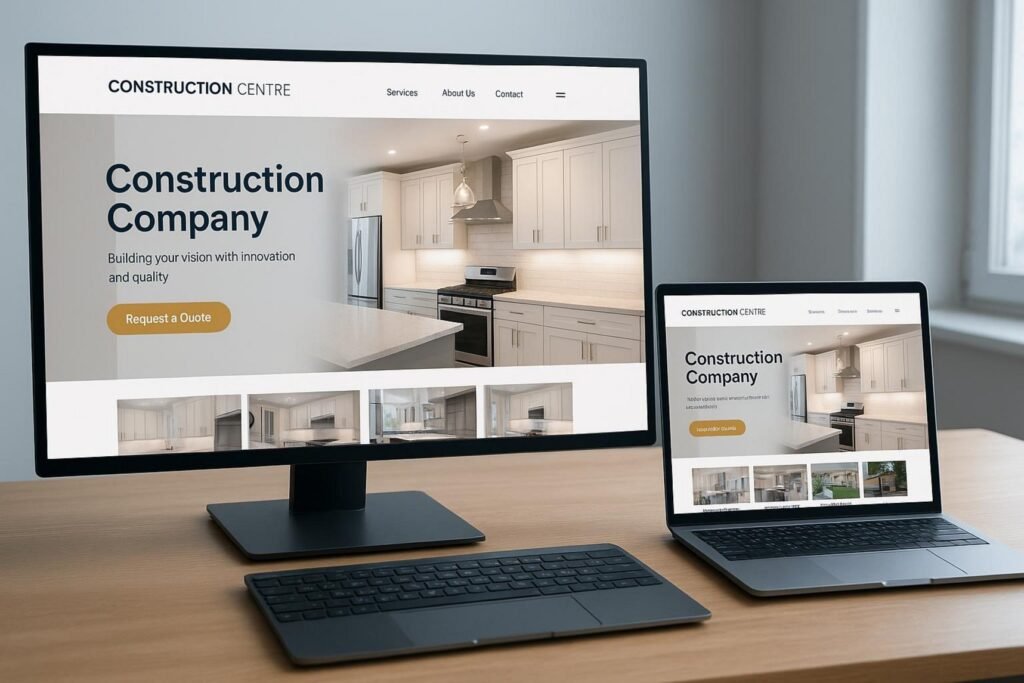
Your website is the online “storefront” for your construction business. The design and how it works for visitors matters a lot. A well-built website can be your biggest asset, bringing in leads at a lower cost than many traditional options. This matters because 63% of consumers mainly use a company’s website to find and interact with them, and 48% say website design is the top factor in judging if a business is credible.
Agencies build custom, mobile-friendly websites that look good and are set up to rank in search engines. This often includes clear service pages, strong calls to action (CTAs), simple menus, and fast load times. The goal is to show your services, display past projects, and make it easy for someone to contact you-so more visits turn into leads.
Search Engine Optimization for Construction Companies
Search Engine Optimization (SEO) is the base for long-term online visibility. About 97% of online experiences start with a search engine. For construction companies, good SEO helps your site rank higher on Google or Bing, which brings more qualified traffic, leads, and sales. Agencies usually focus on a few main areas.
This includes fixing technical issues so search engines can read your site, publishing useful content that helps people and shows your expertise, and earning backlinks from trusted websites. It also matters to remember that Google ranks individual pages, not only entire websites, so content planning is very important. SEO takes time-often weeks to months-but 85% of marketers say it works better than PPC for long-term organic growth.
Local SEO to Attract High-Intent Leads
Most construction work is local, which makes Local SEO very useful. Nearly half of Google searches are looking for local results. Around 97% of consumers search online for local services, and 82% of smartphone users use a search engine to find a local business. Local SEO helps you show up for searches like “roofing company near me” or “home remodeler in [City].”
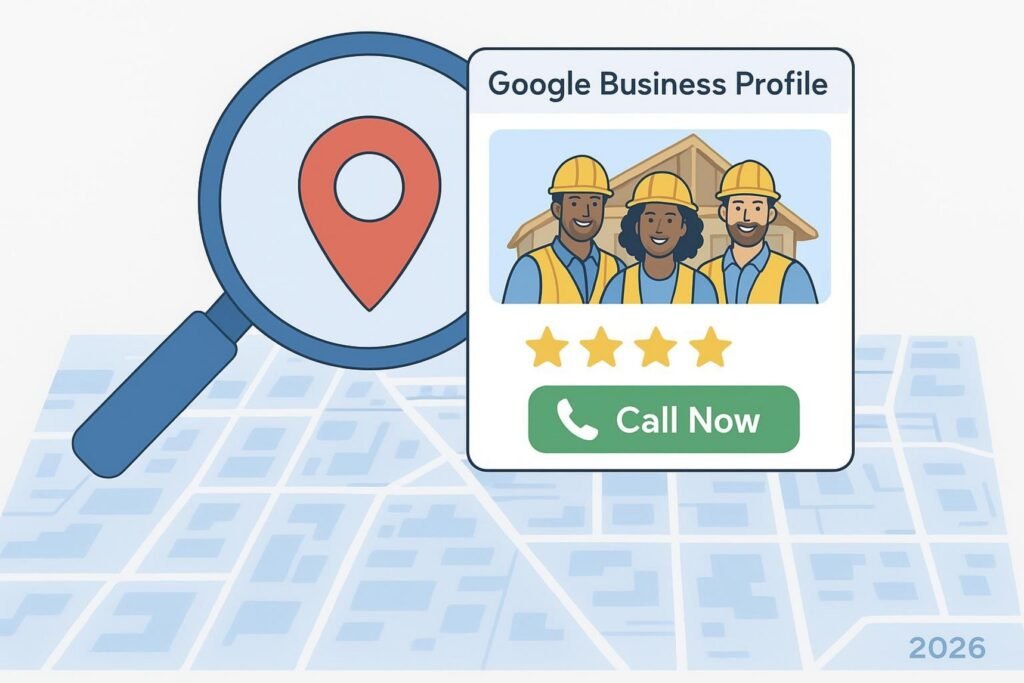
Agencies improve your Google Business Profile, make sure your information is correct, and use methods that help you show up in the “local map pack” on Google. Local SEO is often easier to compete in than broad SEO because you mainly compete with businesses in your service area. That usually leads to better click rates and more ready-to-buy leads.
Pay-Per-Click Advertising (PPC) Targeted to Construction Audiences
If you need leads quickly, Pay-Per-Click (PPC) advertising is a strong option. PPC ads often show in the top three spots on search results, giving you fast visibility for competitive keywords without waiting months. It can bring qualified traffic and leads right away. You pay only when someone clicks, which helps control costs.
Agencies handle keyword research, bids, ad writing, split tests, and landing page improvement. They can also target specific audiences on Google Ads and social platforms like Facebook, Instagram, and especially LinkedIn. On LinkedIn, 80% of members influence business decisions, and the B2B audience has twice the buying power of the average web audience. Many construction companies get the best results by using PPC and SEO together-quick leads now, and steady growth later.
Content Marketing Built for Construction Decision-Makers
Content marketing focuses on creating and sharing helpful content that attracts the right people. For construction businesses, that can include landing pages, blog posts, e-books, newsletters, white papers, case studies, and project highlights. Many B2B construction buyers do 8-12 online searches before contacting a company, and some can make decisions based on online content alone.
Agencies often use experienced writers who know the construction space. They create content that makes sense for both homeowners and commercial buyers. This kind of content answers questions, builds trust, and shows that your company knows what it is doing. With consistent SEO-focused content, businesses can grow their visibility and earn trust over time.
Social Media Marketing for Brand Awareness and Engagement
Social media is a useful tool for construction companies, not just personal sharing. About 81% of U.S. adults have at least one social media account, and people spend about two hours per day on these platforms. Facebook, Instagram, and LinkedIn let you show projects, share work-in-progress updates, and connect with potential clients quickly.
Agencies can create posting schedules and design visuals that match your brand. They also run social media ads that target local homeowners, business owners, and developers who may need your services. Social is a great place for before-and-after photos, local awareness ads, and building a community around your work.
Video Marketing to Show Projects and Skills
Video is now a major part of digital marketing. It holds attention well, and video is 50 times more likely to rank in organic search results than text pages. U.S. consumers also watch up to six hours of digital video each day. For construction companies, video is a strong way to show quality and build trust.
Agencies help produce videos such as project walkthroughs, client testimonials, time-lapse builds, and behind-the-scenes clips of your crew. Video makes it easier to show your process, your results, and your professionalism in a way that photos and text often can’t.
Email Marketing for Lead Follow-Up and Repeat Business
Email marketing is still one of the best low-cost ways to stay in touch with leads and past clients, and it can generate strong ROI. Many businesses see an average return of $44 for every $1 spent. Email also supports other channels like PPC and SEO by keeping your brand in front of people after they visit your site.
Agencies can handle email campaigns from start to finish-building branded templates, writing newsletters and updates, and tracking results like opens, clicks, and conversions. This helps your company stay top-of-mind, increase repeat work, and bring in more referrals.
Conversion Rate Optimization to Get More Leads From Existing Traffic
Getting people to your website is only part of the job. You also need those visitors to take action. Conversion Rate Optimization (CRO) uses testing and improvements to increase how often visitors become leads, like filling out a form or calling your office.
This can include improving forms, placing CTAs in better spots, speeding up pages, and adding live chat for fast responses. With strong CRO work, some construction companies double, triple, or even quadruple their conversion rates, which increases results without needing the same increase in traffic.
How Agencies Develop a Construction-Focused Digital Strategy
Building a digital plan for a construction company takes careful work. It is more than running a few ads. Agencies need to understand the construction market, the client’s goals, and what competitors are doing. Many agencies work like long-term partners, setting up systems that can grow with the business.
Digital Competitive Analysis: Comparing Against Industry Peers
The first step is often a digital competitive analysis. Agencies look at your strengths, weaknesses, threats, and opportunities (SWOT) from a digital marketing angle. They compare your company to close competitors and review things like website quality, SEO rankings, paid ad strategies, and overall online presence. This helps identify what competitors do well, where they struggle, and where your company can stand out.
For example, a digital competitive analysis for Penguin Air, Plumbing & Electrical found multiple opportunities related to their website, organic search (SEO), and paid media (PPC). That research helped guide their digital improvement work. This early research helps agencies give recommendations that fit your situation and focus on real performance gains.
Identifying Ideal Client Profiles and Target Markets
Good marketing starts with knowing who you want to reach. Agencies work with construction companies to define ideal client profiles and target markets. This includes research into customer problems, what they value, and where they spend time online and offline. The approach changes depending on whether you want high-end homeowners, property managers, or commercial developers.
Once the agency understands how people make buying decisions in both B2C and B2B construction work, they can build campaigns that speak directly to decision-makers. This keeps the budget focused on the people most likely to become real clients.
Choosing the Right Marketing Channels for Your Construction Business
After the target audience is clear, the next step is picking the best channels. This choice should be based on data-where people search, what platforms they use, and what type of content they respond to. If your target buyers spend time on LinkedIn, then LinkedIn ads and posts may be a priority.
Agencies like BuiltFor Studio avoid one-size-fits-all plans. Instead, they build channel mixes meant to produce measurable results. This often blends local SEO, paid ads, social media, and email into a single system that grows with your business and keeps your brand visible at multiple points in the buying process.
Setting Measurable Goals and KPIs for Digital Campaigns
Digital marketing works best when goals are clear. Agencies help construction companies set goals using the SMART method: Specific, Measurable, Achievable, Realistic, and Time-bound. For example:
- “Book one new construction job per month from PPC.”
- “Increase qualified SEO leads by 15% in six months.”
Then they connect goals to Key Performance Indicators (KPIs) so progress can be tracked. Setting benchmarks from the start helps keep campaigns focused and makes it easier to see what is working and what is not.
Tracking Results and Demonstrating ROI in Construction Digital Marketing
A major benefit of digital marketing is how easy it is to measure results compared to many traditional methods. Construction marketing agencies focus on clear reporting, so clients can see what they are getting for their spend.
Analytics, Reporting, and Lead Tracking Tools
Tracking is the first step in understanding marketing value for a contractor. Agencies use tools such as Google Analytics, ad dashboards, and phone call tracking and recording. These tools show where traffic comes from, which campaigns produce leads, and what conversion rates look like.
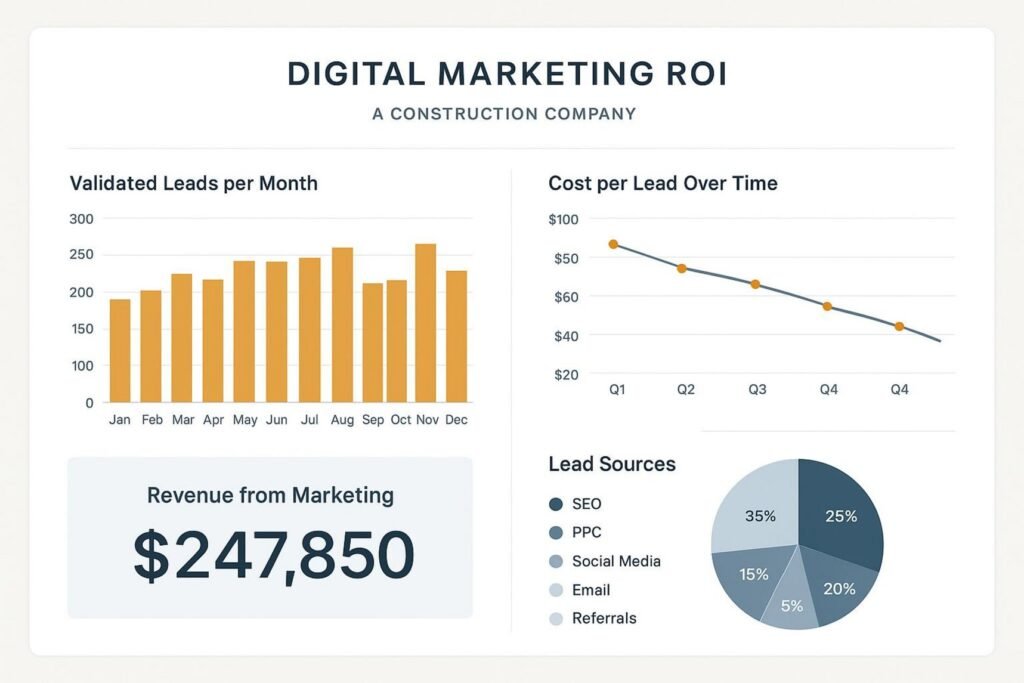
Clients often receive monthly reports that connect marketing performance to real outcomes. Common report items include:
| Metric | What it tells you |
| Validated leads | How many leads were real and worth following up |
| Cost per lead | How much you paid to generate each lead |
| Conversion rate | How often visitors become leads |
| Revenue from marketing | How much income can be tied back to campaigns |
Agencies may also connect CRM systems and automation so every lead is captured, tracked, and followed up on, which helps increase close rates and avoid wasted spend.
Proving the Impact of Digital Strategies on Project Pipelines
What matters most is whether marketing improves your project pipeline and revenue. Agencies use performance data to keep improving campaigns and show what outcomes their work creates. Case studies often show this clearly.
For example, Penguin Air, Plumbing & Electrical generated $34 million in revenue from digital marketing and lowered cost per validated lead by 12%, with digital marketing producing 54% of total revenue.
American Vintage Home, an HVAC and plumbing company, reached page one rankings for 500+ keywords, increased validated SEO leads by 10% year over year, and achieved a 77:1 ROI from SEO.
Arctic Air Conditioning also booked 100 additional jobs and achieved a 14:1 ROI using Blue Corona’s Lead Recovery services. These results show how data-based digital work can directly increase booked jobs and revenue.
Conclusion
Construction marketing is changing fast because digital platforms now play a major role in how clients find contractors and choose who to hire. In the near future, tools like virtual reality (VR) project demos and artificial intelligence (AI) in marketing will likely become more common. These tools can help clients picture a finished space and can help companies qualify leads faster.
With the global construction market expected to reach $15.7 trillion by 2025 and the building sector projected to grow to $19.59 trillion by 2032, demand for strong digital marketing will keep rising. Companies that use contract award data, market trends, and clear customer insights are likely to perform better than companies that rely on guesswork. Working with a construction-focused marketing agency has become a practical step for improving online visibility, bringing in better leads, and staying competitive as marketing continues to change.
Frequently Asked Questions About Digital Strategies in Construction Marketing
Digital marketing often raises questions for construction business owners. Below are common questions and clear answers about what a construction marketing agency typically does.
What Digital Marketing Services Are Most Effective for Construction Businesses?
Many construction companies get the most value from three main services: Search Engine Optimization (SEO), Pay-Per-Click (PPC) advertising, and professional website design. Adding strong content marketing-especially local SEO-often gives the best growth results. Video, live chat, and social media marketing can also increase performance by helping your business look active, trustworthy, and easy to contact.
How Much Should Construction Companies Budget for Digital Marketing?
Budgets vary based on company size, yearly revenue, cash flow, and which channels you use. A common guideline is around 10% of annual revenue for marketing. Agency pricing for digital marketing can range from about $3,500 to $10,000+ per month based on how much work is included. Building promotion firms often charge between $500 and $10,000 monthly. This should be treated as an investment-when tracked and improved over time, it can produce strong returns.
How Quickly Can Results Be Expected from Digital Strategies?
Timing depends on the method. PPC and social media ads can generate leads quickly because they provide immediate visibility. SEO takes longer. You may see early gains in a few weeks, but it often takes several months for bigger SEO results like strong rankings and steady organic traffic. Digital marketing usually works best with consistent effort over time, where results build month after month.
