
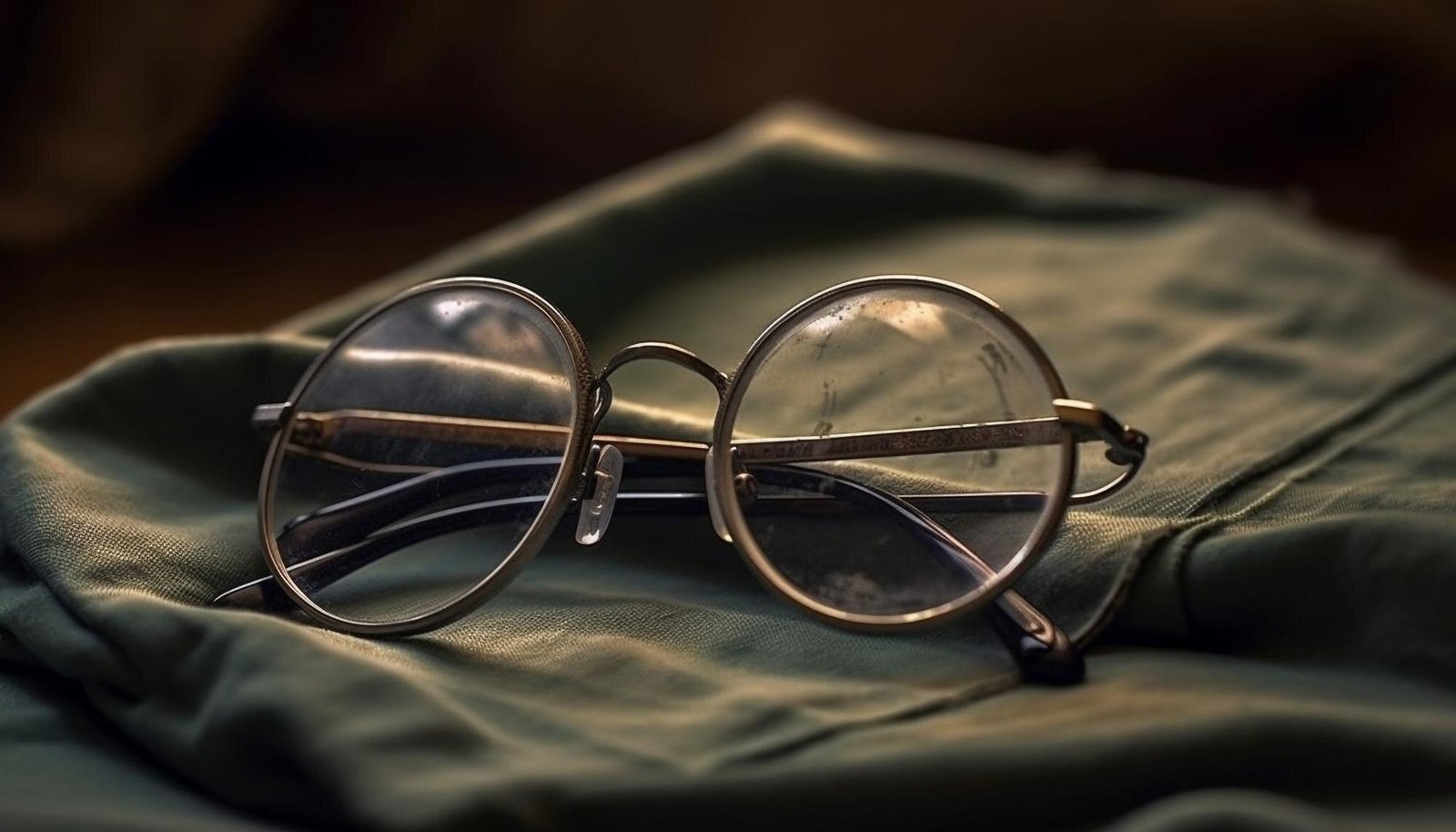
Walk into any pharmacy and you will find a stand of reading glasses near the counter, priced at a few pounds, available in a range of magnification strengths, and needing no involvement from an optician whatsoever. Walk into an optical practice and you will spend considerably more on a pair that requires a full eye examination before anyone will make them. Both sit on your nose and help you see. Understanding why they are fundamentally different products matters more than most people realise before they make a choice between them.
What Prescription Glasses Actually Are
Prescription glasses are made to a specification unique to the individual wearer. An eye examination establishes the exact refractive error of each eye separately, any astigmatism present and its precise orientation, and the appropriate power needed to bring vision to its clearest point. That information is expressed as a written prescription, and the lenses are ground to those exact values.
The result is a pair of glasses in which each lens is individually calibrated. The right eye gets its own correction. The left eye gets its own correction. If astigmatism is present, the axis of correction is precisely positioned in the lens. The pupillary distance, the measurement between the centres of the pupils, is used to position the optical centre of each lens directly in front of the corresponding eye.
This level of individualisation means prescription glasses correct what your eyes actually need rather than approximating it.
What Reading Glasses and Ready Readers Are
Reading glasses available off the shelf, often called ready readers, work on an entirely different principle. They apply the same magnification power to both lenses, with no account taken of any difference between the two eyes, and no correction for astigmatism. The optical centres are positioned at a standard average pupillary distance rather than the wearer’s actual measurement.
They are available in magnification steps, typically from +1.00 to +3.50, and the buyer selects the strength that feels most comfortable for near tasks, usually by trying a few pairs in the shop.
For a narrow group of people, this approach works adequately. If both eyes are essentially equal in their near vision needs, if astigmatism is minimal or absent, and if the pupillary distance is close to the standard used in the manufacture, a pair of ready readers will provide functional near vision improvement for reading and similar close tasks.
For everyone else, the compromise is a real one. A person whose two eyes require different magnification will find that one eye is better served than the other with any off-the-shelf strength they choose. Someone with meaningful astigmatism will find that ready readers sharpen the image but leave a degree of blur or distortion that prescription glasses would remove. Someone whose pupillary distance falls outside the average used in manufacture will experience a low-level visual effort from looking through lenses whose optical centres do not align with their pupils.
Where the Practical Difference Shows Up
The distinction between the two products becomes clearest in extended use. Wearing ready readers for a quick look at a label or a brief read of a page works reasonably well for people who are broadly suited to them. Wearing them for an hour or two of sustained reading, screen work, or close-detail tasks makes the compromises more apparent because the visual effort of compensating for imprecise correction accumulates.
Headaches after reading, eyes that tire quickly during close work, and a vague sense that nothing is quite sharp enough despite the glasses helping are all common experiences among people using ready readers who would be better served by prescription glasses.
The other practical difference is durability and fit. Ready readers are made to a price point and rarely carry the lens coatings, frame quality, or fitting precision of properly dispensed prescription glasses. Anti-reflective coatings, scratch resistance, and accurate frame positioning relative to the eyes are features that matter across a full day of wear and are generally absent or minimal in off-the-shelf options.
When Ready Readers Are a Reasonable Choice
They are not without a valid use case. Someone who needs low-level reading help, whose eyes are similar in their near vision requirements, and who does not have significant astigmatism can use ready readers without meaningful compromise for light reading tasks.
They also serve well as backup pairs. A prescription glasses wearer who wants a pair to keep in a car, a bag, or a bedside drawer without worrying about loss or damage has a reasonable argument for using ready readers in those contexts, provided the magnification roughly matches their near prescription.
What they should not be is a long-term substitute for prescription glasses in anyone whose vision needs more than a rough approximation can provide.
The Bottom Line
Prescription glasses and reading glasses are solving the same general problem, near vision difficulty, but in fundamentally different ways. Prescription glasses are built around the individual. Ready readers are built around an average.
For occasional, low-demand near tasks in people with simple and similar near vision needs in both eyes, ready readers are a practical and inexpensive option. For anyone spending significant time on close work, anyone with astigmatism, or anyone whose two eyes differ meaningfully in their correction needs, prescription glasses are not an upgrade, they are simply the correct tool for the job.
