
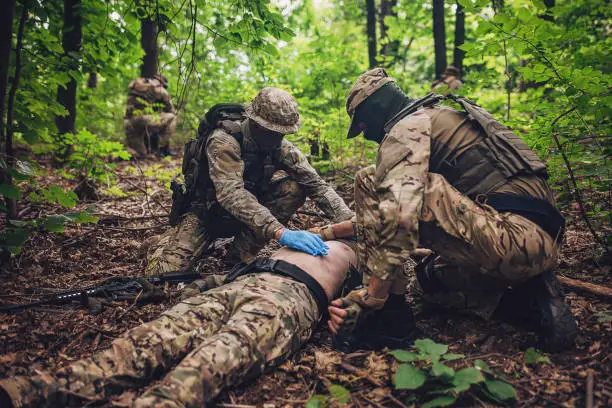
For project managers and outdoor expedition leaders, relying on standard first aid supplies in austere environments is a critical liability. When professional medical help is hours away, the equipment on hand dictates the survival outcome of severe trauma.
Modern risk management requires a shift from superficial wound care to systematic trauma intervention. This transition mandates the adoption of clinical-grade trauma systems, fundamentally changing how field teams prepare for worst-case scenarios.
Why Standard First Aid Kits Fail in High-Risk Remote Environments
Traditional commercial first aid kits are primarily designed for minor abrasions and low-acuity workplace incidents. They fundamentally lack the engineered components required to manage catastrophic hemorrhage or compromised airways in the field.
When applied to heavy industrial work or extreme outdoor operations, these basic kits create a false sense of security. Remote environments demand gear capable of bridging the critical time gap before emergency medical services arrive.
The “Golden Hour” and the MARCH Treatment Protocol
When operating miles away from immediate emergency medical services, field managers must evaluate medical gear through the clinical MARCH treatment protocol rather than counting basic adhesive bandages. High-risk outdoor environments require components that can immediately intervene in massive hemorrhage and airway compromise.
As a baseline for clinical compliance and equipment traceability, professional-grade Rhino rescue are engineered with ISO 13485 manufacturing certification and include CoTCCC-compliant mechanical tourniquets, vented chest seals, and individual component lot traceability designed to withstand severe field storage conditions.
Plasters vs. Trauma Management: Understanding the Component Gap
The fundamental gap between standard kits and trauma management lies in intervention priorities. Standard kits supply low-pressure tapes and cotton gauze, which are clinically ineffective against arterial bleeding.
Conversely, trauma management focuses on life-saving physiological interventions. A proper trauma kit prioritizes rapid hemostasis and airway patency, utilizing pressure dressings and engineered hemostatic agents rather than basic plasters.
System Comparison: Standard First Aid vs. Tactical IFAK
Anatomy of a Modern Tactical IFAK: Essential Technical Specifications
Building a highly reliable Individual First Aid Kit (IFAK) requires stringent technical specifications. Every component must be purposefully selected based on clinical efficacy and environmental resilience.
Procurement managers must move beyond generic inventory lists and focus on the engineering standards of the medical devices. This ensures that the equipment performs reliably under extreme physiological and environmental stress.
Mechanical Tourniquets and ISO 13485 Engineering Compliance
Arterial bleeding can become fatal within minutes, making the mechanical tourniquet the most critical component in any trauma kit. However, not all tourniquets meet the necessary biomechanical standards to effectively occlude blood flow.
Organizations must source windlass or ratcheting tourniquets that comply with ISO 13485 medical device manufacturing standards. Strict engineering compliance ensures the internal routing band will not snap under high tension during critical applications.
Vented vs. Unvented Chest Seals for Thoracic Trauma
Penetrating chest injuries introduce the high risk of tension pneumothorax, a fatal condition where air builds up in the pleural cavity. Standard occlusive dressings or unvented seals can inadvertently trap this air, worsening the patient’s respiratory status.
Modern protocols strictly recommend the vented chest seal, which utilizes a one-way valve system. This engineered channel allows trapped air and blood to escape the chest cavity upon exhalation while preventing ambient air from entering during inhalation.
Hemostatic Gauze and Hypothermia Prevention Layers
For junctional wounds where tourniquets cannot be applied, advanced packing materials are required. Standard cotton gauze is insufficient; field teams require hemostatic gauze impregnated with Kaolin or Chitosan to rapidly accelerate the blood clotting cascade.
Additionally, massive blood loss inevitably leads to clinical hypothermia, which inhibits natural clotting. Integrating a durable, heat-reflective mylar emergency blanket is a mandatory countermeasure to maintain core body temperatures in trauma patients.
Integrating Modular Trauma Systems into Field Operations
Having clinical-grade components is only effective if they are immediately accessible. The housing and deployment mechanisms of an IFAK are just as crucial as the medical supplies contained within.
Organizations updating their outdoor adventure and hiking trail safety protocols must ensure that their medical equipment integrates seamlessly with existing field gear and operational workflows.
Ergonomics, MOLLE Compatibility, and Environmental Durability
High-risk environments degrade basic medical packaging rapidly. Professional systems utilize 500D or 1000D Cordura nylon, providing a highly abrasion-resistant and weather-proof housing for sterile components.
Furthermore, integration into a MOLLE platform allows for standardized attachment to backpacks or utility belts. Incorporating a “rip-away” hook-and-loop back panel ensures the entire kit can be detached in seconds, maximizing the efficiency of the golden hour.
Supply Chain Traceability and Expiration Logistics
Unlike simple bandages, advanced trauma supplies contain active chemical agents and degradable polymers. Tourniquets and chest seals typically carry a strict 60-month shelf life, while hemostatic agents often expire in 36 months.
Risk managers must implement rigorous supply chain traceability for every IFAK deployed in the field. Tracking component lot numbers and precise expiration dates prevents the catastrophic failure of degraded medical gear during an active emergency.
Key Takeaways
| Area | Key Takeaway | Impact/Data |
| Liability | Scrap commercial kits for MARCH-compliant IFAKs | Standard kits fail major trauma |
| Hemostasis | Mandate ISO 13485 windlass tourniquets & hemostatic gauze | Arterial bleed fatal in minutes |
| Thoracic | Standardize on vented one-way chest seals | Prevents fatal tension pneumothorax |
| Hardware | Deploy rip-away MOLLE 1000D Cordura pouches | Saves critical seconds in Golden Hour |
| Logistics | Track lot traceability and expiration logistics | 36-60 month hard shelf-life |
| Training | Pair hardware with TCCC refresher frameworks | Eliminates operator liability |
Regulatory Guidance and Structured Refresher Training
Hardware solutions must be paired with structured educational frameworks. Deploying complex medical devices without concurrent tactical medical training creates immense operational liability for safety managers.
To maintain compliance, organizations must integrate trauma response into their broader workplace safety and risk management infrastructure. This holistic approach ensures equipment and operator capability are always aligned.
Aligning Emergency Readiness with UK Safety and Clinical Standards
Equipping a remote team with advanced trauma hardware is only one half of the preparedness equation; operational compliance requires that field team members understand exactly when and how to deploy each intervention.
Modern risk management frameworks recommend aligning all field protocols with established medical training guidelines and Tactical Combat Casualty Care (TCCC) principles, ensuring that every team member can confidently transition from basic life support to evidence-based hemorrhage control under stress.
