
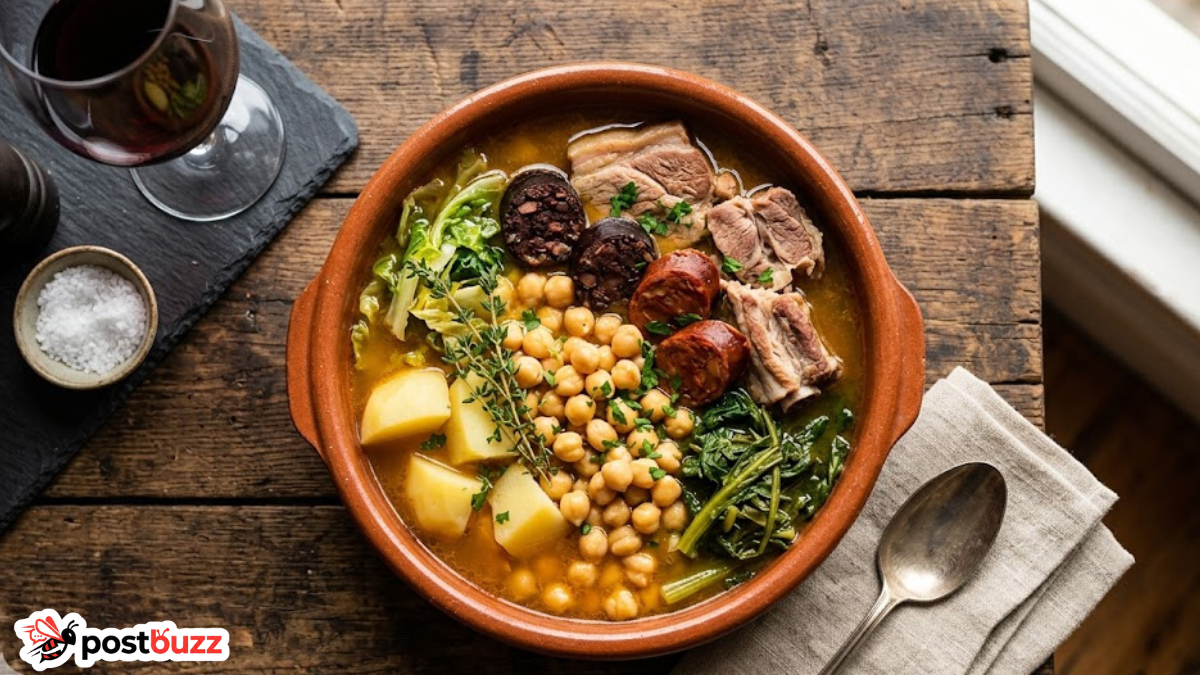
Searching for the best cocido gallego near me usually means one thing: you’ve heard about this legendary Galician stew and you want the real thing, not a watered-down imitation. Cocido gallego is a slow-cooked one-pot feast from northwestern Spain, built on pork, chickpeas, potatoes, and grelos (Galician greens), traditionally served in stages — broth first, then vegetables, then meat. It’s comfort food with centuries of history behind it.
The good news is that you don’t have to fly to Galicia to taste it. Spanish and Galician restaurants in the UK, the USA, and beyond now serve this dish — though, as you’ll see below, it’s often seasonal, so a little planning goes a long way. This guide covers where to actually find cocido gallego near you (with real restaurants, not generic suggestions), how it’s made, and answers to the questions people ask most.
Where to Find the Best Cocido Gallego Near Me
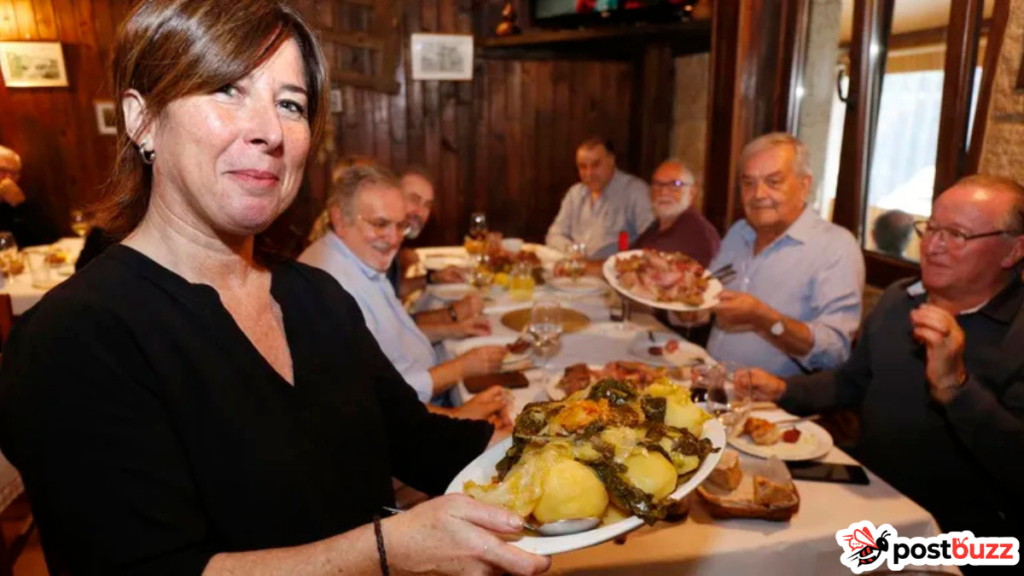
Cocido gallego isn’t on every Spanish menu — it’s a labour-intensive dish, so restaurants that take it seriously tend to be Galician specialists rather than general tapas bars. Here’s where you have a real shot at finding it.
United Kingdom
Centro Galego de Londres — Kensal Green, London (869 Harrow Rd, NW10 5NG) One of London’s longest-running Galician restaurants, known for octopus Galician-style, homemade croquettes, and a menu rooted in northwestern Spanish cooking. As with most Galician kitchens, hearty stews like cocido gallego are more likely to appear during colder months — it’s worth calling ahead to confirm it’s on that week’s menu.
Gallaecia Tapas & Bar — Dalston, London A Galician-run tapas bar serving traditional plates from the region alongside Spanish wines and sangria. Reviews are mixed, so check recent ratings before booking, but it’s one of the few London spots explicitly built around Galician (not generic Spanish) cuisine.
UK tip: Outside London, your best bet is searching “Spanish Benevolent Society,” “Galician association,” or “Casa de Galicia” in your city — Spanish immigrant community clubs across Europe often serve the most authentic, least-commercialised versions of cocido.
United States
La Nacional — 239 W 14th Street, New York, NY Run by the Spanish Benevolent Society since 1868, this is one of the oldest Spanish institutions in the US. The menu leans contemporary day-to-day, but as a historic Galician/Spanish community hub, it’s worth a direct call if you’re after traditional stews — community restaurants like this often cook heritage dishes for members and events even when they’re not printed on the public menu.
Tomiño – Taberna Gallega — Lower Manhattan, New York, NY A dedicated Galician taberna serving Pulpo á Feira, Empanada Gallega, and other northwestern Spanish staples. Because the kitchen specialises specifically in Galician food rather than general Spanish cuisine, this is one of the more promising places in NYC to ask about cocido gallego, especially in winter.
Galicia Tapas — New York, NY Specialises in Caldo Gallego (the lighter Galician soup made with white beans, greens, and pork) seven days a week. Worth noting: caldo gallego and cocido gallego are related but not the same dish — caldo is the everyday soup, cocido is the full multi-course stew. If you want the complete cocido experience, confirm which version is being served.
El Gallego Spanish Food — Miami, FL A Galician-owned Spanish restaurant with Caldo Gallego on its regular menu. Like Galicia Tapas, it’s a strong option if you want Galician comfort food in Florida, though again, confirm directly whether the full cocido (versus the caldo soup) is available.
USA tip: New York, Miami, and Los Angeles have the strongest concentration of Galician and northern Spanish restaurants. Availability of full cocido gallego (versus the simpler caldo) tends to be seasonal — many kitchens batch-cook it on weekends in colder months. Always call ahead before making a special trip.
Beyond the UK and USA
In Galicia itself, the town of Lalín is considered the spiritual home of the dish and hosts an annual Cocido Festival recognised by the official Tourism Board of Galicia. In Madrid, several traditional taverns serve their own version (Cocido Madrileño) year-round. If you’re travelling, searching for “Casa de Galicia” or regional Spanish cultural clubs in major cities worldwide is consistently the most reliable way to find an authentic version, since these are often run by Galician communities themselves.
What Is Cocido Gallego? Ingredients and How to Make It at Home
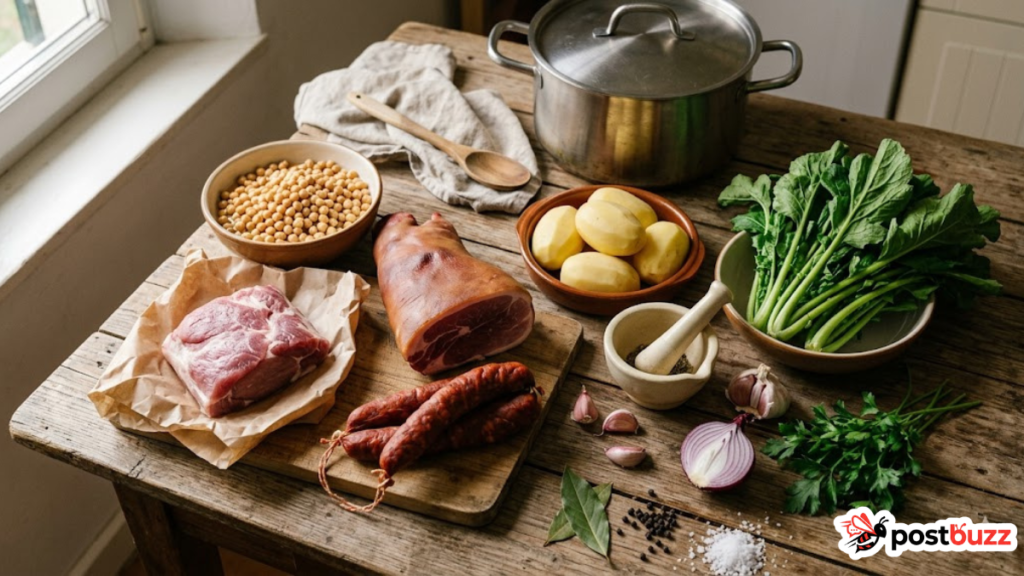
If you can’t find an authentic version nearby, the good news is that cocido gallego is very achievable in a home kitchen — it just needs time, not skill.
What goes into it
- Pork shoulder or pork ribs
- Lacón (cured pork foreleg) or smoked ham hock
- Chorizo gallego
- Dried chickpeas (garbanzos), soaked overnight
- Potatoes
- Grelos or turnip greens (cabbage works as a substitute)
- 1 onion, bay leaf, garlic
- Salt to taste
Step-by-step recipe
- Soak the chickpeas. The night before, soak dried chickpeas in plenty of water. This is essential — skipping it results in chickpeas that never properly soften.
- Soak the cured meats. If using lacón or salted pork, soak it separately for several hours (or overnight) to draw out excess salt.
- Start the pot. In a large stockpot, add the pork shoulder, lacón, and chorizo. Cover generously with water and bring to a gentle boil, skimming off any foam that rises.
- Add the chickpeas. Once the meats have simmered for about an hour, add the soaked, drained chickpeas. Reduce to a low simmer.
- Simmer slowly. Let everything cook gently for 2 to 3 hours, partially covered, until the meats are tender and the chickpeas are soft but holding their shape. Top up with hot water if the level drops too low.
- Add the potatoes and greens. In the final 30–40 minutes, add peeled, halved potatoes. In the last 15 minutes, add the grelos or turnip greens so they don’t overcook.
- Rest and separate. Once everything is tender, remove the ingredients from the broth. Traditionally, cocido gallego is served in stages: the broth first (often with a little rice or noodles cooked in it), then the vegetables and chickpeas, and finally the meats, sliced and arranged on a platter.
- Serve generously. Galician tradition leans toward big portions and second helpings — don’t be shy with the meat platter.
Tip: Cocido gallego tastes even better the next day, once the flavours have had time to settle. It also freezes well in batches, minus the potatoes (which go soft when frozen).
Frequently Asked Questions About Cocido Gallego
What is cocido gallego made of? It’s a slow-cooked stew of pork (shoulder, ribs, and lacón), chorizo, chickpeas, potatoes, and grelos (Galician greens), traditionally served in separate courses: broth, then vegetables, then meat.
Is cocido gallego the same as caldo gallego? No. Caldo gallego is a lighter, everyday soup made with white beans, greens, and pork. Cocido gallego is the larger, multi-course feast version with several types of meat and chickpeas — think of caldo as the simple weeknight version and cocido as the full celebration meal.
Where can I find authentic cocido gallego near me? Look specifically for restaurants that identify as Galician (not just “Spanish”), Spanish cultural/community clubs, or Galician associations in your city. Availability is often seasonal, so calling ahead is the most reliable approach.
Is cocido gallego served year-round? Rarely. Because it’s a heavy, slow-cooked dish, most restaurants serve it seasonally — typically in autumn and winter — or only on specific days of the week.
How long does cocido gallego take to cook? A traditional version takes around 3 to 4 hours of simmering, plus overnight soaking for the chickpeas and cured meats. There are no real shortcuts to an authentic result.
Can I make cocido gallego if I can’t find grelos? Yes — turnip greens or even cabbage can substitute for grelos if they’re not available locally. The flavour will be slightly different but still satisfying.
Final Thoughts
Cocido gallego isn’t fast food, and it isn’t always easy to find — that’s part of what makes tracking down a genuine version so rewarding. Whether you’re hunting down the best cocido gallego near me in London, New York, Miami, or further afield, the key is looking for restaurants that specialise in Galician cooking specifically, confirming availability before you go, and being patient with a dish that was never meant to be rushed. And if you strike out locally, now you’ve got everything you need to bring a proper pot of cocido gallego to your own table.
If you enjoy hearty, slow-cooked European classics like this one, you might also like exploring German comfort food. Rotkohl with apples is another traditional dish worth seeking out, and just as comforting on a cold day.
