
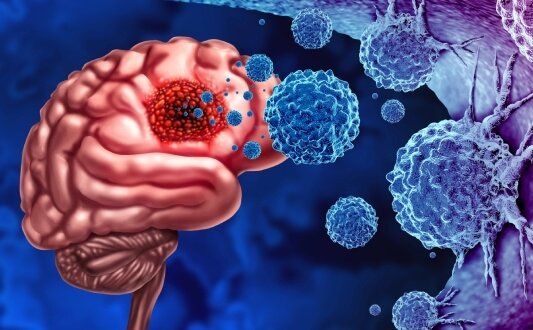
Glioblastoma is one of the most challenging types of brain tumour to manage. Treatment usually requires a multidisciplinary approach involving neurosurgery, radiation therapy, chemotherapy and careful neurological follow-up. Because every patient can have a different tumour profile, treatment decisions need to be individualized rather than based on a single therapy or generalized protocol.
Alongside conventional treatment, some patients explore complementary approaches such as Ayurveda. However, when considering any Ayurvedic approach for glioblastoma, it is important to distinguish between traditional use, laboratory research, animal studies and evidence from human patients.
What Is Glioblastoma?
Glioblastoma is a high-grade malignant brain tumour arising from glial cells. It can grow rapidly and infiltrate surrounding brain tissue, making complete surgical removal difficult in many cases.
The biological behaviour of glioblastoma can also vary considerably between patients. Molecular characteristics, tumour location, extent of surgical removal and response to radiation and chemotherapy can all influence the treatment strategy.
This is why a treatment approach that works for one patient cannot automatically be assumed to work for another.
Why Conventional Treatment Remains Important
Management of glioblastoma commonly involves several stages.
Surgery may be performed to remove as much of the visible tumour as safely possible. This is generally followed by radiation and chemotherapy, depending on the patient’s clinical circumstances.
Temozolomide is an important chemotherapy medicine used in glioblastoma treatment. Other factors, including molecular and pathological findings, can also influence treatment decisions.
Supportive care is equally important. Patients may need management for cerebral edema, seizures, fatigue, nutritional problems, neurological symptoms and treatment-related side effects.
Therefore, complementary therapies should not be considered replacements for established oncology care.
Why Evidence Matters When Considering Ayurveda
Ayurveda has a long history of using medicinal plants and individualized formulations. However, the existence of traditional use does not automatically establish that an herb can treat or cure glioblastoma.
Modern research on Ayurvedic ingredients can fall into several categories:
- Classical Ayurvedic evidence
- Laboratory studies using cancer cell lines
- Animal studies
- Pharmacological research on isolated compounds
- Human clinical studies
- Real-world patient observations
These forms of evidence have very different levels of clinical significance.
For example, if a compound reduces glioblastoma cell growth in a laboratory experiment, that finding can provide a research hypothesis. It does not establish that taking the corresponding herb orally will produce the same effect in a person.
Ayurvedic Ingredients Being Investigated
Several traditional Ayurvedic herbs and compounds have attracted scientific interest in glioma and glioblastoma research.
Shallaki
Shallaki, commonly associated with Boswellia species, has received particular attention because of research involving cerebral edema and boswellic acids.
Some research has investigated whether boswellic acids can influence inflammatory pathways and glioma-related cellular mechanisms. However, reducing cerebral edema should not be confused with shrinking or eliminating a brain tumour.
The evidence therefore needs to be interpreted according to the actual outcome being studied.
Ashwagandha
Ashwagandha has traditionally been used as a Rasayana and for supporting strength and recovery.
Research involving withanolides and glioblastoma models has produced interesting laboratory findings. However, purified compounds such as withaferin A are not equivalent to ordinary Ashwagandha root preparations.
This distinction is important because laboratory concentrations cannot simply be converted into an appropriate human oral dose.
Haridra and Curcumin
Haridra, or turmeric, contains several bioactive compounds, including curcuminoids.
Curcumin has been investigated in glioblastoma research for mechanisms involving oxidative stress, cellular signalling, apoptosis and tumour-cell behaviour. Nevertheless, bioavailability remains an important limitation.
A laboratory study using purified curcumin should not automatically be interpreted as evidence that consuming turmeric will produce the same therapeutic effect.
Pippali and Piperine
Pippali has an important place in Ayurvedic pharmacology, particularly in relation to digestion and bioavailability.
Piperine, a constituent also found in black pepper, has been studied in experimental glioma models, including research involving treatment-resistant cells.
At the same time, bioavailability enhancement can potentially affect the absorption or metabolism of medicines. Patients receiving chemotherapy, steroids or antiseizure medicines therefore need professional supervision before adding concentrated preparations.
Guduchi
Guduchi, traditionally identified as Tinospora cordifolia, is another Ayurvedic plant investigated in experimental research.
Some studies have examined its effects on glioma-cell behaviour and cellular differentiation. However, experimental findings do not establish Guduchi as a proven treatment for glioblastoma.
There is also an important safety consideration: products identified as Guduchi should be correctly authenticated, because species identity and preparation can influence both efficacy and safety.
The Difference Between an Herb and Its Active Compound
One of the most important concepts in evaluating Ayurvedic cancer research is that the whole plant and an isolated compound are not necessarily the same intervention.
For example:
- Ashwagandha is not identical to purified withaferin A.
- Haridra is not identical to purified curcumin.
- Shallaki resin is not identical to a standardized boswellic-acid preparation.
- Brahmi is not identical to isolated bacoside A.
- Mandukaparni is not identical to purified asiatic acid.
The concentration, extraction method, plant part, preparation process and final dosage can all affect the biological properties of a preparation.
Therefore, research should be matched as closely as possible to the actual product being considered.
Why the Blood–Brain Barrier Matters
Another major challenge in brain-tumour research is the blood–brain barrier.
A substance may demonstrate promising activity against tumour cells in a laboratory environment, but that does not necessarily mean sufficient quantities will reach the tumour in the human brain.
Claims such as “crosses the blood–brain barrier” should therefore be supported by direct pharmacokinetic or brain-tissue evidence rather than inferred from laboratory activity alone.
This is especially relevant when evaluating herbal extracts, purified phytochemicals and nanoparticle-based preparations.
Ayurveda and Individualized Care
Traditional Ayurvedic practice emphasizes individualized assessment rather than assuming that one formulation is appropriate for every person.
In a patient with glioblastoma, factors such as current symptoms, digestion, nutritional status, strength, sleep, neurological function and ongoing conventional treatment may all be relevant when developing supportive care.
However, Ayurvedic concepts should not be used to replace pathological or molecular diagnosis.
For example, molecular characteristics of a glioblastoma should not simply be translated into a particular dosha classification. Modern neuro-oncology and Ayurvedic assessment represent different frameworks and should be used appropriately.
How Patients Can Evaluate Ayurvedic Claims
Before using an Ayurvedic formulation for glioblastoma, patients and caregivers should ask several practical questions:
- What exactly are the ingredients?
- Which botanical species are being used?
- Which plant part is included?
- Is it a powder, extract, resin or purified compound?
- Has the finished formulation been tested for quality?
- What evidence exists for the actual preparation?
- Was the research performed in cells, animals or humans?
- Is the research dose comparable to the proposed dose?
- Could the formulation interact with chemotherapy or other medicines?
- How will treatment response and adverse effects be monitored?
These questions can help separate evidence-based complementary care from unsupported cancer-treatment claims.
Ayurveda Should Be Considered Complementary, Not a Replacement
For a serious disease such as glioblastoma, complementary medicine should be integrated carefully with the patient’s oncology plan.
Stopping or delaying surgery, radiation, chemotherapy or other medically indicated treatment in favour of an unproven alternative can carry substantial risks.
The more responsible approach is to investigate promising Ayurvedic research while maintaining appropriate conventional treatment and medical monitoring.
Patients interested in the scientific literature around Ayurvedic approaches can also review a detailed discussion of Ayurvedic treatment for glioblastoma, including research limitations, individual ingredients, formulation considerations and safety issues.
Final Thoughts
Research into Ayurveda and glioblastoma is still developing. Certain herbs and their constituents have demonstrated interesting findings in laboratory and preclinical studies, while some areas—such as cerebral edema management—have generated human research.
But promising research is not the same as proof of a cure.
The most useful approach is to examine the evidence at the level of the actual ingredient, preparation, dose, mechanism, safety profile and clinical outcome.
For patients and families dealing with glioblastoma, informed decision-making means combining appropriate conventional treatment with carefully evaluated supportive approaches rather than relying on unsupported claims.
Note: This article is for educational purposes and should not be interpreted as medical advice or as evidence that any Ayurvedic medicine can cure glioblastoma. Decisions about treatment should be made with the patient’s qualified oncology and medical-care team.
