
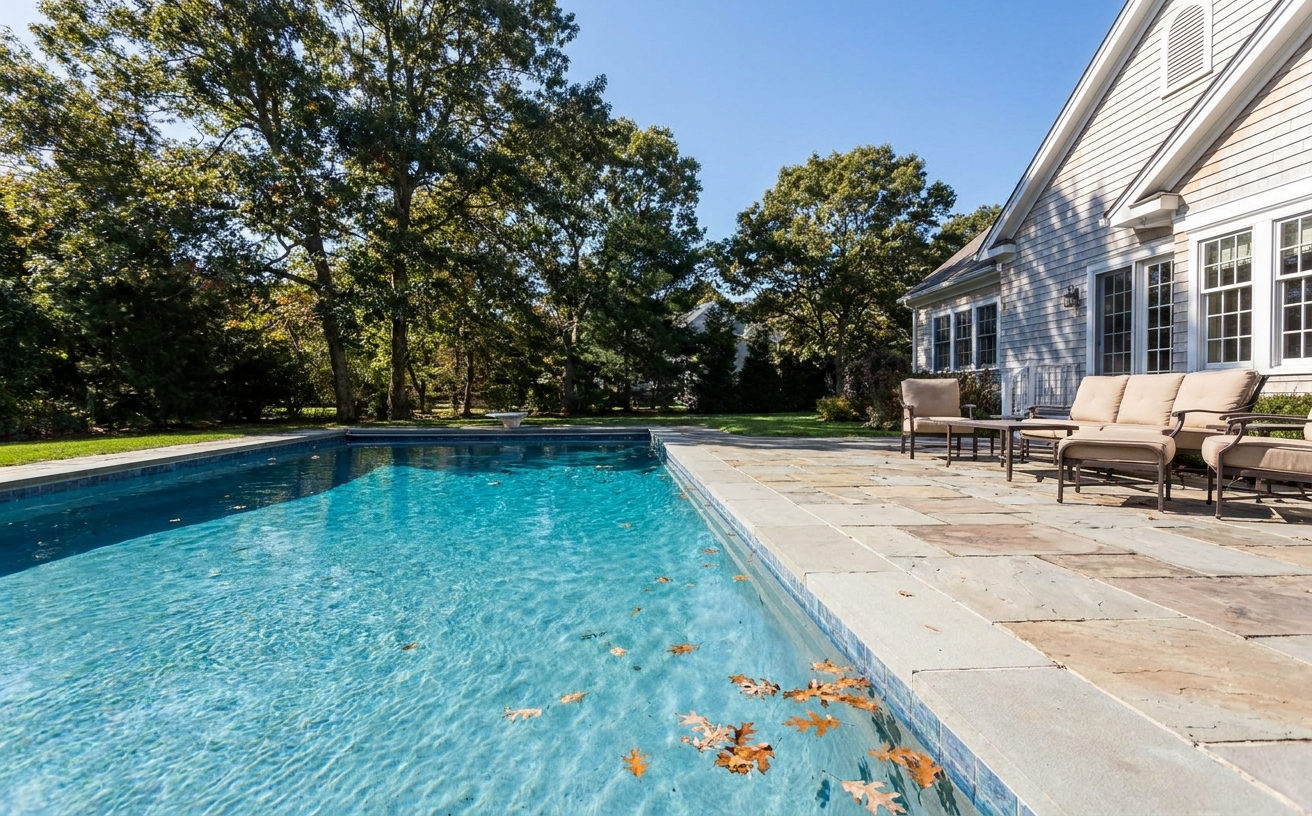
A backyard pool has its own weather report. Not the one on TV, and not the quick forecast on your phone. This one is more local. It comes from the trees over the fence, the direction of the wind, the birds on the roof, the grass clippings near the patio, and the storm clouds that roll in after dinner.
Pool owners who learn to read these signs often feel less surprised by the work that follows.
A windy day explains the leaves. A pollen-heavy week explains the film on the surface. A fresh mow explains the bits of grass near the edge. A summer storm explains why the pool looks different the next morning.
This way of looking at the backyard changes the mood. Instead of reacting to every mess as if it came from nowhere, you begin to see patterns.
And once you see patterns, you can build better routines.
The Pool Is Part of a Small Ecosystem
A pool may look separate from the yard, but it is connected to everything around it. Trees drop leaves. Flowers release pollen. Birds carry debris. Wind moves dust. Lawn equipment sends tiny clippings into the air.
Even the patio furniture plays a role. Cushions collect pollen. Umbrellas catch leaves. Planters drop soil. Kids carry grass on wet feet.
None of this means the yard is poorly kept. It means the backyard is alive.
A clean pool routine starts by accepting that the pool does not exist in a sealed room. It sits inside a living outdoor space, and that space changes every day.
Start With Wind Direction
Wind is one of the biggest clues. A light breeze may not seem important, but it decides where leaves, dust, and pollen go.
Spend a week noticing what happens after wind from different directions.
Maybe wind from the west pushes leaves into the shallow end. Maybe wind from the north brings dust from a nearby road. Maybe a certain corner collects floating debris every time the weather changes.
This is useful information.
It tells you where to check first. It also helps you place furniture, storage bins, and plants more thoughtfully.
Wind turns random mess into a pattern you can plan for.
Watch the Trees by Season
Trees create different pool issues at different times of year. Spring may bring pollen. Early summer may bring flowers or seed pods. Fall brings leaves. After storms, small branches may appear.
Create a simple tree calendar for your yard.
You do not need botanical knowledge. Just notice what drops and when.
For example:
- March: yellow pollen on chairs and waterline
- May: small blooms near the steps
- August: dry leaves after hot weeks
- October: heavy leaf drop after windy days
This kind of note helps you stop being surprised.
It also helps you prepare before the pool looks messy, not after.
Pay Attention to Lawn Day
Lawn mowing can affect the pool more than people expect. Grass clippings, dust, and small debris can move across the deck and into the water.
If someone cuts the grass weekly, notice what happens afterward.
Does the pool look different the next morning? Do clippings collect near one side? Does the patio need a quick blow-off before people swim?
A small habit can help. After lawn work, take five minutes to clear the deck near the water. Move loose clippings away before they become pool debris.
The goal is not to make lawn day complicated.
It is to connect cause and effect.
Notice What Birds Do
Birds are part of the backyard too. They sit on fences, rooflines, trees, and patio furniture. Sometimes they bring small messes with them.
Watch where they gather.
If birds often land on one side of the fence, that area may need more frequent attention. If they sit over the same patio chair, move the chair. If bird droppings appear near the waterline, check nearby branches or roof edges.
You do not need to control every bird.
You only need to understand the pattern well enough to reduce the cleanup.
A small adjustment in furniture placement can sometimes help more than repeated frustration.
Use Patterns, Not Panic
Many pool owners react only when the water looks different. That creates a cycle of surprise and cleanup.
A better approach is to use patterns.
If you know windy days push debris into one area, check that area after the wind. If you know pollen peaks in spring, plan for more frequent surface attention. If you know storms bring leaves overnight, expect a morning reset.
For households that want this routine to feel less reactive, a robotic pool cleaner can fit into a broader pattern-based system, working alongside the natural rhythm of the yard rather than replacing the need to understand it.
The real improvement comes from awareness.
Tools help more when the owner already knows what the backyard tends to do.
Build a Backyard Field Note
A field note sounds formal, but it can be simple. Use a note on your phone or a page in a household notebook.
Track what you notice for two weeks.
Try categories like:
- Weather
- Wind direction
- Tree debris
- Lawn work
- Pool appearance
- Quick action needed
You may only write one sentence per day.
“Windy after lunch, leaves gathered by steps.”
“Lawn cut today, grass near shallow side.”
“Storm last night, small branches on deck.”
“Pollen heavy this morning, patio table dusty.”
After two weeks, you will understand your backyard better.
Plan Around Storms
Storms are obvious, but their effects can still catch people off guard. Rain, wind, runoff, and falling debris can change the pool area quickly.
Before a storm, secure loose items. Close umbrellas. Move light toys into storage. Clear small objects from the deck.
After a storm, do a short inspection before anyone swims.
Check for branches, debris, furniture movement, and anything that may have blown into the water. Look at the patio too, not just the pool.
Storm cleanup feels easier when it is expected.
The backyard weather report helps you stay ahead of it.
Include the Patio in the Reading
The patio often tells you what the pool will need. If the table is dusty, the water may be too. If cushions are covered in pollen, the pool surface may show it. If leaves collect near the door, they may soon reach the water.
Look at the whole space.
A clean pool surrounded by a messy patio will not feel fully ready. A clean patio with ignored water will not feel right either.
The two work together.
Reading the backyard means reading both land and water.
Avoid Overreacting to One Messy Day
One messy day does not mean your routine has failed. Outdoor spaces change. A storm can undo yesterday’s work. A windy afternoon can bring in leaves even after a morning cleanup.
Do not judge the system by one day.
Look for repeated patterns.
If the same corner is always messy, solve that corner. If the same tree causes seasonal debris, plan around that season. If the pool only looks messy after storms, build a storm routine.
A pattern-based approach is calmer than treating every issue as new.
Make the Yard Easier to Read
The easier the yard is to read, the easier it is to manage.
Keep pool toys in one place. Store tools neatly. Trim plants that constantly drop into the water if that fits your landscaping plan. Keep the deck clear enough that new debris is easy to spot.
A cluttered backyard hides clues.
A simple layout makes changes more visible.
This does not mean the yard has to look bare. It only means the space should be clear enough that you can tell what happened overnight.
The Backyard Is Always Talking
A pool owner does not need to become a weather expert. But paying attention to the yard can make pool care feel more predictable.
The wind, trees, lawn, birds, and storms all leave signs. Once you learn those signs, the pool feels less mysterious. You stop wondering why the water looks different and start understanding what changed around it.
That awareness can make maintenance less stressful.
It can also make the backyard more enjoyable because you are no longer fighting it blindly.
A pool is not just a blue rectangle behind the house. It is part of a living outdoor space. When you learn to read that space, you can care for it with more confidence and less frustration.
