
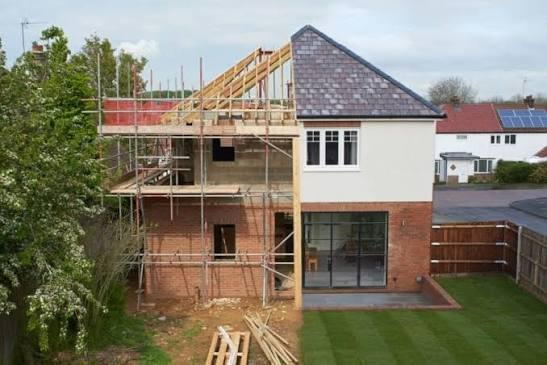
Bicester has changed a lot over the last ten years. Anyone who knew the town before the new-build wave started will tell you the same thing — it barely resembles the place it used to be. New estates keep going up on almost every edge of town, and buyers are constantly asking us whether it’s worth paying more for the eco-focused developments or sticking with the more affordable, high-volume sites. Both have their place, and the best estate agents in Bicester for sellers see this question come up on a weekly basis.
The New-Build Premium Is Real, But It Varies A Lot
New homes in Bicester generally sell for more than comparable older properties in the area, sometimes by a fair margin. That premium isn’t fixed though. It moves depending on which development you’re looking at, how far along the build is, and whether you’re buying in one of the higher-spec eco schemes or a more standard volume site. Buyers usually ask about this early on, and it’s a fair question, because paying more upfront only makes sense if you understand what you’re actually getting for it.
Premium Developments Like Elmsbrook
Elmsbrook is the one people bring up most when they talk about Bicester’s eco-town developments. These homes are built to a genuinely high standard — proper thermal insulation, low carbon footprints, and renewable energy systems built in from the start rather than added later. Utility bills tend to be noticeably lower here, which matters a great deal more to buyers now than it did a few years back.
There’s also a strong sense of planning behind these estates. Green spaces are built in deliberately, not squeezed in as an afterthought, and there are strict design codes that keep the whole area looking consistent. It feels considered. Whether that’s worth the extra money depends on how long you plan to stay, though.
The drawback is straightforward — you’re paying more from day one. If the local market grows slowly over the next few years, it can take longer than people expect to recover that initial premium through capital growth. It’s not a bad investment by any means, but it’s not an instant one either. We see this quite often with buyers who assume the eco features alone will drive faster resale value. Sometimes they do. Sometimes the market just needs time to catch up.
Budget And Volume Developments Like Kingsmere
Kingsmere and similar volume developments sit at the other end of the scale. The entry price per square foot is lower, and there are usually more standard specification options, which makes these estates a natural fit for first-time buyers trying to get on the ladder without stretching too far.
What these developments often get right is speed of infrastructure. Schools, local shops, and commuter road links tend to arrive faster here than in some of the newer master planned eco-towns, simply because the pace of building is quicker and the layouts are more conventional. For a family that needs a school place sooner rather than later, that matters a lot.
The trade-off is density. These sites are often built with more homes per acre, and the social housing mix can vary street by street. Plots can feel a bit tight in places, and that can occasionally hold back long-term resale growth compared with the greener, lower-density developments. Not always — but it’s a pattern worth being aware of before you commit.
So What’s Actually Worth Buying?
There’s no single right answer here, and anyone who tells you otherwise is probably trying to sell you something. If long-term energy savings and a more considered living environment matter to you, and you’re happy to hold the property for a good number of years, the premium developments like Elmsbrook tend to make sense. The higher price is easier to justify when you look at it over a longer horizon.
If you need something affordable now, with schools and shops already up and running nearby, the volume developments like Kingsmere are usually the more practical choice. You won’t get the same eco credentials, but you’ll get a lower entry cost and a community that’s already functioning rather than one still being built around you.
A Final Thought on Timing
Bicester isn’t finished growing. More land is earmarked for development on the edges of town, so both types of estate are likely to keep expanding over the coming years. That’s generally good news for existing owners, since more infrastructure tends to follow, but it’s also worth checking what’s planned nearby before you buy, because a building site next door for two or three years isn’t for everyone.
