
The Graduate Record Examination (GRE) is used for admission to several institutions of higher learning around the world. The exam aims to evaluate an individual’s ability to analyze the questions provided, solve the problems that are presented in the exam, and apply their knowledge of verbal reasoning skills.
Many college students take this exam to pursue their graduate education. In other words, it is a test that needs more than just knowledge about the contents covered in the test. Preparation for this test is essential, and this roadmap has all the information one needs to be ready for this test, which includes how one can do well on the GRE test. Selecting the best GRE training helps in effective preparation and better results.
Overview of the GRE Exam
The GRE exam is mandatory for many universities worldwide. The test assesses the proficiency of a student in verbal reasoning, quantitative reasoning, and analytical writing. It also evaluates the skill of critical thinking, problem-solving, and speaking skills of the applicant to assess their suitability for undertaking further studies.
| Measure | Number of Questions | Allotted Time |
| Analytical Writing (One section) | One “Analyze an Issue” task | 30 minutes |
| Verbal Reasoning (Two sections) | Section 1: 12 questionsSection 2: 15 questions | Section 1: 18 minutesSection 2: 23 minutes |
| Quantitative Reasoning (Two sections) | Section 1: 12 questionsSection 2: 15 questions | Section 1: 21 minutesSection 2: 26 minutes |
Getting a Strong GRE Score
In order to score well on the GRE exam, you must always remain prepared and consistent. This will never work in case of last-minute preparations. Practice, determination, and progress are what matter.
The very first step towards success would be to realize your own potential. This can be done through practicing on a full-time basis. Understanding what type of questions you’re facing allows you to create an extra-focused and effective testing program that makes the exam much less complicated. Additionally, knowing the style of questions asked on the GRE can reduce anxiety and improve confidence by watching once a day.
Building a Consistent Study Plan
The right preparation plan forms the basis for performing well on the GRE. Ideally, the preparation should last several weeks so that you can gradually build skills and steadily improve over the years. Choosing the best GRE preparation classes can also support this process.
Some of the elements that goes into the right study plan are:
- A regular study time
- Studying all sections
- Reviewing the concepts learned
The most effective approach would be to learn your vocabulary through context and not rote learning. You should also eventually practice a mock test once or twice a week. As steadiness is more fruitful than last-minute cramming.
Improving Language Skills
Adequate verbal reasoning entails comprehension and good vocabulary skills. An excellent method of improving vocabulary is to relate new words to contexts, as opposed to stumbling upon them.
Tips:
- Read newspapers, editorials, and research journals daily.
- Note down new words and revise them.
- Practice inferential reading questions.
- Summarize passages in your own language.
- Grasp tone, logic, and meaning.
Improving Quantitative Skills
In the numerical section, the emphasis is on using the basics of mathematics efficiently and effectively rather than high-level theory.
To perform well:
- Make sure you have an understanding of basic Arithmetic, Algebra, and Geometry.
- Practice doing problems under time conditions regularly.
- Accuracy is key before moving on to speed.
- Be aware of tips to improve efficiency.
Improving Writing Proficiency
The analytical writing assessment gauges clarity of thought and organized expression. Higher scores rely more on organizational skill than extensive vocabulary.
To improve writing:
- Write practice essays on various topics.
- Adhere to a proper format: introduction, arguments, examples, conclusion.
- Ensure you create one powerful argument instead of several weak arguments.
- Study good sample essays.
- Obtain constructive criticism and keep editing.
Using Mock Tests Strategically
The mock test is one of the best ways to prepare for the GRE. The real strength of the mock test lies in its analysis, which consists of:
- Examining wrong answers
- Understanding time-wasting questions
- Recognizing recurring mistakes
- Focusing on weak areas during upcoming study sessions
Without analysis, tests provide little to no benefit at all.
Avoiding Common Preparation Mistakes
A lot of students waste a lot of scores through avoidable mistakes, such as:
- Not studying following a definite pattern
- Neglecting the analysis of mock tests
- Spending too much time on good sections
- Mugging up vocabulary blindly
- Not working under timed pressure
Time Management During Preparation
Effective time management should be employed while preparing for the GRE. Each section of the test has to be done within particular time frames. You need to learn how to be fast but not lose your efficiency. Timed practice will also help you become faster and will increase your confidence. It also relieves you from pressure and makes you more efficient.
Conclusion
Not only does the GRE test one’s proficiency academically, but it also evaluates discipline, dedication, and one’s capacity to manage time effectively. Planning is important in this context as well. Effective preparation and regular practice enable one to score well on the test. Good knowledge of the pattern is key. Proper error analysis helps improve your performance and scores.
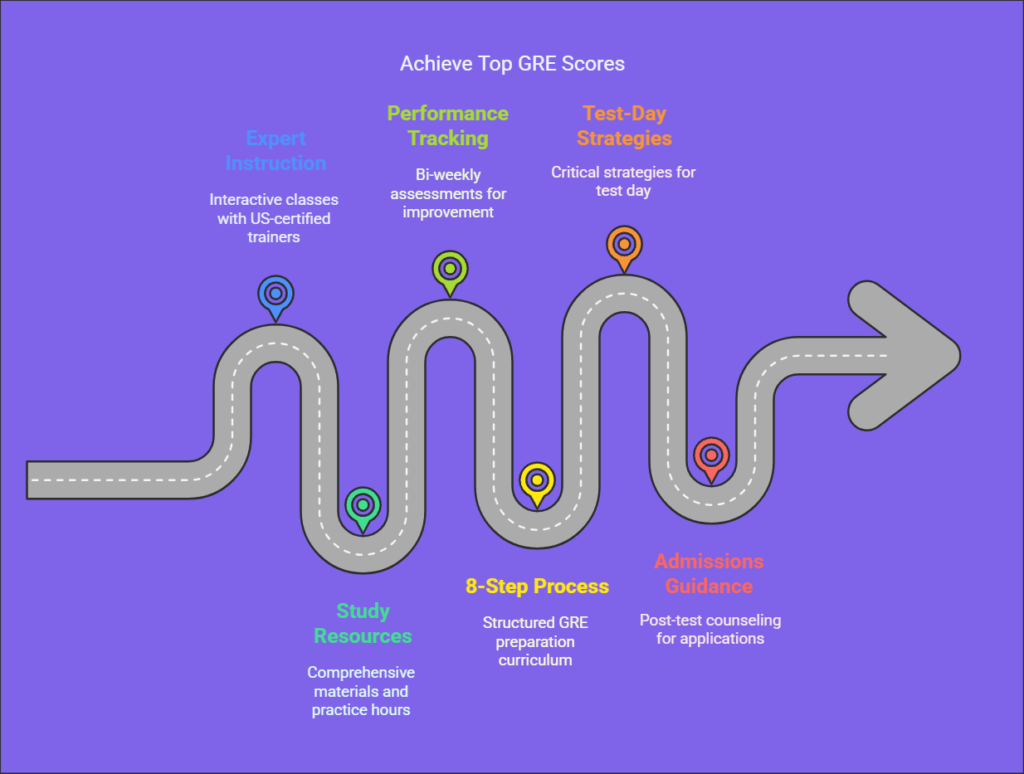
In this respect, Jamboree provides GRE preparation courses offline as well as online GRE preparation classes. This course is prepared by subject matter experts, and one can get the material as well as mocks, along with guidance and mentorship from expert faculty, as part of this program.
