
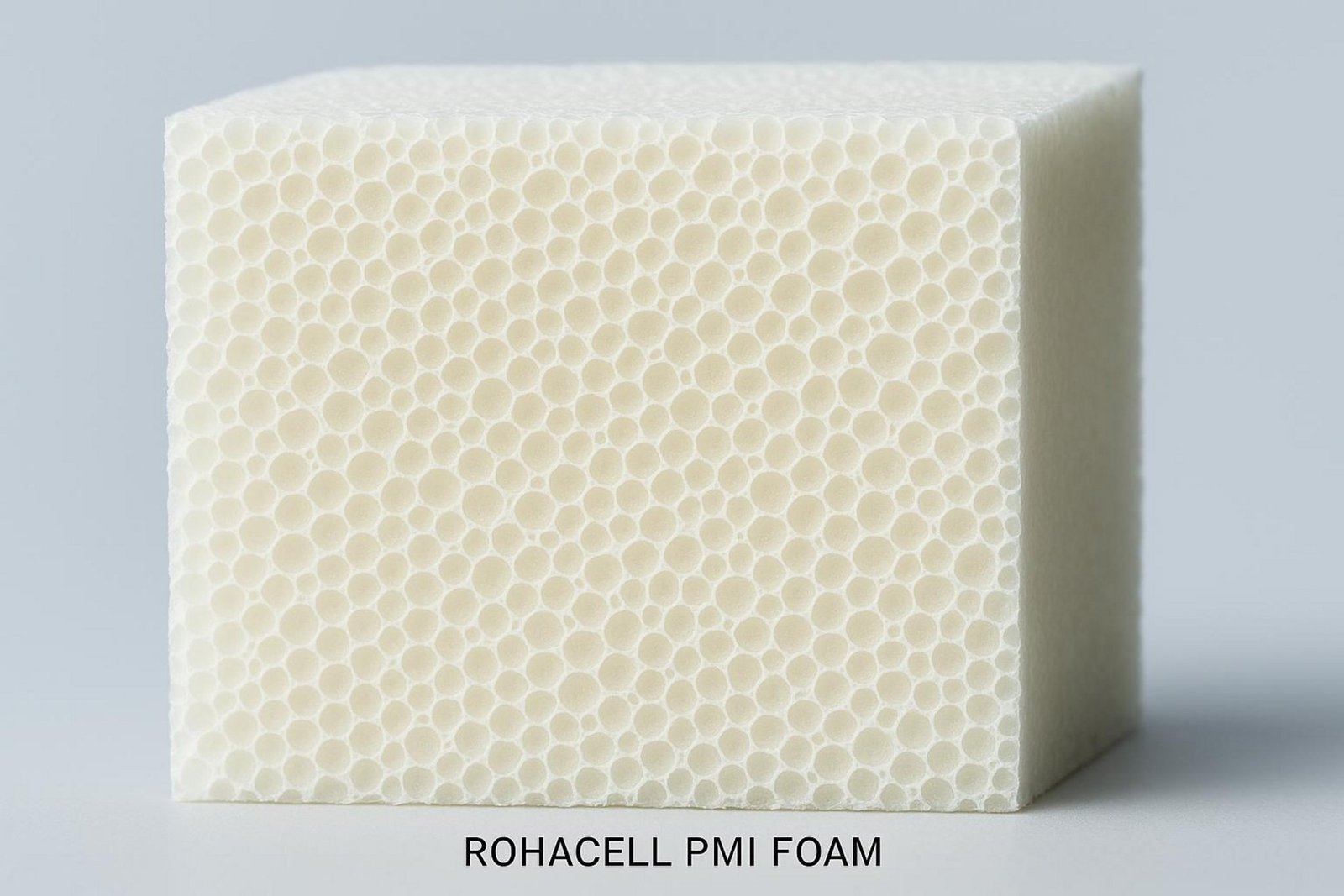
Modern industries keep pushing for better performance and higher efficiency. That often comes down to one thing: cutting weight without losing strength. That is where ROHACELL comes in. It is a high-performance, rigid polymethacrylimide (PMI) foam used as a core material in advanced composite “sandwich” parts.
Because it has a 100% closed-cell structure, strong mechanical properties, and good heat stability, it helps engineers build parts that are much lighter than metal while still staying stiff, durable, and resistant to harsh conditions. This makes it possible to reduce weight without weakening the part, which opens up new design options in many industries.
How ROHACELL Enables Strong Yet Lightweight Engineering
What Makes ROHACELL Unique Among Structural Foams?
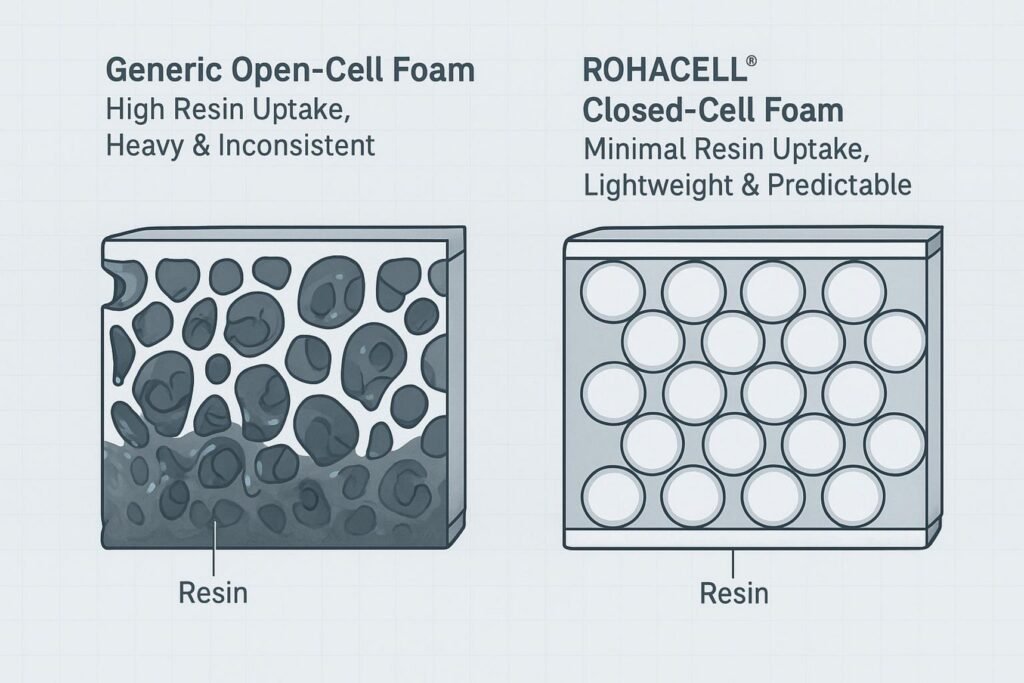
ROHACELL stands out from other structural foams because of how it is built and how it behaves. It is a PMI-based foam with a 100% closed-cell structure. That matters because the cells are separate from each other, so resin cannot easily flow deep into the foam during composite production. Instead, the resin mainly stays near the surface. This leads to low and predictable resin absorption, which helps keep part weight and mechanical performance consistent.
ROHACELL also has a fine, even microcell structure and isotropic performance, meaning it acts the same in every direction. For engineers, that means the material behaves in a steady, predictable way across the whole sheet. On top of that, it offers strong mechanical performance, including high heat resistance, strong compressive strength, and very good creep resistance. It can handle demanding cure temperatures and long-term loads, even though it may look similar to common packaging foams at first glance.
How Does ROHACELL Balance Strength and Weight?
ROHACELL gets its excellent strength-to-weight results mainly from how it is used in sandwich composite structures. A sandwich structure has two strong, thin outer layers (often carbon fiber reinforced plastic, or CFRP) with a thicker lightweight core in between. ROHACELL is used as that core. The outer layers take most of the pulling and squeezing forces, while the core keeps them spaced apart, stops buckling, and boosts stiffness.
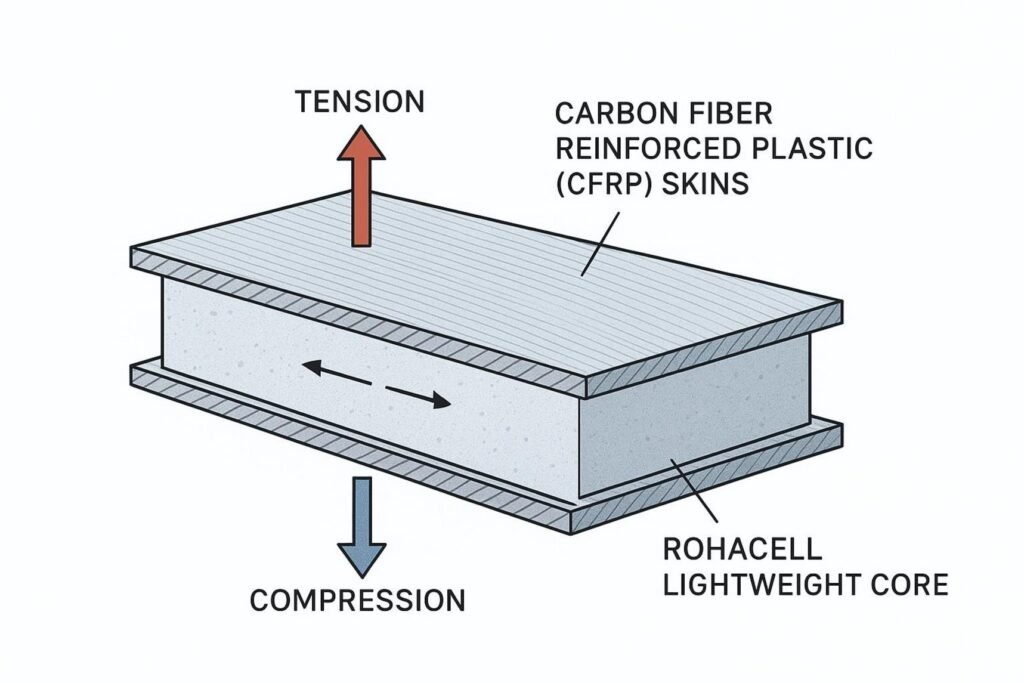
Because ROHACELL has low density but strong “specific” strength (strength compared to weight), it helps create parts with a very high stiffness-to-weight ratio. In simple terms: the part can be very stiff and strong without being heavy like solid composites or metals. Less weight can mean better fuel use in aircraft, better acceleration in cars, and easier handling in sports gear. ROHACELL also has good stability and fatigue resistance, so it keeps this balance over time, even with repeated loading.
Key Benefits of ROHACELL for Advanced Engineering Applications
High Specific Strength and Stiffness
ROHACELL foams can offer major weight savings compared with many other structural foams because they combine low density with strong mechanical properties. This leads to parts with high specific strength and stiffness-strong and rigid for their weight. In areas where every gram counts, such as aerospace and high-performance sports equipment, this can change what is possible in design. The stiffness also helps parts hold their shape under heavy loads.
Low Resin Uptake for Better Composite Performance
ROHACELL is well known for very low and consistent resin uptake. In composite manufacturing, foam cores can absorb resin, but too much resin adds weight without adding real performance, and it can also cause variation between parts. ROHACELL’s closed-cell structure and fine cell pattern limit resin contact mostly to the surface with only shallow penetration. This helps keep parts as light as possible while also keeping laminate weight and resin use more predictable. It can also support good surface quality and steady mechanical results from part to part.
Thermal and Chemical Stability
ROHACELL has strong heat and chemical stability, which helps in both manufacturing and real-world use. Its high heat resistance lets it stay stable during high-temperature cure cycles without collapsing, softening, or forming microcracks. This reduces the chance of resin-rich areas or internal resin channels that could weaken performance. It also resists moisture absorption, which supports long service life and helps avoid problems like water entry and freeze damage. For dielectric uses, it can combine RF transparency with processing performance up to 190 °C (374 °F).
Excellent Processability and Design Freedom
ROHACELL is popular with engineers and manufacturers because it is easy to work with and supports many design shapes. It can be machined into complex 3D forms using standard methods, including thermoforming and NC processing. This helps teams create detailed shapes and clean looks without adding extra weight or giving up strength.
Because the material is uniform, engineers can run more reliable calculations during design, which can also simplify production and reduce costs. It works well for both structural parts that need high stiffness for low weight and visible parts that need accurate shapes.
Durability and Long-Term Reliability
Many applications require parts that last for years under repeated stress. ROHACELL supports this with strong fatigue resistance and resistance to water entry, freeze damage, and skin debonding. These qualities help parts keep their performance over long service periods. This makes it attractive in industries where failure is not acceptable.
ROHACELL Across Major Engineering Sectors
Aerospace and Aviation: Lightweighting for Performance and Efficiency
Aerospace is a clear example of how reducing weight improves performance and lowers costs. New aircraft designs often replace metal structures with fiber composites that use ROHACELL cores. Uses range from aircraft pressure bulkheads to helicopter rotor blades-where ROHACELL is the only closed-cell, isotropic foam that works with all composite processes. New aircraft types like eVTOLs (electric Vertical Take-Off and Landing vehicles) and advanced cargo aircraft such as DRONAMICS’ Black Swan also use ROHACELL to support lighter, more energy-efficient, and mechanically reliable designs. Evonik has also aligned ROHACELL production with sustainability goals by updating its Darmstadt production site to run on 100% renewable energy.
Automotive: Improving Mobility and Energy Savings
Car makers keep working to reduce vehicle weight to improve fuel economy, increase electric vehicle range, and boost performance. ROHACELL is widely used in lightweight sandwich structures for automotive parts, including body and exterior panels. Strong, low-weight cores reduce the mass that must be moved, which can lower energy use and operating costs. Since it can be machined into complex 3D shapes, it also supports distinctive designs without adding extra weight or weakening the structure.
Sports Equipment: High Performance with Reduced Weight
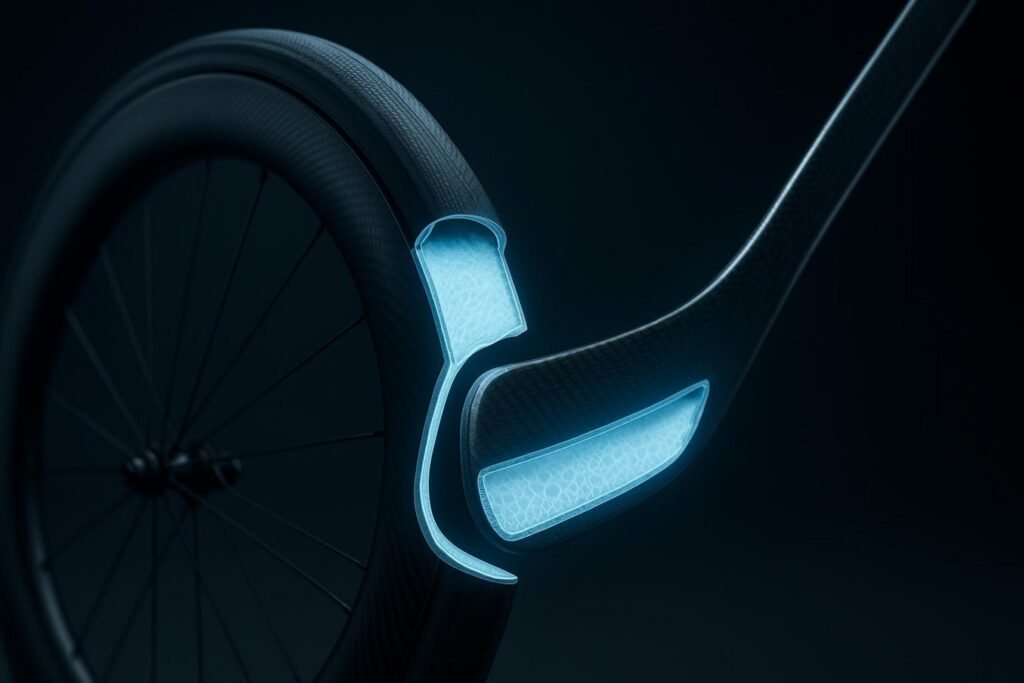
In sports, small weight changes can matter. ROHACELL is used in modern sports equipment where low weight and high durability are needed at the same time. Examples include cross-country and downhill skis that stay light but strong, and racing bike wheels where full-carbon rims with ROHACELL foam cores transfer rider energy well without deforming. In ice hockey sticks, ROHACELL foam cores in the blade help deliver high puck rebound and good puck control, while keeping the blade stable after many impacts.
Medical Technology: Precision and Strength in Medical Devices
Medical devices often need accuracy, strength, and sometimes low weight for patient comfort. ROHACELL’s mechanical strength, heat resistance, and ability to form complex shapes make it a common core material for precision composite structures in medical components. Its steady and reliable performance supports devices that must meet strict requirements.
Communications and Electronics: Structural Support with Minimal Mass
ROHACELL rigid foam can also be used in dielectric applications. It combines the RF transparency close to air with strong mechanical properties and the ability to handle high-temperature processing. This makes it suitable for radomes, precision RF parts, and even micro speakers for smartphones, where low weight and low signal interference matter. Its closed-cell structure also helps block moisture, which supports longer life and better reliability in electronics. For projects like these, the right grade can be sourced through Chem-Craft, a specialist supplier of ROHACELL foams.
Wind Energy: Load Reduction in Turbine Blades
Evonik’s ROHACRYL foam core is made to meet the strict needs of wind energy, offering stiffness, strength, and durability while cutting weight. The same lightweight design idea behind ROHACELL matters here too. Lighter wind turbine blades reduce loads on the full turbine, improve efficiency, and can extend service life. The high stiffness-to-weight performance of PMI foam core materials like ROHACELL and ROHACRYL supports more efficient and longer-lasting wind energy systems.
How ROHACELL Performs in Composite Manufacturing
How ROHACELL Reduces Resin Uptake?
ROHACELL keeps resin uptake low because it is a true 100% closed-cell PMI foam. Since the cells are separate and not connected, liquid resin cannot easily travel deep into the core during manufacturing. Most resin contact stays at surface wetting with only shallow penetration. Its fine and consistent cell structure also reduces the number of broken or open cells that could let resin in. ROHACELL sheets also have a naturally denser surface skin, which further limits surface pores. Together, these features mean the core absorbs mainly the resin needed for a strong bond, helping avoid extra weight and supporting composite quality.
Processing Factors Impacting Material Properties
Even though ROHACELL naturally limits resin absorption, processing conditions still affect the final result. Resin viscosity, laminate pressure, and cure temperature can all change how much resin interacts with the surface and how the foam performs. Very low-viscosity resins may penetrate slightly more if the process is not controlled. Too much pressure or the wrong cure temperature can also affect the surface and lead to changes in resin uptake. The surface finish after machining matters as well: a smoother surface often gives more consistent results than a rough one. Keeping these variables under control helps users get repeatable performance in high-performance composite parts.
Compatibility with Various Manufacturing Techniques
ROHACELL works with many composite manufacturing methods and curing technologies, which makes it useful across different production setups. For strong repeatability and control of resin content, it is often used with prepreg systems because they offer consistent resin films. It also works well with wet layup and infusion processes when resin levels and surface preparation are handled correctly. ROHACELL is also a good match for automated composite production, where bonding and curing can be done in one step. This flexibility can simplify production and widen the range of parts where ROHACELL can be used.
Maximizing the Advantages of ROHACELL in Design and Manufacturing
Selecting the Right ROHACELL Grade for Your Application
Evonik offers a wide product line of ROHACELL structural foams so engineers can match the material to their project needs. Choosing the right grade matters because grades differ in density, cell size, and mechanical properties, which can affect cure temperature limits, fire resistance, and dielectric behavior.
Common examples include:
- IG and IG-F: Very low absorption for aerospace interiors and medical components
- WF: Very fine cell structures for ultra-light laminates
- HERO and HT: High-temperature grades that stay stable during hot cure cycles, helping prevent extra resin penetration in autoclaves
- ROHACELL S: Good fire resistance for railway and shipbuilding
- HF: High dielectric properties for electronics
Matching the grade to the manufacturing method and performance target helps the finished part meet its goals.
Design Tips for Optimal Structural Performance
Getting the most from ROHACELL requires smart design choices. Its uniform structure supports reliable engineering calculations, which helps teams predict performance. Designers can also use thermoforming and NC processing to create complex 3D shapes without adding extra weight. In sandwich structures, core thickness and skin material selection should be chosen along with the ROHACELL grade to get the best stiffness-to-weight results. Since ROHACELL performs the same in all directions, designers can also make more efficient structures by focusing on where loads will occur while still counting on consistent core behavior.
Quality Assurance and Testing Considerations
Because ROHACELL is often used in high-performance and safety-focused applications, strong quality checks and testing are required. Its predictable resin uptake allows engineers to estimate laminate weight and resin use during design, but this should still be checked during production. Key mechanical properties-such as shear strength, compressive strength, and fatigue performance-should be measured across batches to confirm targets are met. Tests should also check moisture resistance and performance under temperature changes. With solid quality control, manufacturers can produce parts with steady weight, stiffness, and fatigue life, and better meet certification demands in areas like aerospace and medical technology.
Conclusion
ROHACELL has changed what engineers can do with lightweight, high-strength designs. Its development has also included more sustainable production choices. Evonik has updated ROHACELL foam production at its main site in Darmstadt, Germany, to use 100% renewable energy. This change is expected to cut CO2 emissions by about 3,400 tons per year, which matches a larger shift in industry toward cleaner manufacturing. As industries push for better efficiency and lower environmental impact, ROHACELL stands out as a high-performance material with a smaller carbon footprint, helping progress in both engineering and sustainability.
