
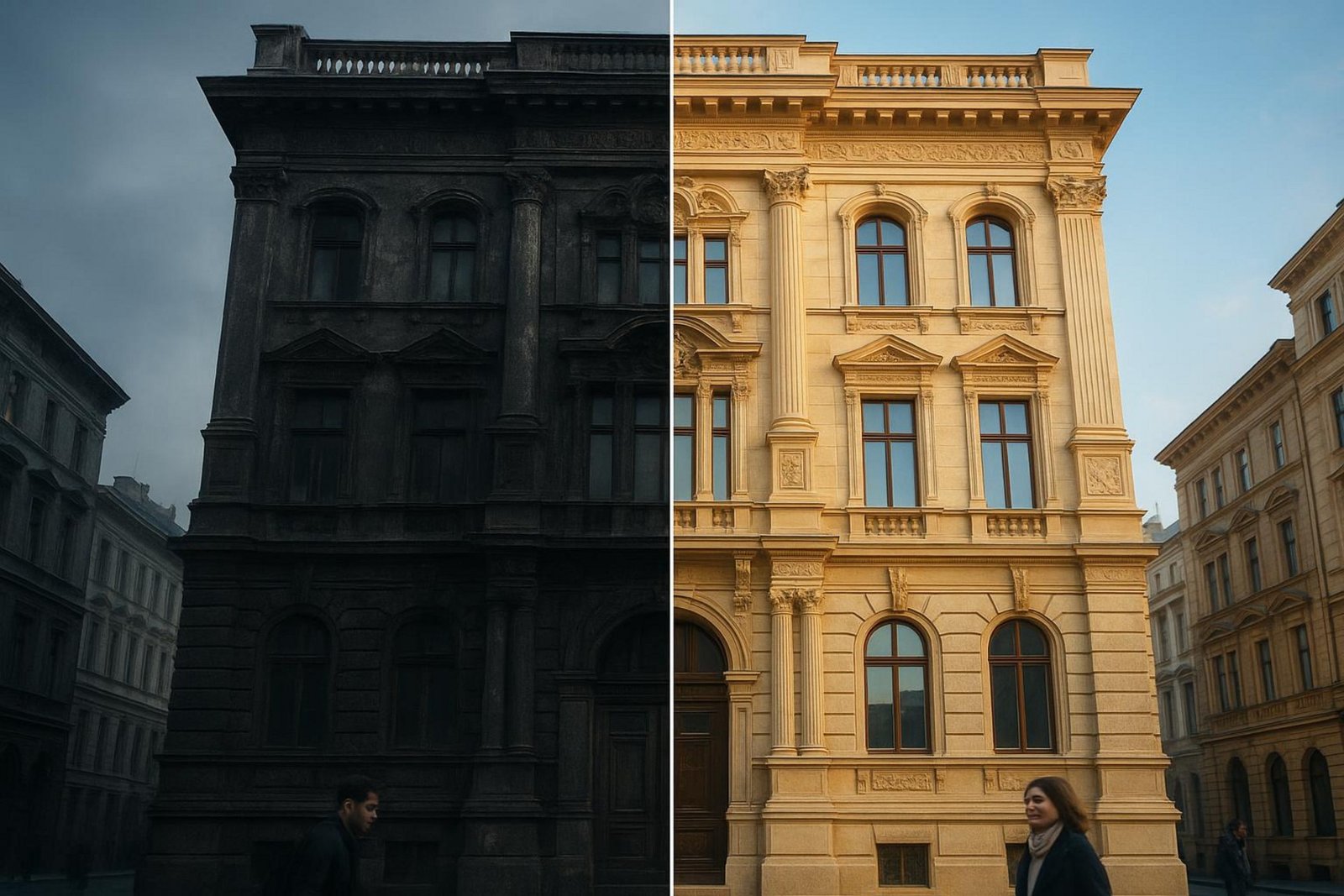
In busy cities, buildings take a constant beating from rain, wind, sun, pollution, and simple aging. So how do professional building facade cleaning services help stop long-term damage? They remove harmful build-up early, which helps prevent materials from breaking down, keeps surfaces in better condition, and can add years to the life of the building.
This is much more than making a property look nicer; it’s preventative care that protects a major investment. If the outside is ignored, small problems can grow into faster wear, water issues, and expensive repairs.
That’s why hiring expert building facade cleaning services is a smart move for owners and property managers who want a building that stays strong, clean-looking, and in good shape for the long run.
What Is Building Facade Cleaning?
Building facade cleaning is the careful work of cleaning and maintaining the outside of a building, especially the facade-the part people see most. It is more than a quick rinse. It focuses on removing built-up dirt, set-in stains, and pollutants that stick to surfaces over time.
A facade is not just “the outside.” It helps protect the building, shapes how it looks, and can even affect things like comfort and energy use. The facade usually includes exterior walls, cladding, glazing (windows and other glass parts), and details like balconies, ledges, cornices, and trim.
Professional facade cleaning has two main goals: improve appearance and help protect the materials that make up the exterior. This approach helps the building look good while also helping it stand up better to weather and pollution. Because different materials react differently to cleaning, facade cleaning also supports safety, preservation, and long-term building performance-especially in cities and harsh weather areas.
How Does Facade Cleaning Differ from Standard Exterior Cleaning?
Both facade cleaning and general exterior cleaning can make a property look better, but facade cleaning is more focused and specialized. General exterior cleaning may include sidewalks, outdoor lights, parking areas, or areas around the property. It is usually lighter work and does not focus deeply on the building’s vertical surfaces.
Facade cleaning focuses on the building’s upright surfaces and often needs special access tools and methods. The biggest differences are the detail level, the types of materials, and the difficulty of reaching areas safely. Different facade systems and architectural details need different methods.
A general exterior cleaning company may not have the right equipment or knowledge for this. The goal is not just to remove visible dirt, but to protect the actual surface and material, which means knowing how cleaning affects brick, stone, coatings, glass, and metal.
Why Does a Building Facade Need Cleaning?
Every building is exposed to rain, wind, sun, and pollution. These are not just appearance problems. They can cause discoloration, surface damage, and a dull or dirty look. Over time, if dirt and grime are left in place, they can speed up wear, reduce property value, and lead to damage that costs much more to fix than regular upkeep.
The facade is the building’s main barrier against outside conditions. When that barrier is covered in pollution and organic growth, the building can face problems like surface breakdown, trapped moisture, and even poorer indoor air quality. Ignoring early signs often leads to long-term damage that can affect safety and costs.
Which Contaminants Commonly Affect Facades?
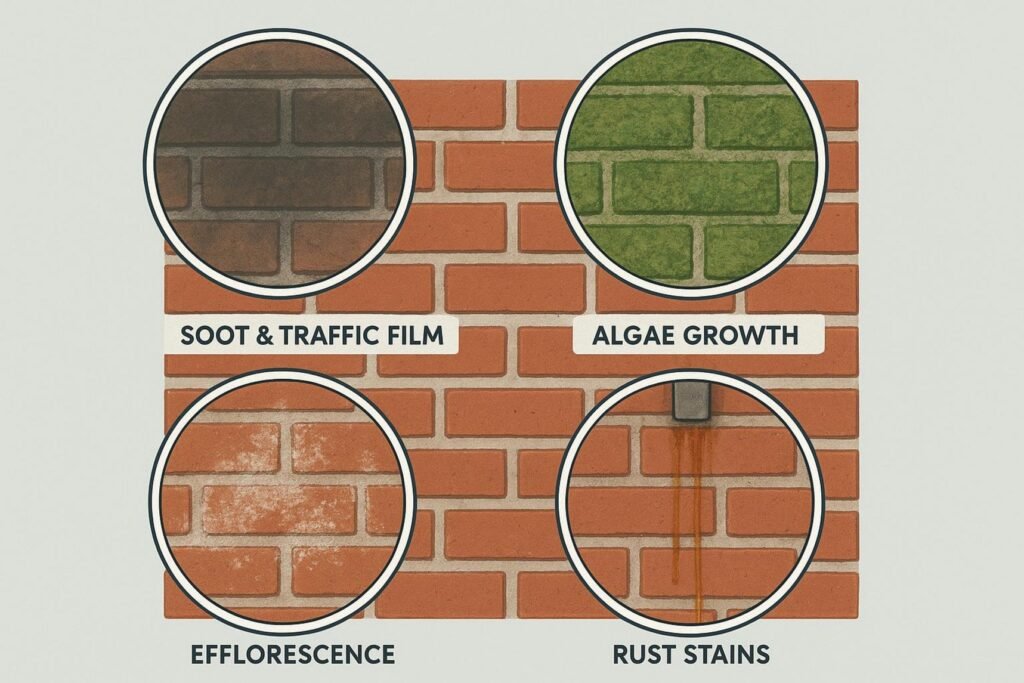
Facades collect many types of contaminants, and each can cause different issues. Common ones include general dirt, traffic film from vehicle exhaust, soot, and industrial pollution. Organic growth is also common-algae, moss, and lichen grow in damp or shaded areas and often leave green, brown, red, or black streaks.
Other problems include graffiti, chewing gum, and stains from water run-off or rust (often from metal parts that start to corrode). Mineral deposits and efflorescence (a white powder left behind when water pulls salts out of masonry) are also common when moisture gets into brick or stone. Bird droppings add another layer of staining and can be corrosive.
Many of these contaminants do more than sit on top of the surface-they can hold moisture, break down materials slowly, and hide small defects that can turn into bigger problems.
How Do Environmental Factors and Urban Pollution Cause Long-Term Damage?
Weather and city pollution work together to damage facades over time. Rain, wind, sunlight, and airborne pollutants like vehicle exhaust and industrial emissions hit exterior materials every day. Dirt and grime can soak up water and keep surfaces damp. That moisture can lead to salt deposits on brick or stone, faster wood decay, and rust on metal parts. In warm or very damp areas, humidity helps mold, mildew, and algae grow more easily, which can weaken surfaces and create safety concerns.
In cities, soot and tiny particles mix with moisture and form dark films, often under ledges and window sills. Carbon staining happens when carbon particles bind with moisture and settle into porous materials, leaving black streaks. Sunlight breaks down paints and coatings, causing fading or chalky residue.
Concrete and render can also change due to chemical reactions, leading to discoloration and surface crusting. Over time, these effects don’t just make a building look worse-they can slowly weaken the materials underneath.
What Are the Signs a Facade Requires Cleaning?
Spotting the need for facade cleaning early helps avoid bigger damage later. The signs are often easy to see and get worse over time. Common signs include visible dirt, pollution stains, and a general dull look. Dark streaks down walls, especially below windows and architectural ledges, often come from water run-off carrying grime.
Algae, moss, or mold growth-often on concrete or painted areas-usually means moisture is being held on the surface. Bird droppings on ledges or windows are another sign and can damage materials. Glass that looks cloudy or stained even after rain can point to mineral build-up and pollution film. You may also notice less natural light inside the building if exterior glass is heavily soiled. Acting on these signs early helps avoid permanent staining and keeps the property looking well cared for.
Types of Facades and Their Unique Cleaning Needs
Many people assume every exterior can be cleaned the same way. In reality, each facade material has its own needs. Using the wrong method can cause damage that cannot be undone, which is why material-specific cleaning matters. What works on glass may harm stone. What works on metal may strip paint. Choosing the right approach is key for safe, effective results.
Facade materials can include brick, terra cotta, granite, marble, sandstone, limestone, brownstone, concrete masonry units, glass curtain walls, Exterior Insulation Finishing Systems (EIFS), and precast concrete. Each one needs a proper review before cleaning. Knowing the differences helps protect the material, avoid repair costs, and get a clean finish without harming the surface.
1. Glass and Glazing
Glass facades look modern and bring in natural light, but they show smudges, streaks, and water spots very easily. Because glass is clear, even small marks stand out, so the cleaning needs to be careful and consistent. A common method uses a mild cleaner mixed with water, then a squeegee or special pads for a streak-free finish.
For tougher spots like oily marks, isopropyl alcohol with a soft cloth can help. Mineral deposits that leave a cloudy film may need a glass polish. Rinsing well with clean, purified water helps prevent new water stains. Many crews use pure water systems and water-fed poles that apply deionized water, helping the glass dry clean without chemical residue and reducing the risk of tiny scratches from grit or harsh tools.
2. Stone and Masonry
Stone and masonry facades-like granite, limestone, and brick-have a classic look, but many are porous and can stain or hold moisture. They can also grow algae or moss in damp areas. Cleaning needs to be gentle to avoid lasting harm. For basic cleaning, warm water with mild soap (or a small amount of vinegar in some cases) and a soft brush is often used, followed by careful rinsing.
Deeper stains may need specialty products, but strong acidic cleaners should be avoided on stones like limestone and marble because they can etch or dull the surface. Some stones also contain iron minerals that can react and leave rust-colored stains when exposed to certain cleaners.
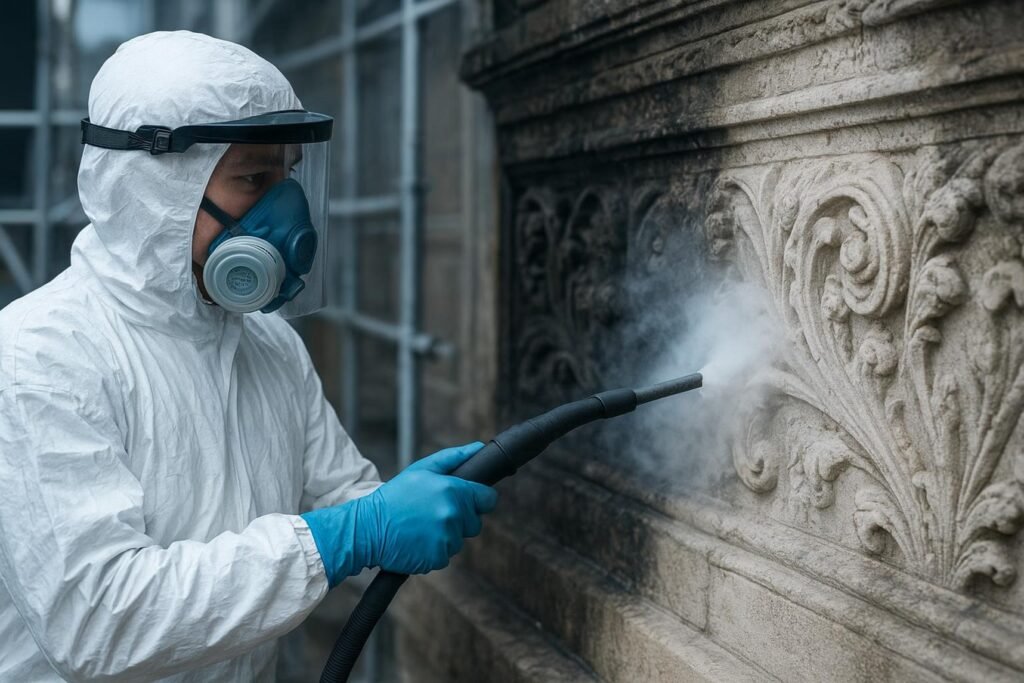
High-pressure washing can damage softer stone, weaken mortar joints, or force water into the wall, leading to cracks and spalling. Because of that, low-pressure steam cleaning (such as DOFF) or non-acidic chemical treatments are often safer, especially for older or historic stonework.
3. Metal and Cladding Systems
Metal facades and cladding-such as stainless steel, aluminum, and composite panels-can look sharp and modern, but they can also oxidize and pick up pollution staining. Cleaning should use products that do not scratch or damage protective coatings. A mild, pH-neutral cleaner with a soft cloth or sponge is usually recommended, followed by a full rinse.
Rust spots or specific stains may need special products, but they must match the metal and its finish. Cladding panels often have protective coatings, so cleaning must avoid abrasion and use balanced products that will not break down the finish. Run-off should also be managed so water does not get into joints. Harsh chemicals and high-pressure jets can lead to dulling, peeling, blistering, or corrosion over time.
4. Wooden Facades
Wood facades have a warm, natural look, but they are sensitive to moisture, mold, algae, and water damage. Wood can absorb water easily, which can cause swelling, discoloration, and rot if care is not taken. Before wet cleaning, loose moss or mold should be gently brushed off.
Cleaning should be gentle. Dish soap and warm water with a soft brush (natural hair or polyamide) often works well. The key rule is to avoid soaking the wood. Too much water can cause swelling and help mold return faster. Rinsing should use as little water as possible while still removing cleaning residue. Some hardwoods can handle a bit more moisture than softer woods, but a cautious approach is usually best.
5. Painted and Rendered Surfaces
Painted and rendered facades depend on the condition of the top layer. Over time, sunlight can weaken coatings, causing chalking, fading, flaking, or blistering. Strong chemicals or high-pressure washing can strip paint or force moisture behind it, leading to damage that may not show up right away.
These surfaces usually need gentler methods. Low-pressure steam cleaning (such as DOFF) or hand cleaning with pH-neutral products that are safe for coatings are common choices. Different render types (cement-based, silicone, monocouche, and others) and painted finishes react differently, so the approach should match the surface. If cleaning is too aggressive, repairs can be expensive and the facade can look worse than before.
Facade Cleaning Methods Used by Professionals
Professional facade cleaning is not the same for every building. The method is chosen based on the material, age, type of dirt, and site conditions. This careful approach helps clean effectively while protecting the surface from damage. Teams may use several methods together to get strong results without harming the facade.
Choosing the wrong method can cause staining, surface wear, or even void warranties on coated systems. That’s why professional work usually starts with an on-site survey and often includes test patches in less visible areas to confirm the safest and most effective method before full cleaning begins.
Pressure Washing vs. Soft Washing
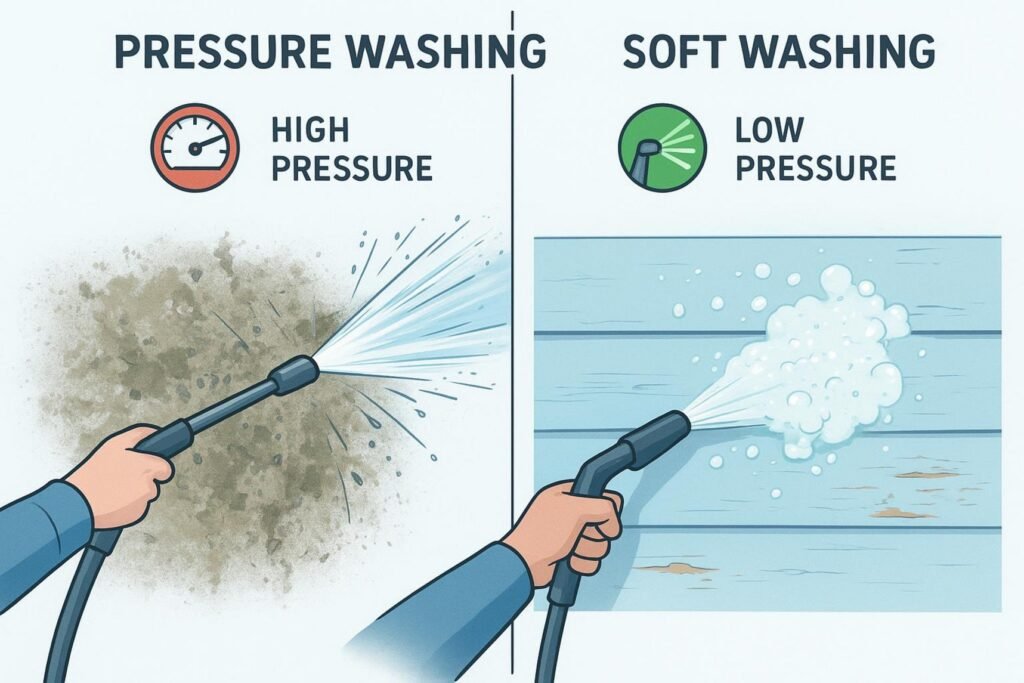
Pressure washing uses strong water jets to remove dirt. It can work well on tough surfaces, but it also comes with risk. If the pressure is too high, or the surface is fragile (older brick, worn mortar, paint, or soft stone), pressure washing can cause erosion, spalling, or push water deep into the material. Professional crews adjust pressure and flow rates to clean without causing harm.
Soft washing uses low-pressure water and cleaning solutions that break down dirt and organic growth like algae and mildew. The chemicals do most of the work, and the rinse is gentle. Soft washing often uses less water than high-pressure cleaning and is a good choice for surfaces where strong force could damage finishes or push moisture into the wall.
Chemical and Biological Cleaning Approaches
Chemical cleaning uses specialty products made to remove stains that water cannot, such as rust, oil, graffiti, or carbon deposits. For example, some cleaners work well on unglazed brick, terra cotta, concrete, granite, and many sandstones, while other cleaners are better for acid-sensitive materials like limestone, marble, and polished granite. Because these products can be risky if used wrong, trained professionals should apply them to avoid etching, staining, or long-term damage.
Biological treatments and softwash systems focus on organic growth using chemical action rather than pressure. They may include biocides or mild detergents applied at low pressure to kill algae, moss, mold, and lichen, which then slowly weather away. This works well for modern renders, painted surfaces, and materials where pressure could cause damage. Both chemical and biological methods need correct mixing, careful application, and proper rinsing so residue does not cause problems later.
Manual Brushing and Water-Fed Systems
For delicate surfaces, detailed architectural areas, or historic buildings where machines are not a good option, hand cleaning with soft brushes and gentle soap gives a controlled and safe result. It takes longer, but it reduces the chance of scratching or surface damage, which is important for conservation work.
Water-fed pole systems are a modern option for windows and smooth panels on taller buildings. They use long poles and purified, deionized water to lift dirt and leave surfaces spot-free without chemicals. This reduces the need for ladders or scaffolding for some work, improves safety, and lowers disruption. Because the water is purified, it leaves less residue behind.
Choosing Methods Based on Material and Condition
Picking a facade cleaning method is a major decision that depends on knowing how materials react to cleaning. It is never a single standard approach. Professionals start with full assessments to identify the surface type (brick, stone, render, cladding, and more), the coating or finish, the type and level of staining, the age of the building, and any planning or conservation rules. Different problems-like algae, carbon staining, or rust-need different solutions, such as biocide treatments, superheated steam, or targeted chemical cleaning.
Test patches in hidden areas are a key step. They show how a method works on that exact surface before the full job begins. This helps prevent damage like etched stone, stained brick, or voided warranties on coated systems. With the right checks, method choice, and trained staff, professional cleaning keeps the building exterior in good condition for the long term.
Risks of DIY Facade Cleaning Compared to Professional Services
Cleaning a facade yourself might sound like an easy way to save money for small, reachable areas. But many facade cleaning jobs-especially on multi-story buildings or sensitive materials-are safer and more effective when handled by professionals. Working at height is dangerous, and different materials need different methods to avoid damage.
A quick attempt using a pressure washer or store-bought chemicals can lead to serious damage and surprise costs. Professional teams bring the right tools, training, safety steps, and insurance, so the work is done properly and with less risk.
Potential for Unintentional Damage
DIY facade cleaning can cause damage without meaning to. Using the wrong chemical, too much pressure, or the wrong technique can permanently harm surfaces. High-pressure washing used on older brick, painted surfaces, or soft stone can cause erosion, spalling, or force water into the wall, leading to damp problems inside. Some chemicals (especially strong acids) can discolor surfaces, leave residues, or react with minerals in stone and create new stains. Even household detergents can leave visible streaks on masonry.
There is also a serious safety risk. Working at height without proper training and equipment can cause falls and injuries. If DIY cleaning causes damage or injury, the final cost can quickly exceed the price of professional service, including repairs, medical costs, and possible legal issues.
Limitations in Cleaning Methods and Access
DIY cleaning has limits, especially compared to professional work. A one-story building with light dirt may be manageable with mild soap and soft brushes. But taller buildings, detailed facades, and city locations bring access problems that need special equipment and training.
Professional crews use tools like scaffolding, scissor lifts, rope access, and purified water-fed pole systems to reach all areas safely. They also know how to match the cleaning method to the material and stain type-soft washing, chemical treatments, steam cleaning, or controlled abrasive methods where appropriate. This wider range of options, plus safety standards and insurance coverage, helps deliver a safer job and results that last longer than most DIY attempts.
How Building Facade Cleaning Services Prevent Long-Term Damage
Professional building facade cleaning services support the long life and stability of a property. They do more than improve appearance. They act as a planned defense against weather and pollution that slowly break materials down. By removing harmful contaminants and spotting issues early, these services help avoid long-term damage, protect property value, and support building safety and performance for many years.
The facade is the building’s protective outer layer. Regular expert care helps it keep doing its job, blocking moisture and pollutants from reaching deeper parts of the structure. This type of preventative maintenance can also mean fewer surprises and lower costs for owners over time.
Prevention of Structural Degradation
Professional facade cleaning helps slow down structural wear. Dirt, pollution, mold, and algae do not just sit on the surface—they can slowly break materials down. Grime can also hold moisture against the wall, keeping it damp and speeding up decay. It can hide early problems too, like small cracks or worn mortar joints. If those issues are missed, they can spread and affect bigger parts of the building.
Regular cleaning by a professional team such as Nova Construction Services removes build-up so surfaces can dry out properly. By removing what causes decay, cleaning helps keep materials stronger and slows long-term damage. It also makes inspections easier because small defects are easier to spot once the dirt is gone.
Protection Against Moisture, Mold, and Biological Growth
The facade is the first barrier against moisture. Cleaning helps by removing dirt that holds water and creates damp conditions. That trapped moisture can lead to salt deposits on brick or stone, faster rot in wood, and rust on metal parts.
Mold, mildew, and algae grow in damp, dirty areas. They can weaken surfaces over time and may create health concerns. Professional cleaning removes this build-up and helps reduce the conditions that let it grow. In some cases, experts may also apply quality sealants to help limit water entry, which lowers the chance of future mold or algae returning.
Reducing Corrosion and Material Erosion
In cities and coastal areas, pollutants can speed up corrosion and erosion. Chemicals in the air from traffic and industry can settle on surfaces and react with metal, leading to rust and corrosion. Near the ocean, salt build-up can make corrosion even worse. Wind can also carry tiny particles that slowly wear surfaces down.
Professional cleaning removes these pollutants before they cause lasting harm. By clearing away what triggers rust and surface breakdown, cleaning helps protect metal parts and reduces permanent staining on materials like glass, concrete, and stone. Early action helps break the cycle of damage and reduces the chance of bigger repair work later.
Extending the Lifespan of Surface Treatments and Finishes
Paints, coatings, and renders help protect a facade and affect how it looks. Over time, UV rays, pollution, and weather can weaken these finishes, leading to fading, blistering, peeling, or chalky surfaces. Professional cleaning helps these layers last longer.
By removing dirt and pollutants that speed up breakdown, cleaning supports the finish and the material below it. This can delay the need for repainting or recoating, which can be expensive. It is also especially helpful for older buildings, where original finishes and historic materials need extra care.

Minimizing the Need for Costly Repairs
One of the biggest benefits of regular professional cleaning is fewer expensive repairs later. Facade damage often builds slowly, so it is easy to ignore until the cost becomes large. Dirt can also hide cracks, corrosion, and weak mortar, allowing problems to grow unseen.
Cleaning can work like an early warning system. Once surface build-up is removed, small issues like hairline cracks, loose mortar, or failing sealant are easier to see and fix early through repairs such as repointing or crack injection. Fixing small problems early helps prevent major work later and can also reduce risks like falling debris, which can create liability for owners.
How Often Should Building Facades Be Cleaned to Prevent Long-Term Damage?
There is no single schedule that fits every building. Cleaning frequency depends on the site and the building itself. A fixed timeline can be misleading because conditions vary so much. A better approach is to include facade cleaning in a maintenance plan based on inspection results, risk, and appearance needs. That way, cleaning happens when it is actually needed, which helps control costs and protect the building.
When owners and facility managers understand what affects dirt build-up and surface wear, they can set a cleaning plan that better protects the property over time instead of waiting until the facade looks heavily stained.
Factors Affecting Cleaning Frequency
Several factors affect how often a facade should be cleaned. The building’s location matters a lot. Buildings in city centers, near major roads, industrial zones, or construction sites collect soot and traffic film faster, so cleaning may be needed every year or every two years. Buildings in cleaner areas may only need cleaning every three to five years.
Facade material also matters. Light-colored render, uncoated brick or stone, and some cladding types can show stains sooner or wear faster if left dirty. Exposure is another factor: north-facing or sheltered areas stay damp longer and may grow algae and moss more easily. Building use matters too-retail, hospitality, and commercial buildings often need a cleaner look and may need more frequent cleaning. Regular inspections help adjust the plan over time.
How Regular Maintenance Protects Your Investment
Regular facade care protects the building as an investment and does more than improve looks. A routine plan can lower long-term costs by stopping small problems from turning into big repairs. Regular checks for dirt, stains, mold, and damage, along with quick spot cleaning using gentle methods, helps prevent heavy build-up and permanent staining.
Other simple actions help too, like keeping gutters and downspouts clear so water does not overflow onto the facade, and trimming plants so branches do not scrape surfaces or create damp shaded areas. A clean facade can also raise property value because it gives a better first impression to buyers, renters, and customers. It can even help with energy use: dark, dirty surfaces can absorb more heat, which can increase cooling demand. Cleaning also supports healthier indoor conditions by reducing mold and pollutants that may otherwise enter the building.
Frequently Asked Questions about Building Facade Cleaning and Damage Prevention
How Do You Maintain a Building Facade?
Good facade maintenance needs regular actions over time. Start with inspections at least once per year and after major storms to spot early dirt, damage, or movement. Use a cleaning schedule that matches the location and materials, so build-up does not get out of control. Repair cracks, failing sealant, and small defects early so they do not spread. Keep nearby plants trimmed to reduce moisture and surface contact. Keep gutters and downspouts clear so water does not run down walls. If needed, apply protective coatings or sealants, and keep insulation systems in good condition. Keeping records of inspections, cleaning, and repairs also helps with long-term planning.
Does Facade Cleaning Increase Property Value?
Yes. A clean, well-kept facade improves property value because the exterior shapes first impressions. It signals that the building is cared for and well managed. For commercial properties, it can attract better tenants and customers. For residential properties, better curb appeal can support higher sale prices and faster sales. Buyers, renters, and investors often view exterior upkeep as a sign of overall building condition. Regular cleaning helps a building stay attractive, avoids visible decline, and supports stronger rental and resale potential.
Can All Facades Be Safely Cleaned?
In most cases, yes-facades can be cleaned safely, but the method must match the material. Glass, porous stone, wood, and coated metal all need different techniques to avoid damage. A professional process usually includes a site inspection to confirm materials, check condition, and identify the type and level of staining. Based on that, the team picks the safest method or combination of methods. Many reputable companies also perform small test patches in hidden areas before full cleaning. This step helps avoid staining, surface wear, and other unwanted reactions, even on older or more delicate materials.
Key Takeaways: Protecting Buildings with Professional Facade Cleaning
Keeping a building facade in good condition is ongoing work, and professional support often makes the process clearer and safer. Facade cleaning is not just about looks. It is a key part of property maintenance that helps protect the exterior from weather, pollution, and organic growth over time. It supports a planned approach that fits into the long-term care and financial health of a building.
Regular professional cleaning helps reduce material wear, protect architectural character, and support long-term property value. It can lower the chance of surprise repairs by making it easier to spot small problems early. It also helps the facade stay stronger and helps finishes last longer. A cleaner exterior can support a healthier indoor space by reducing mold and pollutants near the building envelope, and it may even support lower cooling demand by reducing heat absorption on dirty, darkened surfaces. Using professional services helps keep a building safe, insurable, presentable, and valuable for years to come.
