
If you have spent any time researching hair restoration online, you have probably noticed a pattern. Most content either reads like a sales brochure promising painless procedures, instant results, and life-changing transformations with no downsides or it swings to the opposite extreme, filled with horror stories and worst-case scenarios pulled from forums.
The truth, as is usually the case, sits somewhere in the middle. FUT Hair Transplant Turkey is a real surgical procedure with real considerations around pain, real costs that vary depending on your choices, and a recovery process that demands patience and proper care. This blog aims to give you exactly that a grounded, honest, and practical look at what to actually expect, without the exaggeration in either direction.
Why FUT Still Matters in 2026
Before getting into pain, pricing, and recovery, it is worth understanding why FUT remains relevant at all. With so much attention given to newer techniques like Sapphire FUE and DHI Hair Transplant in Turkey, some people assume FUT has been phased out entirely. It has not and for good reason.
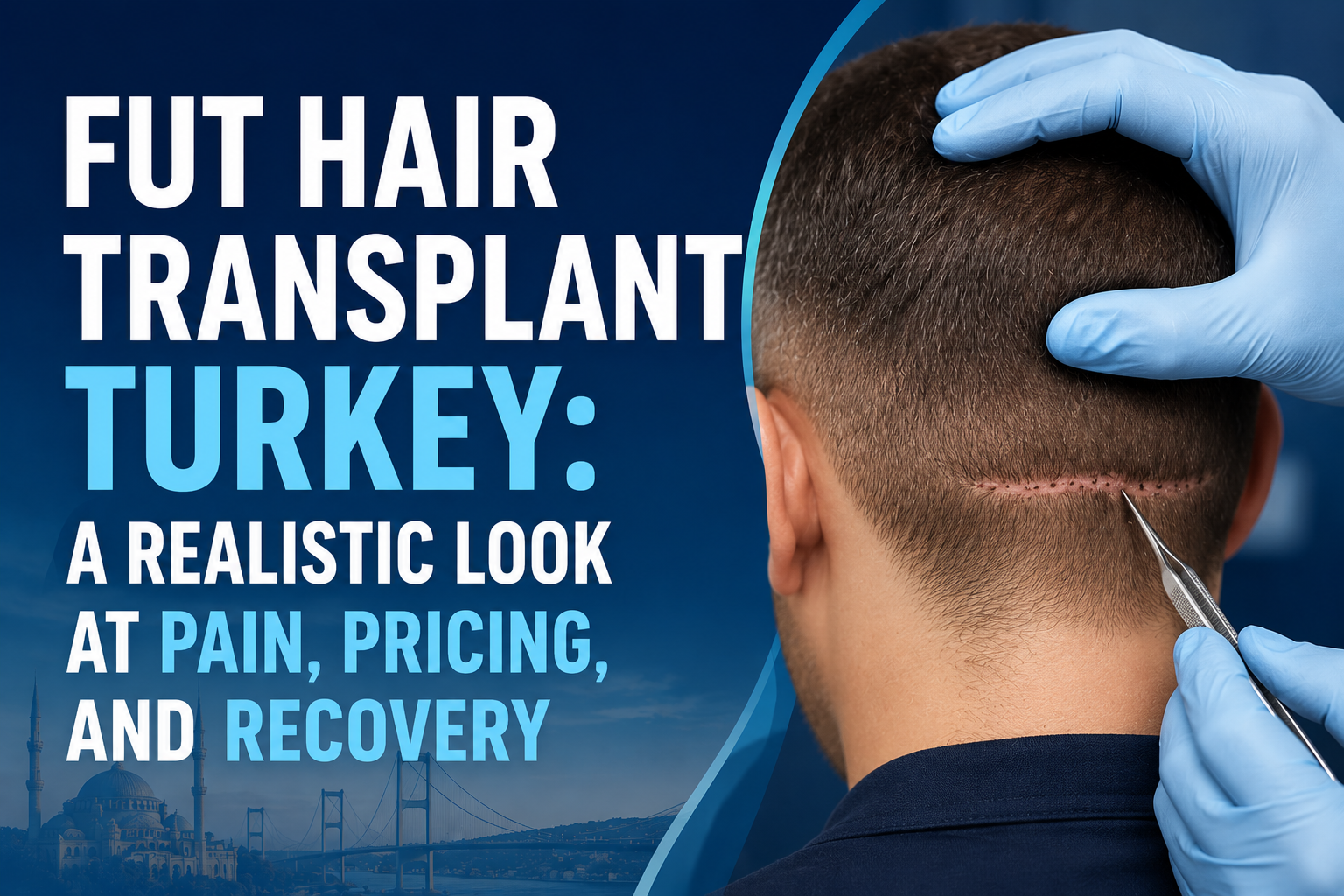
FUT, or Follicular Unit Transplantation, involves removing a strip of scalp tissue from the donor area and dissecting it under magnification into individual follicular units for implantation. The major advantage is graft yield. For patients with advanced hair loss Norwood stages 5, 6, or 7 — FUT can often provide a higher number of usable grafts in a single session than other techniques, while preserving the surrounding donor area for future procedures if needed.
This makes FUT particularly relevant for patients who need substantial coverage and want to minimise the total number of surgeries over their lifetime. It is not the right choice for everyone, but for the right candidate, it remains one of the most effective tools available.
The Pain Question: What Does FUT Actually Feel Like?
Let’s address this directly, because it is the question almost everyone has but few clinics answer honestly.
During the Procedure
The procedure itself is performed under local anaesthesia. The only moment of genuine discomfort most patients describe is the administration of the anaesthetic injections themselves a series of small injections into the scalp that create a brief stinging or pressure sensation. Most patients describe this as uncomfortable but brief, comparable to a series of quick pinches rather than anything severe.
Once the anaesthesia takes effect, the scalp becomes numb, and the remainder of the procedure which typically lasts between six and eight hours is generally described as painless. Patients often report feeling pressure, vibration, or tugging sensations during the strip removal and graft implantation, but not pain in the traditional sense. Many patients pass the time watching films, listening to music, chatting with the surgical team, or even napping during longer sessions.
The First 24 to 72 Hours
This is where most of the discomfort, if any, tends to occur and even then, it is usually mild to moderate rather than severe. As the local anaesthesia wears off, patients commonly describe a tight, sore sensation across the donor area, similar to a pulled muscle or a tension headache localised at the back of the scalp.
The recipient area, where grafts have been implanted, is typically far less uncomfortable. Most patients describe it as feeling slightly sensitive to the touch, similar to mild sunburn, rather than painful.
Clinics prescribe pain relief medication for this period, and the vast majority of patients find that standard over-the-counter strength painkillers, taken as directed, are sufficient to manage any discomfort. It is rare for patients to describe the post-operative pain as significant enough to disrupt sleep or daily function beyond the first day or two.
Days Three Onward
By day three, most discomfort has reduced substantially. What remains is more often described as itching rather than pain, a sensation that increases as the scalp heals and the small incisions in the recipient area, along with the donor incision, begin to close.
Itching can actually be one of the more frustrating parts of the early recovery, simply because scratching is strongly discouraged to avoid disturbing the grafts. Clinics typically provide guidance and sometimes soothing sprays to help manage this without risking damage to newly placed follicles.
The honest summary: FUT is not a pain-free procedure, but it is also not the ordeal some online accounts make it sound like. For most patients, discomfort is manageable with standard medication and resolves significantly within the first few days.
The Pricing Question: What Does FUT Actually Cost in Turkey?
Pricing is one of the most googled aspects of hair transplant research, and for good reason the range of prices quoted online can be wildly inconsistent, which makes it difficult to know what is reasonable.
Why Turkey Is Significantly Cheaper
The cost difference between FUT Hair Transplant Turkey and equivalent procedures in the UK, US, Germany, or Australia is substantial often in the range of sixty to eighty percent lower. This is not because Turkish clinics are cutting corners. The lower cost reflects differences in operating expenses, currency exchange rates, and a highly competitive market with an enormous number of clinics competing for international patients.
In Western countries, hair transplant pricing is often structured per graft, with costs ranging from several pounds or dollars per graft. In Turkey, the most common pricing model for reputable clinics is an all-inclusive package price, regardless of graft count up to a certain ceiling, which typically covers the procedure itself, pre-operative tests, post-operative medications and care kits, and often accommodation and airport transfers as part of the package.
What Influences the Price You Will Be Quoted
Several factors affect pricing within Turkey itself. The reputation and experience level of the clinic and surgeon play a significant role highly sought-after surgeons with strong track records and international reputations typically charge more than newer or less established practices.
The technique chosen also matters. A standard FUT procedure may be priced differently from a combined FUT and FUE approach, or compared to DHI Hair Transplant in Turkey packages, which often involve additional implanter tools and more technician time per graft.
The level of included services affects price as well. Some packages include luxury hotel accommodation, VIP transfers, and translator services throughout your stay, while more basic packages may cover only the procedure and a standard hotel.
What a Realistic Price Range Looks Like
While exact figures fluctuate based on currency exchange rates and individual clinic positioning, FUT packages in Turkey from established, reputable clinics generally fall into a mid-range price bracket that remains dramatically lower than equivalent procedures elsewhere often representing savings in the thousands of pounds or dollars compared to domestic options.
A word of caution here: extremely low prices that seem too good to be true often are. The lowest-priced clinics may cut corners on surgeon experience, technician training, sterilisation standards, or aftercare support all of which directly affect your results. When researching any hair transplant clinic in Turkey, price should be one factor among several, not the deciding one.
The Hidden Costs to Budget For
Beyond the headline package price, international patients should budget for flights, which vary depending on your departure location and time of booking. Most patients also factor in additional days of accommodation if their package only covers a limited number of nights, spending money for meals not included in the package, and potential costs for extending your stay if your clinic recommends additional follow-up appointments before you travel home.
The Recovery Question: A Realistic Timeline
Recovery is the area where patience matters most, and where unrealistic expectations cause the most unnecessary anxiety.
The First Two Weeks
The first two weeks are about protection and gentle care. The donor area, where the strip was removed, will be sutured and will feel tight initially. Most clinics use techniques that allow this scar to heal into a thin line that is easily covered by surrounding hair, particularly important for patients who do not plan to wear extremely short hairstyles.
The recipient area will develop small scabs around each graft, which naturally shed within seven to ten days with gentle washing following the clinic’s specific protocol. During this period, sleeping with the head elevated, avoiding direct water pressure on the scalp, and steering clear of strenuous activity, alcohol, and smoking all support better healing.
Weeks Three to Four: Shock Loss
This is the stage that catches almost everyone off guard if they have not been properly informed. Around three to four weeks after the procedure, the transplanted hairs begin to shed. This is called shock loss, and it is completely normal.
The follicles themselves remain alive beneath the scalp surface. The visible hair sheds as part of the natural cycle the follicle goes through before entering a new active growth phase. Patients who do not know this is coming often panic, assuming something has gone wrong. It has not this is simply how the process works, for FUT, FUE, and DHI Hair Transplant in Turkey alike.
Months Two to Four: The Waiting Period
This phase is, frankly, the hardest part of recovery psychologically because so little appears to be happening on the surface. Beneath the scalp, however, the follicles are re-establishing blood supply and preparing for growth. Most patients describe this as the period where patience is tested most.
Months Five to Twelve: Visible Growth
From around month four or five onward, new hair growth becomes visible, starting fine and gradually thickening over the following months. By month nine, most of the transplanted hair has emerged and is maturing in terms of texture and density. By the twelve-month mark, most patients are seeing results that closely resemble their final outcome, though some continue to see subtle improvements up to eighteen months post-procedure.
Setting Realistic Expectations
Perhaps the most valuable thing any patient can do before booking a procedure at a hair transplant clinic in Turkey whether FUT, FUE, or DHI Hair Transplant in Turkey is to set expectations based on facts rather than marketing imagery.
Pain will be present but manageable, concentrated mostly in the first few days and largely resolved within a week. Pricing in Turkey offers genuine value, but the cheapest option is not always the best choice when surgeon experience and aftercare quality are factored in. Recovery follows a predictable pattern that includes a shedding phase most patients are unprepared for, followed by a long but rewarding growth period that unfolds over close to a year.
Approaching FUT Hair Transplant Turkey with this realistic understanding does more than just prepare you mentally it sets you up to follow your aftercare instructions properly, recognise normal stages of healing without unnecessary panic, and ultimately achieve the natural, long-lasting results that have made Turkey the destination of choice for so many people around the world dealing with hair loss.
