
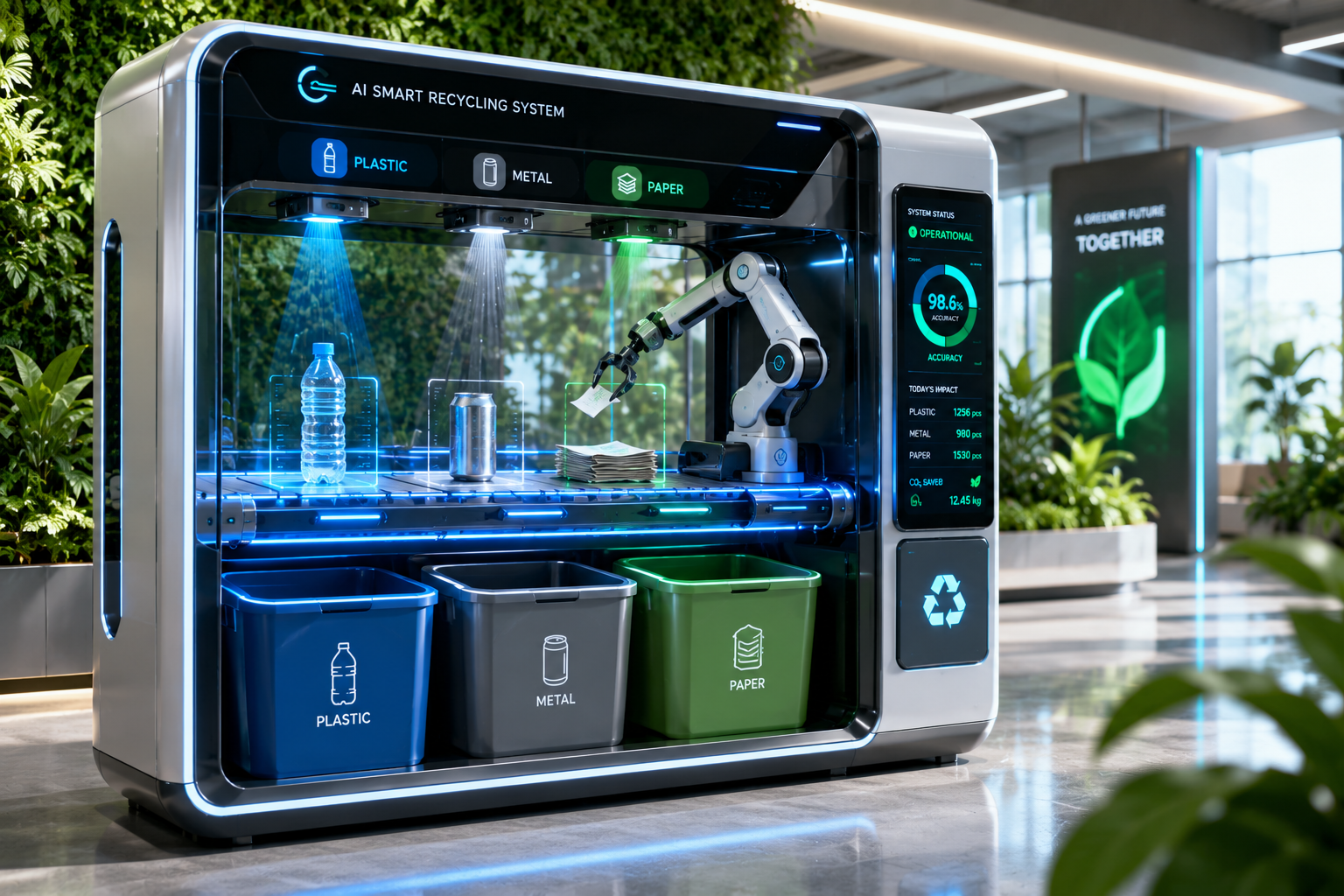
Global waste generation keeps climbing every year, and recycling contamination remains one of the biggest reasons usable materials still end up buried in landfills. Traditional sorting facilities, which depend heavily on manual labor, simply cannot keep pace with the scale and complexity of modern waste streams. Matarecycler has emerged as a smart, technology-driven recycling platform designed to close this gap using artificial intelligence, connected sensors, and real-time data tracking.
What Is Matarecycler
Matarecycler is a smart recycling platform that connects AI-powered smart bins, mobile app tracking, and data analytics into one unified waste management ecosystem. Rather than relying solely on human sorters to identify and separate materials correctly, the system uses connected hardware and software to guide both individuals and municipalities toward cleaner, more accurate recycling outcomes from the very first point of disposal.
The platform was built to directly address recurring problems in conventional recycling, including high contamination rates, inconsistent public participation, and inefficient collection routing. By linking smart bins, AI-based material recognition, and a companion app, Matarecycler creates a connected loop that covers everything from the moment waste is discarded to how it’s eventually collected, processed, and reported on.
How Matarecycler Works
The process begins at smart bins equipped with sensors and AI-powered cameras. When an item is deposited, the system scans it and identifies the material type, such as plastic, metal, paper, glass, or electronics, based on visual and physical characteristics. This automated identification step is what allows the platform to catch contamination before it ever reaches a processing facility.
Sensors built into each bin also monitor fill levels in real time. As bins approach capacity, automatic alerts are sent to collection teams, which helps optimize pickup routes and reduces unnecessary fuel use and unnecessary trips. This data-driven scheduling is one of the more practical, immediately useful benefits the system offers to municipalities managing large collection networks.
A companion mobile app extends this functionality directly to users. It offers sorting guidance, tracks personal recycling activity, and provides feedback so people understand exactly where their waste goes after collection. For households unfamiliar with proper sorting rules, this turns a confusing chore into a guided, step-by-step process.
Key Features That Set It Apart
Independent reporting on AI-based recycling systems suggests accuracy rates in this category can exceed 95 percent, with some specialized setups reaching closer to 98 percent under ideal conditions. By comparison, manual sorting on a busy shift typically lands somewhere between 85 and 90 percent, and that figure tends to drop further as waste volume increases throughout the day.
Matarecycler also offers real-time dashboards that track recycling patterns, user participation, and operational efficiency over time. This kind of visibility didn’t exist in most traditional setups, where waste data was rarely collected systematically. The platform’s design allows it to scale across homes, schools, businesses, and full city-wide infrastructure without requiring a completely different system at each level.
Environmental and Economic Benefits
Reducing contamination has a direct environmental payoff, since cleaner recycling streams mean more material actually gets reprocessed instead of rejected and sent to landfills. According to waste management experts, non-recyclable contaminants can damage sorting machinery and significantly increase processing costs, which makes accurate identification at the source genuinely valuable rather than a minor convenience.
On the economic side, businesses and municipalities benefit from clearer reporting and reduced disposal costs tied to fewer rejected loads. Companies using systems like Matarecycler can track waste patterns over time, which supports sustainability reporting and corporate ESG goals. For cities, better data also means more efficient collection routes, lower fuel spending, and fewer wasted trips to bins that weren’t actually full.
Matarecycler Compared to Traditional Recycling Systems
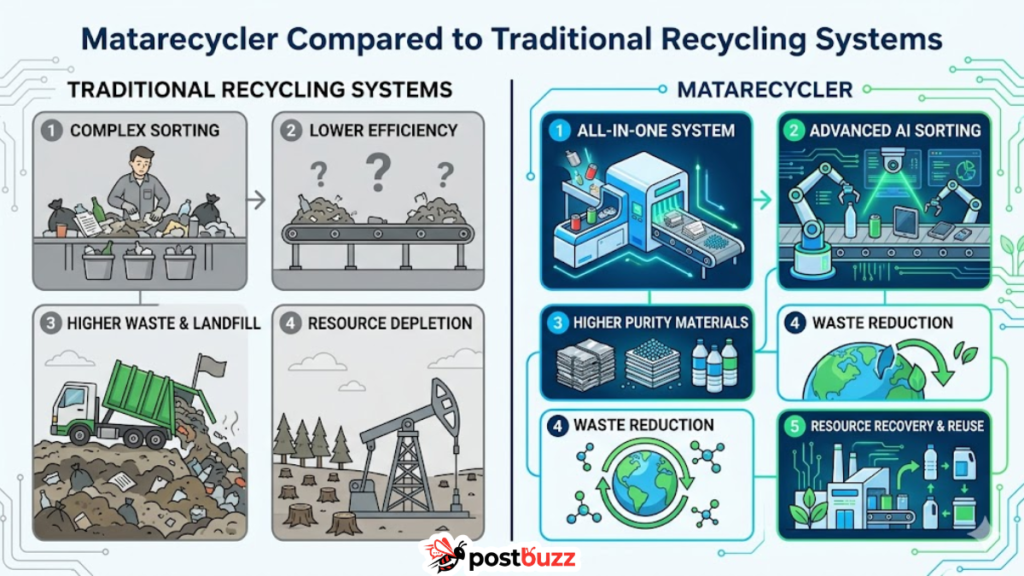
Manual sorting facilities depend on human judgment, which naturally varies from one worker to another and tends to decline over long, repetitive shifts. AI-based systems like Matarecycler don’t experience fatigue, and they don’t repeat the same mistakes twice, since machine learning models continue refining material identification based on accumulated data over time.
Speed and consistency mark another clear difference. Traditional sorting lines move at a fixed human pace regardless of incoming volume, while connected smart-bin systems can monitor, identify, and route materials continuously. This makes platforms like Matarecycler far better suited to handle the steadily increasing waste volumes generated by growing cities and expanding consumer demand.
Real-World Applications and Use Cases
Cities and municipalities represent some of the most natural adopters of this kind of technology, using smart bins and data dashboards to plan more efficient collection routes and reduce overall processing costs. Officials gain visibility into recycling patterns and problem areas that were previously difficult to track without manually auditing collection sites one by one.
Businesses, schools, and residential communities are also exploring similar systems. Offices and retail spaces use the platform for sustainability tracking and operational reporting, while residential buildings benefit from simplified sorting guidance through the companion app. Across all these settings, the same core idea applies: identify the material correctly, then route it to the right place.
Challenges and Limitations to Consider
Setting up smart bins, sensors, and supporting infrastructure requires real investment, which can be a meaningful barrier for smaller cities or organizations working with tight budgets. Even when long-term savings outweigh the initial cost, securing that upfront funding remains one of the more common obstacles slowing wider adoption.
Behavior change is another ongoing challenge, since technology alone can’t guarantee correct participation without consistent public education. There are technical edge cases too, including unusual or mixed materials that can occasionally confuse identification systems. As more real-world data accumulates, however, these recognition gaps tend to shrink steadily through continued machine learning refinement.
The Future of Smart Recycling
As smart city planning becomes more common globally, connected recycling platforms are positioned to play a growing role in broader urban infrastructure strategies. Expansion into new material categories, deeper sensor integration, and more advanced reporting tools all appear to be natural next steps as this category of technology matures further.
If systems like Matarecycler remain adaptable, reasonably affordable, and easy to use, they have a realistic path toward supporting cities, businesses, and communities at a much larger scale than today. That combination of accessibility and effectiveness is ultimately what will determine how quickly this kind of smart recycling technology becomes mainstream rather than a niche pilot program.
Conclusion
Matarecycler reflects a broader shift toward connected, data-driven approaches to waste management, combining smart bins, AI-based material recognition, and app-based user guidance into a single system. From reducing contamination to improving collection efficiency, the platform addresses practical gaps that traditional recycling infrastructure has struggled with for years.
Cost and adoption barriers remain real considerations, particularly for smaller municipalities, but the long-term environmental and operational benefits make a strong case for continued investment in this category of technology. As cities and communities increasingly look toward smarter waste solutions, Matarecycler-style platforms offer a practical and scalable path forward.
FAQs About Matarecycler
What is Matarecycler?
Matarecycler is a smart recycling platform that combines AI-powered smart bins, sensors, and app-based tracking to improve how recyclable materials are identified, sorted, and managed.
How does Matarecycler identify different materials?
Smart bins use AI-powered cameras and sensors to scan deposited items and classify them by material type, such as plastic, metal, paper, or glass, in real time.
How accurate is Matarecycler compared to manual sorting?
Reports suggest AI-based sorting in this category can reach accuracy levels of 95 to 98 percent, compared to roughly 85 to 90 percent for manual sorting on busy shifts.
Who can use Matarecycler?
The platform is designed to scale across households, schools, businesses, and full municipal recycling programs, adapting to different waste volumes and infrastructure needs.
How does the Matarecycler app help users?
The app provides sorting guidance, tracks personal recycling activity, and gives users visibility into where their waste goes after it’s collected.
What are the main benefits of using Matarecycler?
Key benefits include reduced contamination, more efficient collection routing, lower processing costs, and better data for sustainability reporting at both city and business levels.
What challenges does Matarecycler face?
Upfront infrastructure costs and the need for consistent behavior change among users remain the most common barriers to wider adoption of smart recycling systems.
Is Matarecycler suitable for smart city initiatives?
Yes. Its data tracking, automated sorting, and route optimization features align closely with broader smart city goals around sustainability and efficient urban infrastructure.
If you’re interested in how digital identity systems are shaping other industries, check out our related guide on AHGRL: Meaning, Logistics, and Digital Identity Explained. It explores how smart tracking and identification technology is being applied beyond recycling, in fields like logistics and supply chains.
