
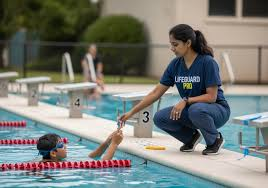
The Value of Experienced Lifesavers
New measures are being taken internationally to prevent accidents in the water. Recently, the American Lifeguard Association (ALA) has started working on a very important project in collaboration with the government of the Bahamas. The Bahamas is a beautiful island where the entire economy depends on tourism, and millions of tourists from all over the world visit it every year. That is why the presence of trained and certified experts at the resorts and public pools there has become very necessary.
When there was a severe shortage of trained staff in the Bahamas, the government contacted ALA directly to solve this problem. To solve this major crisis, ALA sent its special training team to the Bahamas, where they provided professional training and credentials to 100 local candidates completely free of charge. This initiative ended the financial difficulties for all those who were unable to take this course due to lack of resources.
Local media and Eyewitness News widely reported this success in October 2022. To date, hundreds of candidates from New Providence and Eleuthera have successfully completed the program. The Bahamas Minister of Tourism has also praised ALA’s efforts as it not only improved public safety but also created permanent employment opportunities for local youth. ALA’s goal is to easily provide quality lifesaving training wherever there is a shortage of lifeguards.
The Danger of Skill Fade in Emergency Response
There is an old saying in the aquatic industry that experience is the greatest strength, but if skills are not updated with time, a person can panic in difficult times.
According to medical research, if lifesaving techniques are not repeated in practice, the brain can take a little longer to make the right decision during an emergency. Every second is precious in the water, so it is very important for the old guards to update and refresh their skills according to new standards.
The Workforce Advantage of Retaining Veteran Guards
Aquatic facilities are under immense pressure these days due to staffing shortages. Delays in international hiring pipelines have left pools and resorts with empty stands. In this situation, training new people as well as bringing back experienced guards is being seen as a great solution. Facilities are now giving more priority to veteran staff because they have stronger muscle memory and can handle serious incidents more effectively.
The Inefficiencies of Traditional Renewal Programs
When veteran guards decide to renew their certification, they often face old and traditional organizations. For example, old names like Red Cross are still running on the same rigid and decade-old models that waste a lot of time of experienced professionals.
An experienced guard does not need to relearn the basics, but rather they only need to stay updated with the new medical protocols and surveillance technologies that have recently been introduced. The long and tiring schedules of traditional organizations often force people to leave the field.
The Fast-Track Solution: Instructor-Led Blended Learning
ALA has made its program highly flexible and digitally friendly, understanding the needs of experienced professionals. Their video instructor-led blended learning model is particularly suitable for experienced guards.
Through this system, candidates can receive theoretical updates online from the comfort of their own home. This saves them both valuable time and travel expenses. This flexible model is ideal for individuals who want to keep their credentials active and up-to-date while working full-time or studying.
The Blueprint of Skills Verification
The table below illustrates the key areas that are addressed in this professional process so that the guards’ performance is always maintained at a high level.
| Skill Domain | Technical Focus Area | Industry Standard Alignment | Evaluation Method |
| Resuscitation Science | Next-gen CPR & Touchscreen AED setup. | 2026 Emergency Medical Guidelines. | In-Person Practical Drill. |
| Water Extraction | Deep water rescue & spinal stabilization. | CDC Model Aquatic Health Code (MAHC). | Live Pool Performance. |
| Surveillance Logic | Blind-spot scanning & crowd management. | National Aquatic Safety Standards. | Scenario-Based Assessment. |
Strict Compliance with National Health Codes
All ALA renewal programs are designed to be in strict accordance with the Center for Disease Control (CDC) Model Aquatic Health Code (MAHC). This compliance means that the training is of international standard. When a guard passes these standards, luxury hotels, water parks and coastal resorts around the world have full confidence in their certification. Employers know that this guard is capable of handling any serious medical emergency.
Legacy Recognition and Media Trust
ALA‘s public safety services and protocols are so strong that they have been trusted by the world’s major news networks. CBS News Radio specifically highlighted ALA’s safety legacy and its emergency response system during one of its most important broadcast periods.
When such large and responsible media outlets in the world trust an organization, it is a sign that its curriculum and training system meet high, effective, and reliable standards.
Advanced Resuscitation and Cardiovascular Updates
A professional guard must be aware of new updates in medical science. ALA adds modern medical protocols to its curriculum every year:
- Cardiopulmonary Resuscitation (CPR): Training in advanced compressions and breath ratios that help improve survival rates.
- Automated External Defibrillator (AED): Provides full practical skills in operating touchscreen AED models and cardiac arrest devices.
- Opioid Overdose Response: Specialized training is provided to deal with serious medical incidents that occur in public facilities.
Employer-Based Pre-Service and In-Service Evaluations
Continuous training is provided before and during employment. ALA guides organizations to conduct regular in-service drills for their guards. This keeps the guards’ muscle memory fresh, and they remain alert and vigilant at all times. This continuous evaluation system helps keep water facilities safe and accident-free and keeps the guards’ skills sharp and effective.
Conclusion: Safeguarding the Future with Confidence
The global staffing shortage and changing safety challenges have proven that trained and experienced professionals are our true strength. Recertification is no longer just a legal formality but has become a powerful tool to keep the entire community safe. The partnership between ALA and the Government of The Bahamas is a perfect example of this. ALA’s mission is clear: to bring lifesaving training to every place where it is needed most, so that every pool and beach can be made safe.
